Uber and Wayve Launch London's First Robotaxi Service: Wayve's First Commercial Deployment Anywhere
Uber and British startup Wayve rolled out London's first commercial robotaxi service on September 3 — under 20 camera-and-radar Ford Mustang Mach-Es, a licensed operator up front, and Wayve's first revenue-generating deployment in its nine-year history.
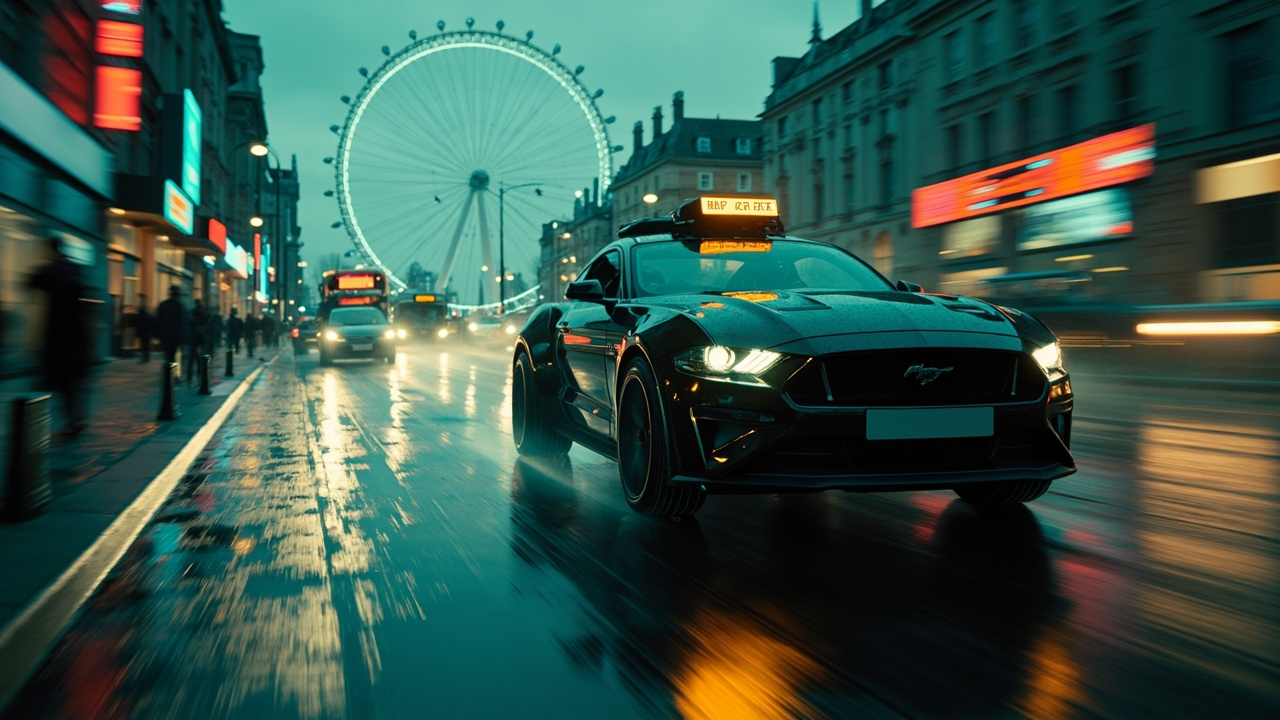
London woke up on September 3, 2026 to something its transport regulator had never licensed before: a commercial robotaxi service. Uber and London-based autonomous-driving startup Wayve switched on the city’s first paying autonomous rides, marking the culmination of a 15-month sprint from partnership announcement to public launch — and the first commercial deployment of Wayve’s technology anywhere in the world.
What launched today
The service is deliberately small and deliberately supervised. Fewer than 20 Ford Mustang Mach-E electric SUVs, each retrofitted with Wayve’s self-driving stack — surround-view cameras and radar sensors feeding the company’s end-to-end “AI Driver” software — now roam London streets, matched to ordinary ride requests through the Uber app. Riders hailing an UberX, Uber Comfort, or Uber Electric may be silently paired with an autonomous vehicle at no extra cost.
Crucially, a licensed operator rides in the driver’s seat during this phase. That person is a trained, licensed private-hire driver, present not because the software needs rescuing every block, but because Transport for London (TfL) — among the most cautious urban regulators in the world — has not yet cleared fully driverless operation. The operator stays until TfL is satisfied with the safety record.
Two details make this more than a demo. First, the rides are commercial: this is a revenue service on Uber’s main app, not a research trial with a waitlist and a waiver. Second, it is Wayve’s first commercial public deployment in the company’s roughly nine-year existence. The startup, spun out of UCL and backed by SoftBank, Microsoft, Nvidia, and Epic Games, has spent the better part of a decade building camera-first, end-to-end learned driving software. Today that bet starts earning money.
The road to September 3
The launch follows a sequence of regulatory dominoes falling through 2026. In June, Uber opened sign-ups for London riders on an interest list, with CEO Alex Kendall promising service “soon,” subject to regulatory approval. On August 5, TfL issued Private Hire Vehicle (PHV) licences for the modified Mustang Mach-E fleet — the clearance that turned a plan into a schedule. Wayve and Uber characterized that grant as the step that moved them “a step closer to autonomous rides in London,” with early rider access planned for late summer.
They hit that window. September 3 is early September, exactly the “later this summer” the companies had promised when the licences landed.
The regulatory strategy is worth attention because it differs from the American playbook. TfL licensed the vehicles as private hire vehicles — the same category as any Uber minicab — with a licensed driver aboard, rather than creating a bespoke autonomous-vehicle permit regime from scratch. Full autonomy, when it comes, will presumably ride on demonstrated safety data collected under this supervised configuration, a graduated path that echoes how the UK’s broader AV framework has been designed.
Why Wayve’s approach matters
Wayve has always been the unorthodox one among autonomy companies. Where Waymo, Cruise (in its original form), and Aurora leaned on lidar-heavy sensor suites and high-definition prior maps, Wayve’s founding thesis was that driving intelligence should be learned end-to-end from vision data — one neural network mapping pixels to driving actions, scalable by data rather than by engineering per-city map pipelines.
That thesis shaped today’s launch in concrete ways. The London fleet relies on cameras and radar, not lidar. The same core software has been tested across multiple cities and continents — Wayve has run vehicles in London, several other UK cities, and parts of the US and Europe — without city-specific remapping as a prerequisite. For a company pitching automakers and mobility platforms on a licensable “AI Driver,” a first commercial deployment in one of the world’s most visually chaotic driving environments is the strongest existence proof it could ask for.
London is genuinely hard. Narrow Victorian streets, double-decker buses cutting in, cyclists filtering on both sides, rain-smeared lenses, and the famous ambiguity of mini-roundabouts. The city’s black-cab drivers, who spend years memorizing “The Knowledge,” have publicly greeted the robotaxis with skepticism. If end-to-end learned driving works here, the argument that it generalizes gets much stronger.
The Uber calculation
For Uber, the launch is one tile in a rapidly assembling global autonomy mosaic. The company now partners with Wayve in London, Waymo in Austin and Atlanta, Pony.ai and WeRide elsewhere, and has its own robotaxi ambitions — including plans for a premium robotaxi service in Houston by mid-2027 — funded in part by aggressive cost discipline. Just yesterday, news broke of Uber cutting roughly 3,300 jobs to redirect about $10 billion toward its robotaxi future.
The platform logic is straightforward: Uber owns demand, routing, and the rider relationship; partners supply driving intelligence and fleets. London lets Uber stake a claim in Europe before Waymo and Baidu — both of which have signalled UK intentions — arrive. Getting there first, even with 20 supervised cars, buys operational learning and regulatory goodwill that latecomers will have to earn separately.
What to watch
The near-term metrics that matter are mundane: rides completed, intervention rate, and incident reports filed to TfL. The transition trigger is TfL clearing driverless operation — watch for the operator moving out of the driver’s seat, then out of the vehicle. Fleet size is the scaling signal; sub-20 cars is a beachhead, not a network.
The competitive clock is also running. Waymo has been preparing a London launch, Baidu has eyed the UK, and Tesla holds its Cybercab launch event in Austin today. Europe’s robotaxi race has barely started, and today’s launch means it now has a scoreboard.
Analysis
Strip away the spectacle and today’s news is a milestone in industrialization, not yet in autonomy itself — a supervised fleet of fewer than two dozen cars is a pilot with a fare meter. But milestones of industrialization are how this technology actually compounds. Wayve’s first paying riders generate exactly the data, revenue, and regulatory track record that a nine-year-old research bet needs to become a business. And London, by licensing autonomy through its existing private-hire regime, has quietly built a template other European capitals can copy without new legislation.
The deeper signal is architectural. If Wayve’s camera-first, end-to-end software can hold its own in London under commercial conditions, the lidar-and-maps orthodoxy loses some of its inevitability — and the cost floor for autonomy drops for everyone. That is a bigger deal than 20 Mustang Mach-Es. It is the difference between autonomy as a capital-intensive infrastructure project and autonomy as software that ships.
Sources
- [1] https://aiweekly.co/ai-news-today
- [2] https://wayve.ai/press/wayve-uber-phv-license/
- [3] https://investor.uber.com/news-events/news/press-release-details/2026/Wayve-and-Uber-Move-a-Step-Closer-to-Autonomous-Rides-in-London/default.aspx
- [4] https://www.reuters.com/world/europe/uber-opens-sign-ups-london-robotaxis-ahead-launch-in-months-2026-06-08/
- [5] https://www.electrive.com/2026/08/06/wayve-and-ubers-london-robotaxi-project-passes-key-hurdle/
- [6] https://www.wsj.com/business/autos/wayve-uber-win-approval-for-supervised-robotaxi-london-96dca1ca