From Tasmania's Hydro to a $5 Billion Listing: Firmus Bets the ASX Wants Its Own AI Factory
Nvidia- and Blackstone-backed Firmus is pitching an up-to-A$7B October ASX IPO to fund its 1.6GW Project Southgate buildout — Australia's answer to the neocloud boom.
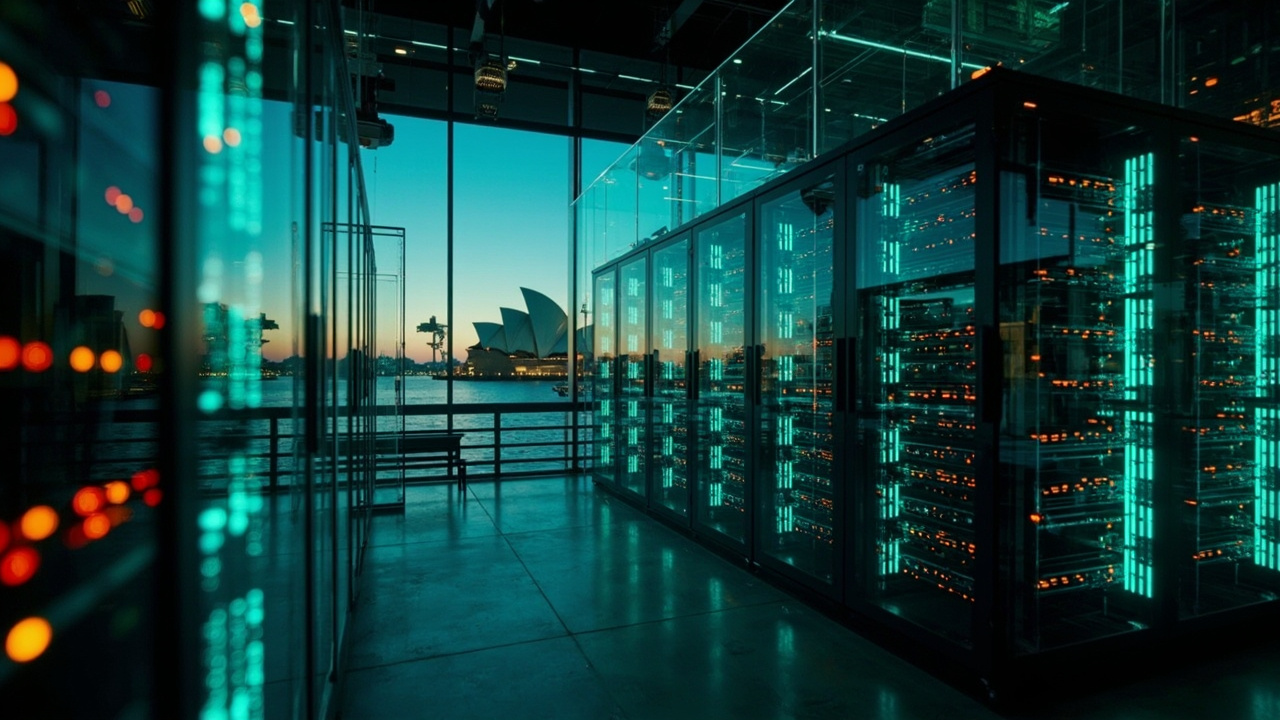
Australia’s most hyped AI infrastructure name is going public. Firmus Technologies, the Sydney-founded, Singapore-headquartered operator of liquid-cooled “AI factories,” is in discussions to raise up to A$7 billion (about US$5 billion) through an ASX listing targeted for the end of October, according to a report first published by The Australian Financial Review on Monday and confirmed by Reuters and Bloomberg. If it lands even near the top of that range, it will rank among the largest tech IPOs in Australian history — and the clearest test yet of whether public-market investors in the Asia-Pacific want direct exposure to the GPU-cloud boom that private capital has been chasing for two years.
What is on the table
The contours of the deal, as reported: investor meetings are already underway across Asia, with a listing window at the end of October. The AFR was first with the figure; Reuters and Bloomberg subsequently confirmed the talks, citing sources familiar with the matter. A raise of this size would be extraordinary by ASX standards, where tech listings of even A$1 billion are rare events — for comparison, it would rival the biggest local tech floats of the past decade in a single stroke.
The proceeds have a clear destination: Project Southgate, Firmus’s 1.6-gigawatt AI compute buildout across Australia, plus its expansion into Indonesia and Malaysia. The company agreed with CDC Data Centers in 2025 to develop up to 1.6GW of capacity across Australia by 2028, and it is currently building AI factories at Wesley Vale and St Leonards in Tasmania, with a Melbourne facility handed over and already running customer models as of late August.
Why the ASX is being asked to fund a global land-grab
Firmus’s pitch rests on an unusual origin story. Its first AI factory rose in Tasmania — an island better known for wilderness and hydro power than for hyperscale compute — because the state’s cool climate, abundant renewable electricity, and isolated grid make it an energy-advantaged place to run power-hungry GPU clusters. The company’s answer to the water problem that plagues data-center developments was a proprietary liquid-cooling system it calls HyperCube, deployed in closed-loop form so that the Wesley Vale site operates without using any water for cooling on most days of the year, falling back to water only on hot ones.
That engineering identity — efficient, liquid-cooled, purpose-built for AI rather than retrofitted from enterprise hosting — has let Firmus graduate from island novelty to regional infrastructure player in under two years. The NVIDIA connection is central. Nvidia participated in Firmus’s equity rounds, and in late June the two signed a strategic partnership under which Firmus buys Nvidia infrastructure and sells Nvidia-powered cloud services to what it calls “AI Native” customers. That pact rode on the back of a US$30 billion Indonesian data-center deal, including a planned 170,000-GPU site in Batam. Days later, OpenAI itself became a Firmus customer in Malaysia — a multi-year deal that pushed the company past 900 MW of contracted capacity across seven AI factories in four countries, two of them operational.
The money already on the table
The IPO would cap a year of staggering capital acceleration. In February 2026 Firmus secured a US$10 billion debt facility backed by Blackstone. In August it closed a US$2 billion strategic equity round — priced at US$230 per share, with Nvidia, Coatue Management, and funds managed by Blackstone and Jane Street participating — at a post-money valuation north of US$10.5 billion, up from US$5.5 billion in April and US$3.9 billion in November 2025. Earlier reporting around the roadshow has suggested ambitions of a US$30 billion-plus valuation at listing. Each successive markup has drawn more attention, and more skepticism.
And the company has had to fight for its moment. Doubts about its governance and financing surfaced in Australian coverage as early as February, with one capital-markets newsletter noting drily that “there are always going to be haters” around the country’s most hyped pre-IPO name. Firmus is also associated with billionaire Oliver Curtis, whose involvement guarantees tabloid attention alongside the term sheets.
The wager: public money for private-style risk
Strip away the local color and the Firmus listing asks a question that markets from New York to Kuala Lumpur are currently wrestling with: can the enormous, contracted, long-dated cash flows of AI infrastructure — build now, amortize over decades, serve hyperscale tenants like OpenAI — be sold to ordinary public investors without the discount that private placements have avoided?
The neoclouds that raced ahead of Firmus — CoreWeave in the United States, Nscale in Europe — have shown both the upside and the peril. CoreWeave’s 2025 Nasdaq debut was the reference case for GPU-cloud public listings, and its subsequent volatility has become a lesson in how sensitive these business models are to debt costs, GPU supply cycles, and the creditworthiness of a handful of anchor customers. An ASX listing of this size would expose a largely retail-heavy market to exactly that risk profile, with the added twist that Australia’s superannuation funds — among the world’s largest pools of pension capital — have so far watched the AI infrastructure boom mostly from the sidelines.
There is also the sovereign angle. Australia has watched the Stargate-style mega-builds of the Northern Hemisphere and largely missed out; Project Southgate, with its renewable-powered Tasmanian backbone, is the closest thing the country has to a national champion in the layer of the AI stack that is currently scarce everywhere: compute. A successful float would hand Australian institutions a way to own that story domestically rather than through Nasdaq ADRs.
What to watch
Three variables will decide whether this becomes the biggest ASX tech story of the year or a cautionary tale. First, pricing: whether the final valuation lands near the US$10.5 billion private mark, the rumored US$30 billion ambition, or somewhere in between will signal how much froth underwriters believe the market will bear. Second, the anchor book: whether Asian sovereign and institutional investors pre-commit enough of the A$7 billion to make the retail component manageable. Third, timing: an end-of-October listing lands Firmus squarely in the middle of the industry’s ongoing debate about AI capex sustainability — a debate in which the CEOs of OpenAI, Anthropic, Google and Microsoft spent this very weekend publicly calling for slower, more deliberate scaling even as they sign record compute contracts.
Firmus, for its part, has bet its entire existence on the idea that the bottleneck of this decade is not models but megawatts. On current evidence — 900 MW contracted, OpenAI as a customer, Nvidia as a partner, and US$12 billion of private capital already committed — the bet is not absurd. Whether the ASX agrees, at a US$30 billion ask, is now the market’s question to answer.
Sources
- [1] https://www.channelnewsasia.com/business/firmus-seeks-to-raise-up-to-5-billion-in-australian-ipo-sources-say-6382786
- [2] https://aiweekly.co/alerts/nvidia-backed-firmus-seeks-up-to-5b-in-october-australia-ipo-to-fund-16gw
- [3] https://www.afr.com/technology/firmus-to-turbocharge-ai-factories-roll-out-after-giant-funding-deal-20260807
- [4] https://www.reuters.com/world/asia-pacific/australias-firmus-technologies-strikes-ai-access-deal-with-nvidia-2026-06-28/
- [5] https://firmus.co/infrastructure/southgate/project-southgate-faqs
- [6] https://www.theaustralian.com.au/business/openai-signs-multibilliondollar-deal-with-oliver-curtis-firmus-fuell