No Camera, No Problem: Meta's Code-Named 'Luna' Bets Privacy Backlash Is a Product Problem
The Information reveals Meta will ship a camera-free pair of smart glasses this fall — six microphones, a dedicated AI button, and no lens, a direct answer to two years of 'pervert glasses' scandals and banned-in-public backlash.
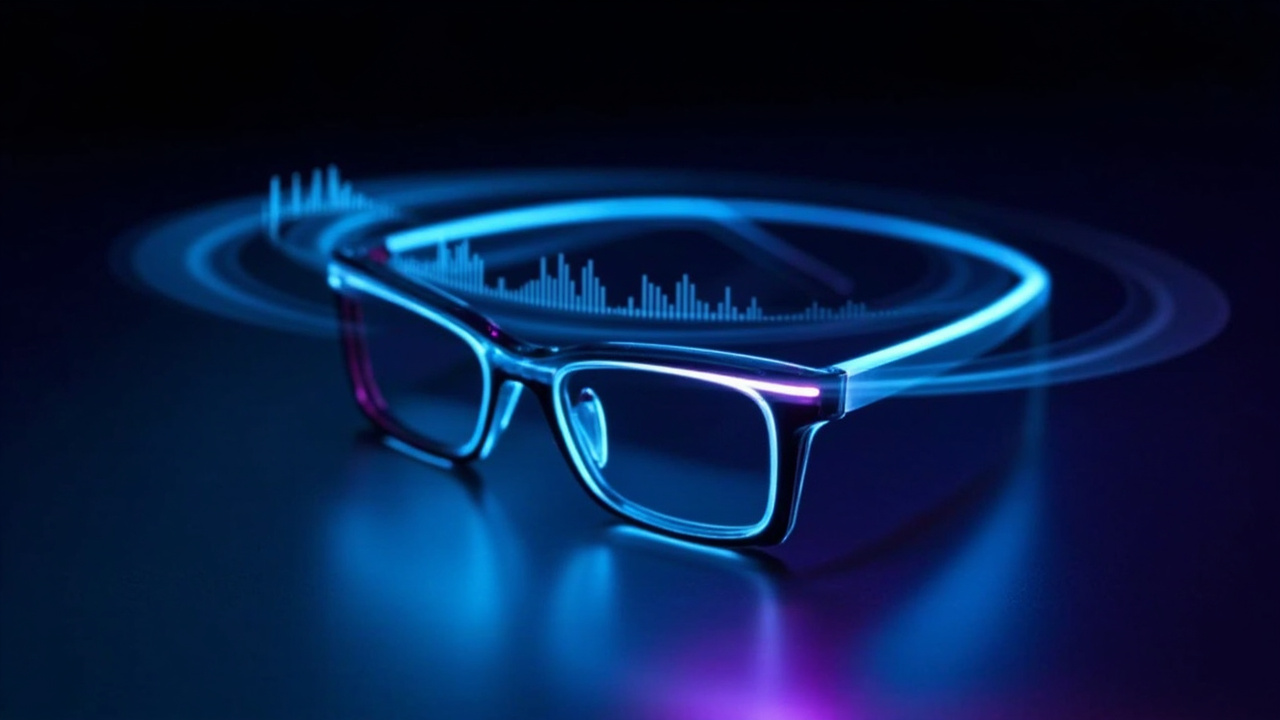
Meta has spent two years learning an uncomfortable lesson about cameras on faces: the feature that makes smart glasses magical for the wearer makes them menacing to everyone else. According to a report from The Information published September 15 and confirmed by Reuters, the company’s answer is a new pair of smart glasses that strips out the most controversial component entirely. Internally code-named Luna, the device will ship this fall with no camera at all — six built-in microphones for voice interaction, open-ear audio, and a dedicated button for quick access to Meta’s AI assistant and its new Muse consumer agent.
What we know about Luna
The report is spare on specs but pointed on strategy. Luna keeps the form factor of Meta’s successful glasses line but deletes the camera that has defined it. In its place:
- Six microphones — an unusually dense array, suggesting serious investment in far-field voice capture, beamforming, and possibly spatial audio recording for the assistant rather than the user’s surroundings in visual form.
- A dedicated AI button — a hardware shortcut for summoning Meta AI and Muse, the consumer AI agent Meta has been rolling out across its apps and recently opened to early testers. Muse is designed to complete tasks on a user’s behalf — sending emails, filling out forms, shopping — and TechRadar’s hands-on this week described it as “incredibly useful” while flagging how uncomfortable it feels to hand an agent your digital life.
- No camera, no capture light, no recording indicator debates — the entire lexicon of smart-glasses privacy controversy simply does not apply.
The subtext of The Information’s headline — “amid mounting privacy concerns” — is doing a lot of work. This is not a company diversifying its SKU sheet for fun. This is a company whose flagship wearable has become a social liability.
Two years of backlash, compressed
To understand why Meta would ship a glasses product without a camera in 2026, you have to look at what happened to the ones with cameras.
Meta sold roughly 7 million pairs of AI glasses in 2025, and by most estimates owns over 80% of the smart glasses market. By revenue, it is the single most successful AI hardware product ever shipped by anyone. And yet by mid-2026 the same product line faced courtroom bans, regulatory complaints, and a social media nickname nobody at Meta wanted: “pervert glasses.”
The pattern repeated across the summer. Women reported being secretly filmed by wearers in gyms, on transit, and in public spaces, with clips surfacing online. Instagram — Meta’s own platform — was forced to crack down on communities sharing covertly captured video. A July 2026 investigation reignited the cycle, and Meta found itself issuing statements that photos and videos captured on the glasses “remain private unless users choose to share them,” a defense that satisfied precisely no one, since the harm occurs at capture, not at upload.
The regulatory pressure escalated in parallel. Germany’s Hessian data protection authority filed a criminal complaint over the glasses’ facial-recognition capabilities. UK cinema chains banned them. A 2026 WIRED investigation revealed Meta had quietly shipped face-recognition code tied to its “Nametag” feature inside the glasses’ companion app — code Meta later silently removed without explanation. By August, The Guardian was running interactive features asking readers whether they had been filmed by Meta glasses that day, and the Dutch Consumers Association was calling for an outright sales ban.
The strategic read: retreat as flanking maneuver
Strip away the optics and Luna is a textbook market segmentation play with a compliance narrative bolted on.
Meta’s glasses business now spans at least three tiers: the $299-and-up camera glasses co-branded with EssilorLuxottica and Meta’s own newly branded line; the higher-end display models; and now a camera-free variant pitched at the privacy-conscious, the camera-shy, and — critically — the institutional buyers. Workplaces, hospitals, schools, and government facilities that banned camera glasses wholesale can allow a microphone-and-audio device far more easily. Luna is, in effect, Meta’s re-entry ticket into every space its own flagship product got thrown out of.
There is also an agent-strategy angle. Six microphones and a hardware button for Muse suggest Meta sees voice as the primary interface for its consumer agent ambition. A camera-free device sidesteps the two things regulators and users fear most — covert photography and always-on visual context — while keeping the always-available audio channel that agent interactions actually need. If Muse is to become the “operating system for your digital life” that Meta has described, the glasses are its most natural always-worn endpoint, and Luna removes the biggest objection to wearing one all day.
The skeptical reading is just as plausible: Luna is a hedge, a way for Meta to claim it heard the backlash while continuing to sell millions of camera units. The company has not pulled a single camera product from shelves. The privacy crisis drove the design of a new SKU, not a retrenchment of the old one.
Why it matters
The Luna report lands at a moment when the entire wearables industry is watching Meta to see whether camera glasses become the next smartphone or the next Google Glass. Apple, Google, and Snap are all preparing glasses products of their own, and every one of them faces the same asymmetry: the wearer gets utility, bystanders get surveillance risk, and no capture LED has ever fixed that imbalance.
A camera-free glasses line from the market leader is the first mainstream acknowledgment that the answer might be subtraction. If Luna sells, expect every competitor to ship a camera-less variant within a product cycle — and expect the “smart glasses problem” to be reframed from “how do we make cameras acceptable” to “what can an assistant do with ears and a voice alone.”
For Meta, the bet is that two years of privacy scandals were never really about smart glasses at all — they were about cameras. This fall, we find out if the distinction holds.
Sources
- [1] https://www.theinformation.com/articles/meta-launch-camera-free-smart-glasses-amid-mounting-privacy-concerns
- [2] https://www.reuters.com/business/meta-plans-launch-camera-free-smart-glasses-fall-information-reports-2026-09-15/
- [3] https://fortune.com/2026/07/28/ray-ban-meta-pervert-glasses-secret-videos-women/
- [4] https://thenextweb.com/news/meta-smart-glasses-privacy-crisis-apple-google-snap
- [5] https://www.theguardian.com/technology/ng-interactive/2026/aug/19/meta-glasses-privacy-surveillance