From Chip to Grid: Mitsubishi Electric's DSX Blueprint Tames Megawatt Racks for NVIDIA's Vera Rubin
Mitsubishi Electric's U.S. arm MEPPI has shipped Chip-to-Grid DSX Reference Designs — 250 MW deployment blocks with islanded microgrids, 800 VDC distribution, and dual-loop liquid cooling — purpose-built for NVIDIA Vera Rubin NVL72 racks heading past 1 MW each.
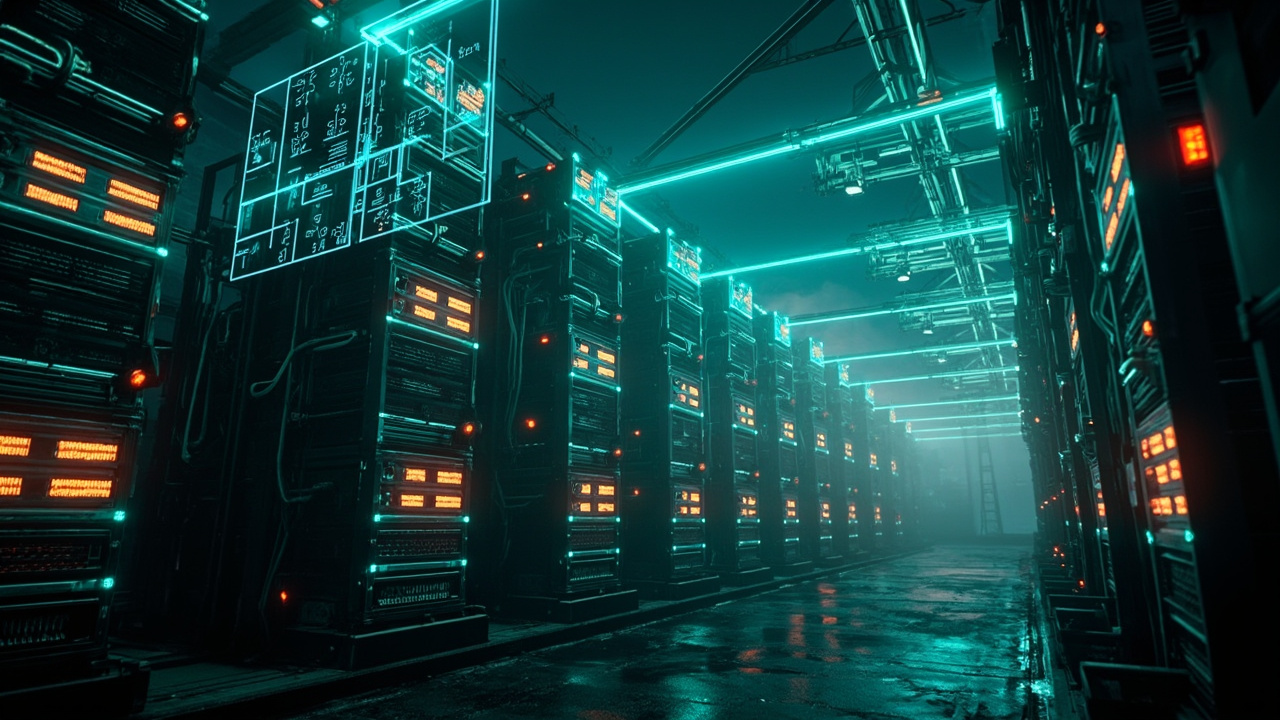
The hardest problem in AI is no longer the model. It is the megawatts. As generative AI gives way to agent AI and physical AI, the compute footprint of a single frontier deployment has swollen from a hall of servers to something that looks more like a power plant with a data center attached. On September 24, 2026, Mitsubishi Electric Corporation (TOKYO: 6503) formally unveiled its answer: NVIDIA AI infrastructure-compatible reference designs for next-generation AI data centers, released through its U.S. subsidiary Mitsubishi Electric Power Products, Inc. (MEPPI) and built to support the NVIDIA Vera Rubin NVL72 rack-scale system and the NVIDIA generations beyond it.
The product of the announcement is a family of what MEPPI calls Chip-to-Grid DSX Reference Designs — pre-validated, standardized engineering blueprints that coordinate every layer of an AI factory, from the utility interconnection and on-site generation down to the power delivered onto the silicon itself, and from direct-to-chip liquid cooling up to facility-level thermal management. The timing is deliberate. The parent company’s Tokyo release notes that AI utilization has expanded from widely adopted generative AI into agent AI and physical AI, and that data centers are now expected to grow into critical societal infrastructure — with operators simultaneously squeezed on power procurement, thermal management, and operational stability.
What is actually in the design
The reference designs are organized around 250 MW deployment blocks. Each block is not merely a floor-plan abstraction: it can operate in an islanded configuration, running on its own on-site generation and battery energy storage systems (BESS) with a pathway to future utility interconnection, or it can be grid-connected from day one. During normal operation, the design minimizes the site’s reliance on the grid; in the event of a grid failure, the facility switches to autonomous operation on its own microgrid, stabilizing power without taking the training run or the inference fleet down with it.
Inside the white space, the designs support both conventional 415/480 VAC distribution and 800 VDC power distribution, the architecture NVIDIA has pushed for next-generation racks where conversion losses and copper mass at low DC voltages become prohibitive. On the thermal side, the blueprint pairs a dual-loop cooling architecture — elevated-temperature direct liquid cooling that sits directly on the chips, plus lower-temperature chilled-water air-side cooling for everything else — a combination Mitsubishi Electric says is suited to high-density AI loads and maximizes power efficiency end to end.
The scalability targets are the part that turns heads. The designs are built for hyperscale, neocloud, and colocation operators across North America, with rack densities designed to grow from roughly 200 kW per rack today to more than 1 MW per rack, and expansion paths toward gigawatt-class campuses. The framework aligns with NVIDIA’s MGX rack-scale accelerated computing platforms and the NVIDIA Vera Rubin DSX AI Factory Reference Design infrastructure provisioning strategy — meaning an operator can drop the blueprint into the same ecosystem that NVIDIA’s own DSX digital-twin tooling in Omniverse is designed to simulate and operate.
The context: power is the binding constraint
To understand why a 103-year-old Japanese industrial conglomerate is suddenly making AI news, look at the constraint curve. Access to power has emerged as one of the most significant bottlenecks to AI capacity buildout — grid interconnection queues in major U.S. markets now stretch for years, and the difference between a profitable AI factory and a stranded one is increasingly measured in months-to-megawatts. That reframes who the relevant vendors are. The companies that can sell a credible, pre-engineered path from utility substation to GPU voltage rail are no longer peripheral suppliers; they are on the critical path of the entire buildout.
MEPPI is unusually well positioned for that role. Headquartered in Warrendale, Pennsylvania, the company’s core business has long been the electric power industry itself: smart-grid distributed energy resource management systems (DERMS), battery energy storage, and substation monitoring. Its Critical Power Solutions Division extends that into mission-critical facilities. In other words, the subsidiary’s existing product line — transformers, switchgear, storage, grid software — is roughly the bill of materials an islanded AI campus needs anyway. The Chip-to-Grid designs are best read as a repackaging of grid-grade equipment into a standardized, NVIDIA-aligned SKU strategy for the AI era.
The quotes in the announcement make the positioning explicit. “The race to build the next generation of AI infrastructure is driving one of the most significant transformations of our time,” said Tricia Breeger, President and CEO of MEPPI. “As AI demand accelerates, success depends on more than computing power. It requires resilient energy systems and scalable infrastructure that can grow from today’s deployments to tomorrow’s gigawatt-scale campuses.” On the NVIDIA side, Vladimir Troy, Vice President of AI Infrastructure, framed the partnership in system terms: “AI factories require compute, power and cooling to work together as one system. Mitsubishi Electric’s Chip-to-Grid Reference Designs give operators a repeatable blueprint for deploying NVIDIA Vera Rubin infrastructure and scaling toward gigawatt-scale AI campuses.”
Why “reference design” is the operative phrase
The deeper story is the industrialization of AI construction. NVIDIA released its own Vera Rubin DSX AI Factory Reference Design — with an Omniverse DSX digital-twin blueprint — to broad industry support, and a growing roster of power and cooling vendors (Vertiv, Schneider Electric, Siemens, Carrier, Samsung, and now Mitsubishi Electric) have aligned their own catalogs to it. The significance of a “reference design” is that it converts bespoke data center engineering into something closer to repeatable manufacturing: pre-validated configurations that reduce engineering complexity, compress permitting and construction timelines, and let operators scale in 250 MW increments rather than redesigning each campus from scratch.
For Vera Rubin NVL72 specifically — NVIDIA’s next-generation rack-scale supercomputing system integrating 72 Rubin GPUs and 36 Vera CPUs — the power and cooling envelope per rack exceeds anything air cooling can handle, which is why direct liquid cooling and 800 VDC distribution appear throughout the partner ecosystem’s designs. Mitsubishi Electric’s differentiation is the grid end of the stack: few competitors bring their own transmission-and-distribution heritage plus DERMS software plus BESS integration under one corporate roof.
What to watch
Mitsubishi Electric says it will use the reference designs to develop solutions for next-generation AI data centers and to expand its business in the global market by integrating them with its broader range of data center systems. The near-term signals to watch are concrete: the first U.S. AI campus actually procured as an islanded 250 MW block, rack-level validation of the 1 MW-per-rack path on Vera Rubin systems in production, and whether the microgrid-first topology — build now, interconnect later — becomes the standard playbook for neoclouds that cannot wait in interconnection queues.
The announcement is also a reminder of how the AI supply chain is stratifying. Chip vendors capture the headlines, but the bottleneck economics have pushed power infrastructure companies into strategic territory. When rack densities cross the megawatt line, the design conversation stops being about servers and starts being about substations — and Mitsubishi Electric has just published its answer to that conversation as a product.
Sources
- [1] https://us.mitsubishielectric.com/en/pr/global/2026/0924_pu/
- [2] https://www.businesswire.com/news/home/20260922610528/en/Mitsubishi-Electric-Introduces-Chip-to-Grid-Blueprint-for-AI-Factories-Powered-by-NVIDIA
- [3] https://investor.nvidia.com/news/press-release-details/2026/NVIDIA-Releases-Vera-Rubin-DSX-AI-Factory-Reference-Design-and-Omniverse-DSX-Digital-Twin-Blueprint-With-Broad-Industry-Support/default.aspx