The $675 Box That Sells AI Failure: Engram Turns Hallucinations Into Instruments
Thoughtful Things' Engram is an offline AI sampler-groovebox that 'circuit-bends' tiny neural audio models into uncanny sounds — the opposite pitch of Suno-era generative music.
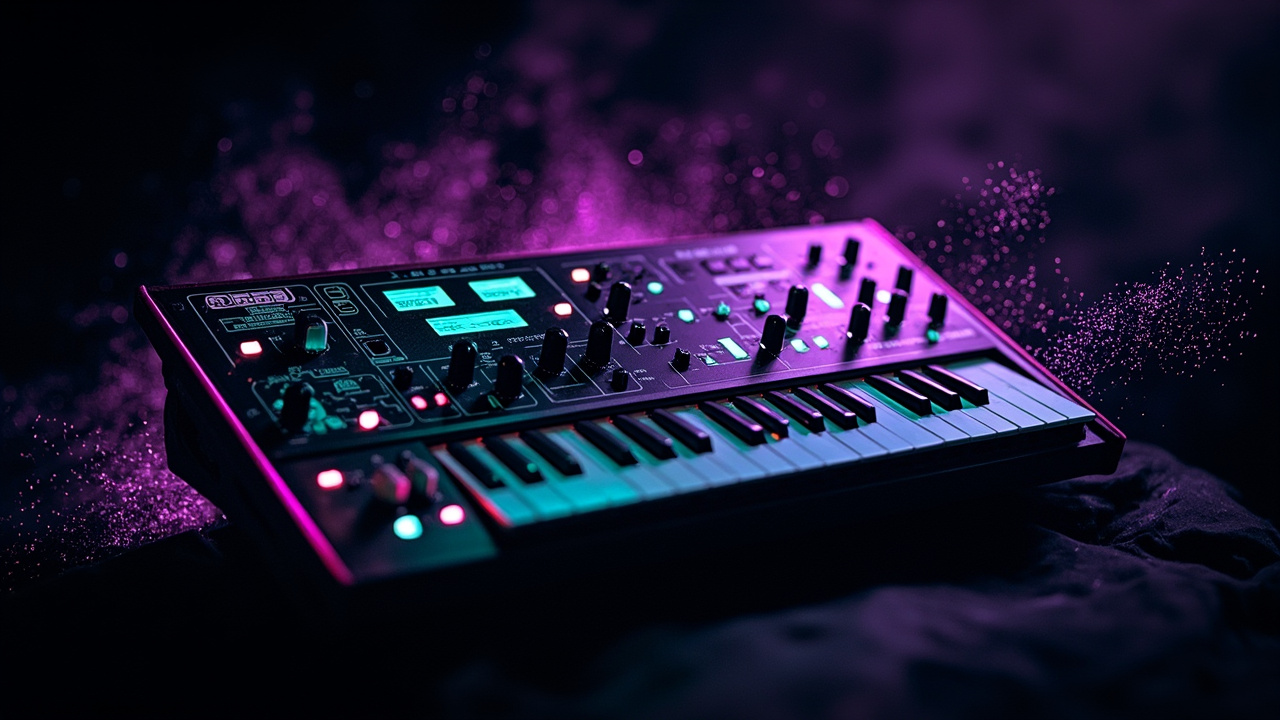
On September 27, 2026, a small music-hardware startup called Thoughtful Things opened a Kickstarter for its first instrument, and the pitch read like a deliberately inverted version of everything the AI music industry has been selling. Engram — the name is a nod to the memory-trace hypothesis in neuroscience — is a sampler and groovebox that uses a locally run neural audio model to mangle incoming audio and, in the company’s own words, “hallucinate” completely new sounds. It is not a push-button hit factory. It is a $675 box whose entire value proposition is controlled failure: sounds that only exist because a small model got something wrong in an interesting way.
What Engram actually is
Strip away the philosophy and Engram is a conventional sampler-groovebox wrapped around an unconventional engine. The hardware offers the workflow electronic musicians already know: record a sample via the stereo line input or the on-board lo-fi microphone, slice it, flip it, sequence patterns, and sync with the rest of a studio over MIDI and CV/gate. What is new is the “tiny AI” engine sitting in the signal path — an embedded neural audio codec that can warp, blend, and extend recordings, plus a sample-generation mode that produces short bursts of glitchy synthetic audio for the musician to capture and manipulate.
The company’s founder, Evan King, demonstrated the dynamic in the campaign video: he uses his voice to ask for “piano,” and Engram responds with something glitchy and vaguely piano-like rather than a clean instrument patch. His framing is “a field recorder for latent space” — the device is designed to be pointed at the interior of a neural network the way earlier generations pointed a microphone at a radiator or a broken walkie-talkie.
The most technically interesting feature is what Thoughtful Things calls model bending. The design reference is circuit bending, the analog tradition of deliberately short-circuiting toys, synths, and effects pedals to discover sounds the manufacturer never intended. Engram exposes the internals of its neural audio models as tweakable parameters, letting the user push them beyond their training distribution — and past the point of “correctness” — as an expressive control surface. It is, in effect, musique concrète with a neural substrate: the old-school practice of treating found sound as raw material, updated with a generative source that never repeats.
Tiny AI, big distinction
The company leans hard on a “tiny AI versus big AI” distinction, and it is more than marketing. Everything runs on the device; there is no internet connection, no companion app, and no subscription. The models are small enough to be trained on hardware “like gaming PCs,” which the company says keeps the carbon footprint minimal — a pointed contrast with datacenter-scale generative systems. And the firmware is planned to be open, with pluggable audio models that owners can create, share, and swap “just like old-school ROMplers.”
There is a candid origin story here as well. Engram began as a hobby project built on Meta AI’s MusicGen models, which were released for research purposes only. The commercial version ships with in-house models trained from scratch — a necessary substitution, since the prototype’s foundation could never legally underpin a product. Thoughtful Things is careful to note it is not affiliated with or endorsed by Meta.
The licensing moat
The most strategically loaded paragraph on the Kickstarter page has nothing to do with sound design. It is the training-data statement: “We’ve trained our audio models on open datasets that only contain audio licensed for commercial use (CC-BY or similar). We have not trained and will never train our models on non-commercial, pirated, or otherwise stolen data.”
That posture is a direct response to the legal weather over the rest of the AI music stack. In the same week Engram launched, Sony and UMG filed suit against Suno again over training data, and UMG separately sued DistroKid over alleged deceptive trade practices and copyright infringement. A hardware startup shipping a sub-$1,000 instrument cannot absorb venture-scale litigation, so a clean-license-only training claim is both an ethical position and a survival strategy. It also happens to be the beginning of a moat: as “trained on licensed data only” becomes a procurement requirement for studios and brands, the claim gets harder to retrofit.
The opposite of Suno
The category context matters. The mass-market end of AI music — full songs generated on demand from a text prompt — is now defined by lawsuits and platform risk. Engram sits at the other end: small, local, artist-facing hardware that produces raw material for a human to arrange, not finished tracks. The Verge’s Terrence O’Brien, reviewing the launch, was explicit that “this isn’t Suno in a box” and not aimed at “top-40 radio.”
The economics are correspondingly modest. The Kickstarter goal is $10,600, with the $675 early-bird pledge billed as a 30 percent discount off a retail price that pencils out to roughly $850–$900. The campaign runs all-or-nothing until October 27, 2026. Thoughtful Things has not disclosed unit economics, delivery timelines, or a production partner — the usual crowdfunding caveats apply, and backers are effectively funding a first production run from a company whose only public product is this campaign.
Why a “broken” model matters
There is a genuine technical argument buried in the marketing. Modern neural audio codecs and generative models are optimized to reconstruct and produce plausible sound; their failures are usually treated as defects to be minimized. Engram’s bet is that the failure boundary is where the interesting material lives — the uncanny, almost-piano textures that no sample library contains because no acoustic source produced them. Exposing that boundary as a playable, bendable interface is a different relationship to a model than prompting it: it treats the network as an instrument with a physical-feeling response, not an oracle.
It also reframes a debate the industry keeps having about “AI creativity.” Engram does not claim to write songs or replace musicians; it claims to be a source of happy accidents that a human curates. That is a defensible niche precisely because it is modest — and because it sidesteps the two existential risks currently battering AI music: copyright litigation over training data, and cultural rejection of machine-authored output.
Whether a market of experimental producers can support an $850 box at scale is the open question. But as a signal of where one corner of AI audio is heading — on-device, openly hackable, cleanly licensed, and selling imperfection rather than polish — Engram is one of the more conceptually complete launches of the season.
Disclosure note: figures in this article reflect the Kickstarter campaign as of launch day, September 27–28, 2026.
Sources
- [1] https://www.theverge.com/ai-artificial-intelligence/1001193/engram-sampler-ai-hallucinations-music
- [2] https://www.aichatdaily.com/ai-tools/thoughtful-things-launches-engram-ai-sampler-hallucinates-sounds
- [3] https://thoughtfulthings.ai/things/engram/
- [4] https://www.kickstarter.com/projects/evmaki/engram-generative-audio-sampler-and-groovebox