Lenders Pull Back as AI Data Center Backlash Threatens $130 Billion in Projects
A Reuters investigation reveals banks and asset managers are tightening data center financing as community opposition blocks record numbers of AI infrastructure projects across the United States.
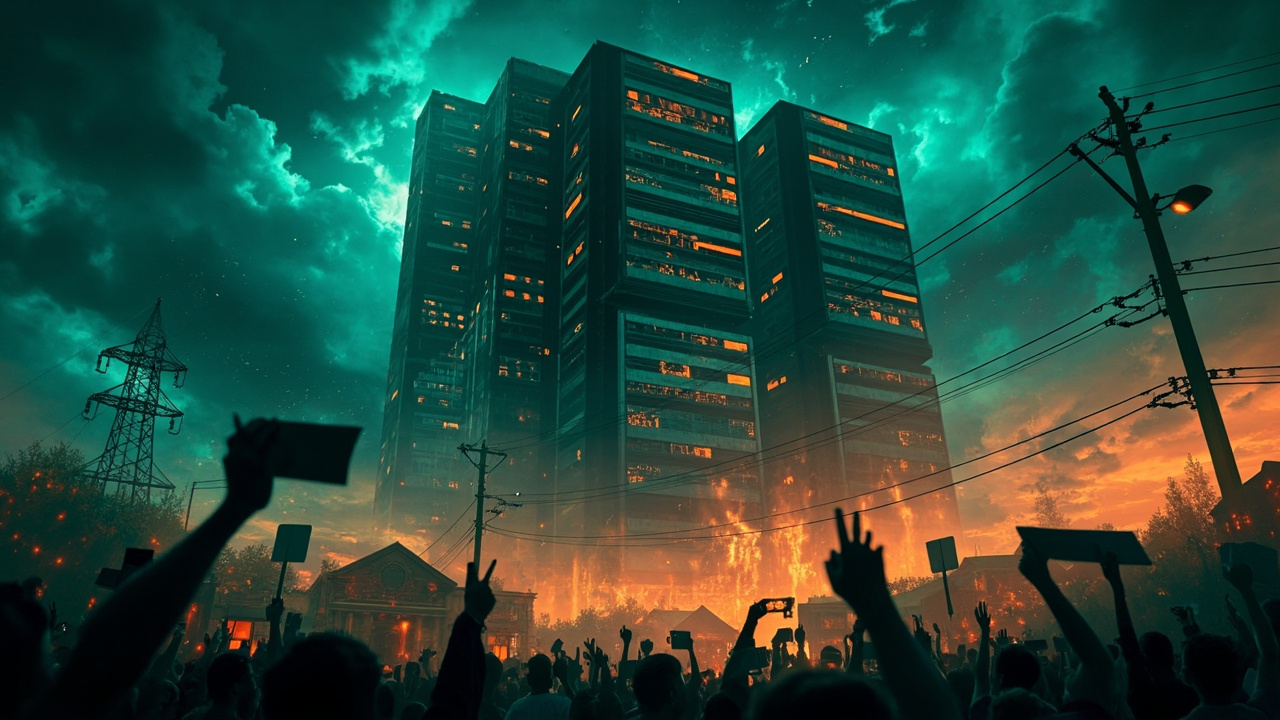
The Money Is Getting Nervous
A sweeping Reuters investigation published on August 10, 2026, exposes a fault line running through the AI economy: the financial institutions bankrolling the data center boom are growing wary. Banks and asset managers that once rushed to finance hyperscale AI facilities are now demanding stricter risk assessments, longer due diligence windows, and community-engagement contingencies before committing capital. The reason is simple and devastating — local opposition has blocked or delayed at least 75 AI data center projects worth an estimated $130 billion in the first quarter of 2026 alone, according to research firm Data Center Watch.
That figure is not a one-off. Between 2024 and May 2026, at least 46 AI data center projects across 20 states, totaling approximately $170 billion, were publicly delayed or canceled due to community pushback. The number of active community groups opposing new data center construction surged from 396 at the end of 2025 to 833 groups spread across 49 states by March 2026. What was once a fringe NIMBY complaint has crystallized into a nationwide political movement — and the money is taking notice.
Why Communities Are Fighting Back
The catalysts for opposition are multifaceted and increasingly well-documented. A Gallup poll conducted in May 2026 found that seven in ten Americans oppose the construction of an AI data center in their local area, with 48% expressing strong opposition. Only 14% of respondents in a separate Reuters/Ipsos survey said they would welcome a data center near their home. The concerns driving this sentiment are concrete:
Electricity demand. A single AI training facility can require 100 to 500 megawatts of continuous power — comparable to the electricity consumption of a small city. The Electric Power Research Institute (EPRI) projects that data centers will consume between 9% and 17% of all U.S. electricity by 2030, up from 4–5% today. This soaring demand is already pushing utility rates higher for ordinary residents in states like Virginia, Texas, and Georgia, where data center density is highest.
Water consumption. AI servers generate enormous heat, and the cooling systems that keep them operational consume millions of gallons of water per day. In drought-prone regions, this has become a particularly volatile issue.
Physical infrastructure strain. A Los Angeles Times report from August 6, 2026, revealed that AI power surges are physically damaging data center equipment — batteries, generators, and cooling systems are malfunctioning or wearing out far faster than expected, rattling the electrical grid operators who must keep pace.
Environmental and aesthetic concerns. Communities cite noise pollution from cooling fans, visual blight from massive windowless buildings, and the broader question of whether local residents bear all the costs while distant tech companies reap all the benefits.
The Financial Reckoning
The Reuters investigation zeroes in on how this opposition is cascading into the financial sector. Traditional banks, already constrained by lending limits on concentrated infrastructure exposure, face a new variable: projects that look viable on paper can be torpedoed by a zoning board vote or a community lawsuit filed months into construction. This political risk is difficult to price and increasingly difficult to insure against.
As a result, alternative financing structures are proliferating. Rule 144A offerings — private placements that bypass public markets — have become a critical funding mechanism for data center developers who cannot secure conventional bank loans. Private credit funds and sovereign wealth investors are stepping into the gap, but they too are demanding higher returns to compensate for the elevated risk profile.
The stakes are staggering. Reuters separately reported that Big Tech has accumulated over $1 trillion in data center lease obligations, a figure that underscores the tension between the AI industry’s infrastructure ambitions and the communities expected to host them. If even a fraction of these leases are delayed or voided by local opposition, the ripple effects could reshape the competitive landscape of AI compute.
Grid Capacity: The Hard Ceiling
Beyond financing and politics, a more fundamental constraint is emerging: there simply may not be enough electricity. Sightline Climate estimates that between 30% and 50% of AI data centers planned for U.S. deployment in 2026 will be delayed or canceled, primarily because power cannot be delivered to the sites on the timelines developers promised. America’s largest power grid, PJM Interconnection, is under enormous strain, and the interconnection queues for new generation projects now stretch years.
This has pushed tech giants into unconventional arrangements. Microsoft, Amazon, and Google have all signed agreements to purchase power directly from nuclear facilities, including the controversial restart of Three Mile Island Unit 1. Others are investing in behind-the-meter generation, on-site solar farms, and even floating offshore wind projects. But these solutions are expensive, slow to deploy, and face their own regulatory hurdles.
What This Means for the AI Race
The data center financing squeeze arrives at a precarious moment for the AI industry. The United States and China are locked in a fierce competition for AI supremacy, and compute capacity is the foundational resource. Every delayed facility represents lost training time, slower inference throughput, and a narrower competitive moat. Researchers at the Belfer Center have warned that AI-driven energy demand is outpacing available capacity, forcing companies to delay projects and contract power directly from private producers — a trend that could entrench the advantage of the largest, best-capitalized players.
Yet there is a policy dimension too. The Trump administration has issued executive orders aimed at accelerating data center permitting and overriding local opposition, framing AI infrastructure as a matter of national security. But the Reuters/Ipsos poll suggests this position may be politically risky: only a third of Americans approve of the current pace of data center construction, and the opposition cuts across party lines. Climate activists and state lawmakers have formed unlikely coalitions to resist projects, and data center opposition has become — in Reuters’ words — “one of the rare issues galvanizing voters across the political spectrum.”
The Path Forward
The collision between AI ambition and physical reality is intensifying. Solutions under discussion include locating data centers in remote areas with surplus power, developing more energy-efficient AI architectures, investing aggressively in grid modernization, and creating genuine community benefit agreements that share the economic upside with host communities. None of these are silver bullets, and all will take time.
What the Reuters investigation makes clear is that the era of frictionless AI infrastructure expansion is over. The financing community — the ultimate arbiter of what gets built — is internalizing that reality. For an industry accustomed to moving fast and assuming the world will adapt, the data center backlash is a humbling reminder that atoms, not just bits, have politics too.
Sources
- [1] https://www.reuters.com/legal/transactional/lenders-scrutinize-us-data-center-financing-community-opposition-builds-2026-08-10/
- [2] https://www.reuters.com/world/us/americans-are-angry-about-data-centers-politicians-are-feeling-pressure-2026-07-16/
- [3] https://news.gallup.com/poll/709772/americans-oppose-data-centers-area.aspx
- [4] https://www.brookings.edu/articles/data-center-backlash-signals-a-fight-over-ai-power/
- [5] https://www.nbcnews.com/tech/tech-news/data-center-opposition-sharply-rising-2026-study-finds-rcna349728
- [6] https://www.latimes.com/business/story/2026-08-06/ai-power-surge-is-frying-its-own-data-centers-rattling-grid
- [7] https://www.epri.com/research/products/000000003002034696