South Australia Launches Australia's First Royal Commission into AI
South Australian Premier Peter Malinauskas announced a $3 million royal commission into AI — Australia's first major public inquiry into the technology, with a stark warning of 'catastrophic societal costs' if it goes unchecked.
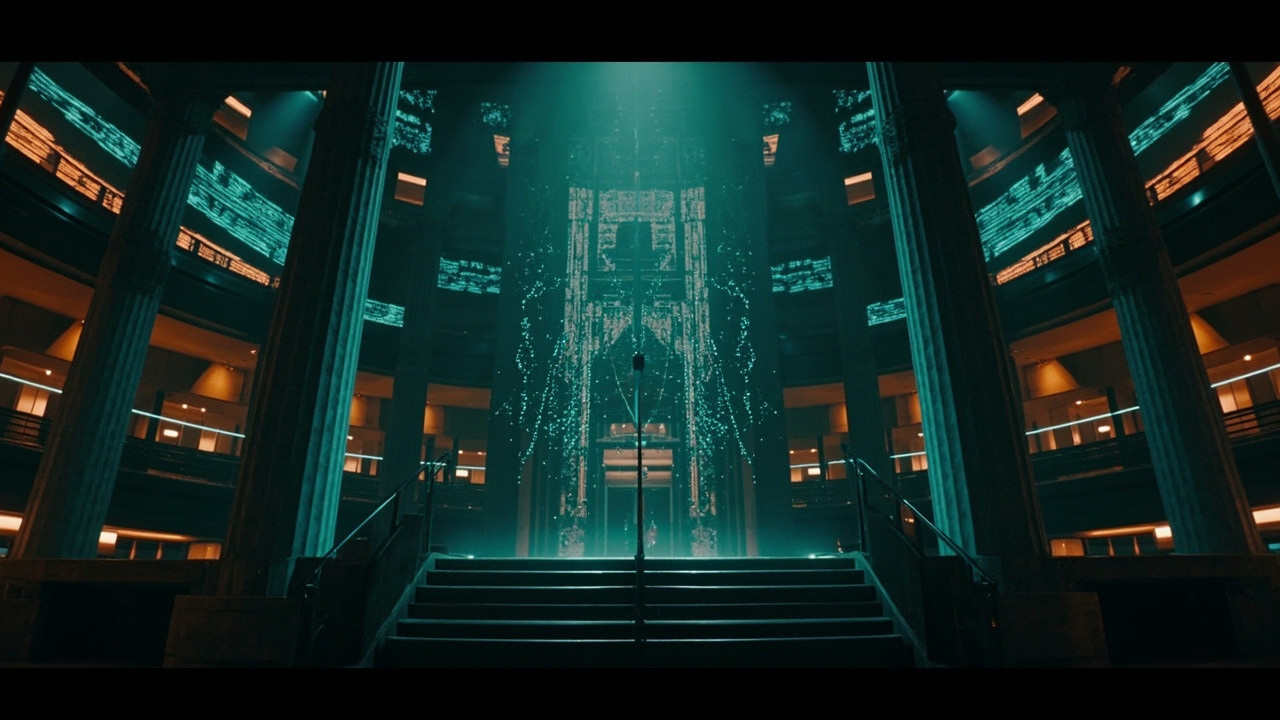
A “Fork in the Road” Moment
On August 10, 2026, South Australian Premier Peter Malinauskas stood before the press and declared that society was at a “fork in the road” when it comes to artificial intelligence. He then announced something no Australian government — state or federal — had ever done before: a Royal Commission into AI.
The inquiry, budgeted at over $3 million, will be staffed by three royal commissioners and is expected to begin on October 1, 2026. Its final report is due no later than July 1, 2027. It will examine how AI is already reshaping employment, education, health care, and the broader social fabric — and what governments should do about it.
The framing was unambiguous. The Australian Financial Review led with the headline: “Royal commission announced in race to stop AI going rogue.” Malinauskas himself warned of the “potential catastrophic societal costs” of AI if left unchecked, calling it a “material risk to the way society operates.”
Why South Australia?
At first glance, South Australia — a state of 1.8 million people known more for wine and defence manufacturing than tech regulation — seems an unlikely pioneer. But the announcement is the culmination of a deliberate, months-long strategy by the Malinauskas government to position SA at the centre of Australia’s AI conversation.
In May 2026, the premier elevated AI policy into a revamped economic “super-portfolio.” In June, the state released a data centre investment strategy aimed at attracting large-scale infrastructure projects. On August 8 — just two days before the royal commission announcement — Malinauskas returned from a whirlwind trip to the United States having signed a memorandum of understanding with OpenAI, making South Australia the first Australian state or territory to ink a direct agreement with the company behind ChatGPT.
The government is simultaneously investing on the ground: $8.1 million for an “AI career conversion” program designed to retrain more than 1,300 at-risk workers into AI-related roles, and $5.5 million to attract data centre jobs with potential projects worth up to $25 billion. The dual message is clear — embrace the economic upside, but prepare for the disruption.
The Economic Stakes
The royal commission lands against a backdrop of eye-popping economic projections. EY modelling released just days earlier estimated that AI could boost Australia’s GDP by between $95 billion and $116 billion over the next decade — a 2.6 to 3.2 percent uplift — while creating approximately 44,000 new jobs. The federal government’s 2026–27 budget earmarked up to $70 million for “AI Accelerator” grants. Westpac has estimated that Australia’s data centre investment pipeline alone will exceed $155 billion.
But the upside is paired with anxiety. Malinauskas singled out employment as the most immediate threat, warning that AI could rapidly displace workers across entire sectors. He painted a vivid picture of the intergenerational squeeze: “Younger workers will be competing for jobs not only against AI but against their own parents and grandparents.” The implication is that AI-driven productivity gains could keep older workers in the workforce longer while simultaneously eroding entry-level roles — a double bind for young people.
A Regulatory Vacuum
Perhaps the most striking context for the royal commission is how far behind Australia has fallen on AI regulation. Unlike the European Union, where the AI Act’s Article 50 transparency rules became enforceable on August 2, 2026 — requiring chatbots to self-identify, AI-generated content to carry machine-readable marks, and deepfakes to be clearly labeled, with penalties reaching €15 million or 3 percent of global turnover — Australia has no standalone AI legislation at all.
A widely shared comparison circulating on Australian social media put it bluntly: “The EU enforces fines up to €35 million for AI violations; Australia enforces zero penalties. Australia now has the least restrictive AI [regulatory environment] among developed nations.” The federal Productivity Commission has separately warned against over-regulating AI in the workplace, creating a tension that the royal commission will need to navigate.
This regulatory vacuum is precisely what the Malinauskas government wants to interrogate. Royal commissions in Australia carry significant legal weight — they can compel testimony, demand documents, and make binding recommendations that often shape legislation for decades. By launching one at the state level, South Australia is effectively forcing a national conversation that the federal government in Canberra has been reluctant to lead.
The Risk Evidence
The commission will have no shortage of evidence to draw on. A June 2026 University of Queensland study found that global AI experts judged there to be at least a 10 percent probability of catastrophic outcomes from AI over the next five years. Eighteen specific risks were identified as warranting serious concern. A separate UQ study from January 2026 revealed that Australia’s AI safety gap — the difference between the risks the public perceives and the risks that actually exist — was 4,000 times larger than previously estimated.
Public sentiment aligns. Survey data consistently shows that 80 percent of Australians would support a 10-year delay in advanced AI development if it reduced catastrophic risk from 5 percent to 0.5 percent. Australians ranked the prevention of “dangerous and catastrophic outcomes from AI” as the number one priority for government action — ahead of job protection, privacy, and economic competitiveness.
A Contradictory Embrace
What makes the royal commission particularly fascinating is its timing alongside the OpenAI deal. The same government that is now warning of AI’s “catastrophic societal costs” signed a strategic partnership with the world’s most prominent AI company 48 hours earlier. The MoU commits SA and OpenAI to “explore a strategic partnership that develops AI skills, accelerates local innovation, attracts global investment, and supports public services.”
Malinauskas defended this apparent contradiction by framing both moves as part of a single strategy: engage deeply with AI to understand it, regulate it intelligently, and capture its benefits — rather than pretending it will go away. Whether that balancing act holds up under the scrutiny of a royal commission remains to be seen.
What Happens Next
The three commissioners — not yet named as of the announcement — will have broad scope to examine AI’s impact across every facet of South Australian life. The inquiry’s terms of reference are expected to cover workforce transition, educational disruption, health care applications, creative industries, public sector deployment, and the ethical guardrails needed to prevent harm.
With a reporting deadline of mid-2027, the commission’s findings could arrive just as the next federal election cycle heats up — potentially injecting concrete, evidence-based AI policy recommendations into national politics for the first time.
For a country that has watched from the sidelines as the EU, the UK, and the United States have wrestled with AI governance, South Australia’s royal commission may be the catalyst that finally forces Australia to decide which fork in the road it will take.
Sources
- [1] https://www.afr.com/technology/royal-commission-announced-in-race-to-stop-ai-going-rogue-20260810-p60n2d
- [2] https://www.sbs.com.au/news/article/australia-is-getting-its-first-major-inquiry-into-ai-its-starting-in-south-australia/xmpt3koiy
- [3] https://www.adelaidenow.com.au/news/south-australia/south-australia-launches-nationleading-royal-commission-into-artificial-intelligence/news-story/639c6195310431ce6d92f3b161ab9145
- [4] https://www.theguardian.com/australia-news/live/2026/aug/10/australia-news-live-transport-minister-sydney-airport-air-traffic-control-catherine-king-aukus-public-inquiry-malcolm-turnbull-alan-jones-trial-ntwnfb
- [5] https://www.news.com.au/technology/online/south-australia-announced-huge-3m-royal-commission-into-ai/news-story/1ab11f2272775fa0747b178749455663
- [6] https://www.adelaidenow.com.au/business/south-australia/openai-signs-memorandum-of-understanding-with-sa-government/news-story/b0ad1202e094b6de593b156fc129727c
- [7] https://www.ey.com/en_au/insights/economics/the-economic-upside-of-ai-for-australia
- [8] https://news.uq.edu.au/2026-06-global-experts-assess-risk-ai-catastrophes
- [9] https://news.uq.edu.au/2026-01-australias-ai-safety-gap-4000-times-bigger-you-think
- [10] https://www.theaustralian.com.au/nation/south-australia/malinauskas-signs-mou-at-openai-headquarters/news-story/1bc871c1eb3bd8f0af84f413af80a079