SK Hynix Bets $38 Billion on Two New AI Memory Fabs as 2027 Shortage Looms
SK Hynix will invest 54 trillion KRW ($38.1B) in new DRAM and NAND fabs in Yongin and Cheongju, racing to close an AI-driven memory gap its CEO calls the worst shortage in the industry's history.
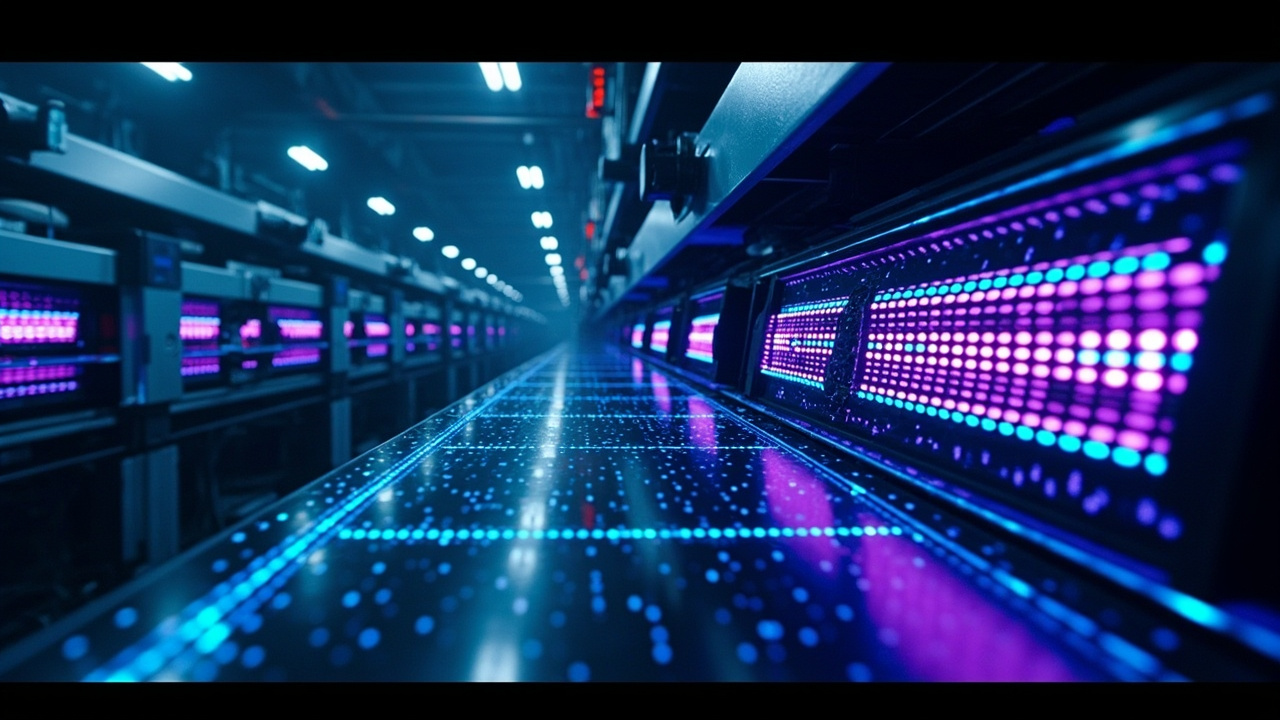
On August 7, 2026, SK Hynix — the South Korean memory chipmaker that has become the indispensable supplier behind the global AI boom — announced it will invest 54 trillion Korean won (approximately $38.1 billion) to build two new semiconductor fabrication plants. The decision arrives at a moment when demand for AI memory, particularly High Bandwidth Memory (HBM), is straining the industry’s production capacity to its limits and beyond.
The investment is not a speculative bet. It is a direct response to what SK Hynix’s own leadership describes as an historic crisis in the making.
The Two Fabs: Y2 and M17
The investment is split across two sites that represent the backbone of SK Hynix’s long-term capacity strategy:
-
Y2 in Yongin (35.2 trillion KRW / ~$24.8B): A massive new DRAM fabrication plant located in Yongin, south of Seoul. Yongin is already home to SK Hynix’s cluster of advanced semiconductor facilities, and Y2 will be dedicated to next-generation DRAM production — the foundational technology that feeds into HBM stacks used in AI accelerators like Nvidia’s GPUs.
-
M17 in Cheongju (19.1 trillion KRW / ~$13.4B): A new NAND flash fabrication plant in Cheongju, the company’s other major manufacturing hub. NAND flash remains critical for AI infrastructure, powering the high-capacity storage layers in data centers that train and serve large language models.
Production at the new facilities will not begin until 2028 and 2029 respectively, with the full investment deploying sequentially through October 2031. That timeline means these fabs will do nothing to ease the current chip shortage — they are aimed at the structural deficit that SK Hynix expects to persist through the end of the decade.
The 2027 Crisis That Triggered the Buildout
The announcement is inseparable from a series of stark warnings from SK Hynix’s leadership. On July 10, 2026, CEO Kwak Noh-Jung told investors that 2027 would represent “the worst supply shortage in the memory industry’s history,” with demand forecast to exceed production capacity well beyond 2030.
The shortage is driven by a single force: AI. Every major AI accelerator — from Nvidia’s Hopper and Blackwell successors to custom silicon from Google, Amazon, and Microsoft — depends on HBM to feed data into compute cores at the speeds required for large-model training and inference. SK Hynix is the dominant HBM supplier, holding an estimated 51% market share in 2026. Major customers are reportedly reserving supply years in advance, locking up capacity before it even comes off the production line.
The result is an unusual inversion. Normally, chipmakers build capacity to chase projected demand. In this cycle, the demand is already spoken for — SK Hynix is building to fulfill commitments it has already made.
Record Earnings, Disappointed Investors
The fab announcement came just days after SK Hynix reported its Q2 2026 financial results, which underscored both the company’s extraordinary position and the market’s increasingly demanding expectations:
- Revenue: 79.32 trillion KRW (~$54.6 billion), up 257% year-over-year and 51% sequentially from Q1 2026.
- Operating profit: 60.54 trillion KRW (~$41.6 billion), up 557% year-over-year, with an operating margin of 76%.
- Net profit: 93.92 trillion KRW.
These are numbers that would have been considered physically impossible for a memory company just two years ago. Yet the stock fell roughly 10% on the earnings report because revenue came in below an analyst consensus of approximately 84 trillion KRW, and operating profit fell short of the ~64 trillion KRW forecast.
The market’s reaction reveals something important about the psychology of the AI hardware trade. Investors have priced in not just growth but perfection — and anything short of a blowout is treated as a disappointment. The $38 billion fab investment, in that context, reads as SK Hynix’s answer to the skeptics: the company is putting capital to work to prove the supercycle is structural, not cyclical.
The Broader Capacity Buildout
Y2 and M17 are not standalone projects. They are part of SK Hynix’s previously announced commitment to invest 1,100 trillion KRW across Yongin, Cheongju, and a new Southwestern semiconductor cluster — a plan that envisions building four or more new fabs and tripling memory wafer capacity within five years. The company has also raised $26.5 billion in capital to fund the expansion.
SK Hynix’s competitors are moving in parallel. Samsung has accelerated its own HBM4 roadmap and reportedly achieved yields of 80% on its latest HBM4 batches, while Micron is expanding HBM production in the United States. But SK Hynix’s combination of technical leadership, customer lock-in, and now the largest single fab investment in its history gives it a structural advantage that will be difficult to close.
Why This Matters for AI
The implications extend well beyond the semiconductor industry. If SK Hynix’s CEO is right that 2027 will bring the worst memory shortage in history, then the bottleneck for AI progress is shifting from compute to memory. You can build all the GPU dies you want — if there are not enough HBM stacks to package alongside them, the accelerators cannot ship.
This means that the pace of AI model development, the rollout of AI infrastructure, and ultimately the economics of every AI-dependent product are now partly determined by how fast SK Hynix and its peers can pour concrete, install lithography equipment, and bring fabs online. The $38 billion announced this week is a down payment on the AI industry’s ability to keep growing at its current trajectory.
For the companies building AI systems — OpenAI, Anthropic, Google, Meta, and hundreds of startups downstream — the message from SK Hynix is both reassuring and sobering. Reassuring, because the supply chain is responding with historic investment. Sobering, because even with that investment, the memory shortage will likely define the AI hardware landscape for the next four years.
The fabs announced on August 7 will not produce their first wafers until 2028 at the earliest. Until then, the race for AI memory continues.
Sources
- [1] https://news.skhynix.com/en/fab-facility-investment-2026/
- [2] https://www.cnbc.com/2026/08/07/sk-hynix-38-billion-memory-chip-prices.html
- [3] https://www.wsj.com/tech/sk-hynix-38-billion-south-korea-investment-ecd4
- [4] https://news.skhynix.com/en/q2-2026-business-results/
- [5] https://www.reuters.com/world/asia-pacific/sk-hynix-ceo-sees-worst-memory-shortage-2027-demand-outstrip-supply-beyond-2030-2026-07-10/
- [6] https://www.reuters.com/world/asia-pacific/sk-hynix-record-profit-misses-forecasts-shares-slump-10-2026-07-28/
- [7] https://news.skhynix.com/en/fact-05/
- [8] https://www.tomshardware.com/pc-components/dram/sk-hynix-double-memory-wafer-capacity-five-years
- [9] https://au.investing.com/analysis/sk-hynix-q2-2026-ai-memory-supercycle-hbm4-drives-record-quarter-5766