Stanford Researchers Create First AI-Designed Viruses Using Evo 2 Genome Models
A Stanford–Arc Institute team used generative AI models Evo 1 and Evo 2 to design 16 fully functional synthetic bacteriophages — the first time AI has written viable viral genomes from scratch.
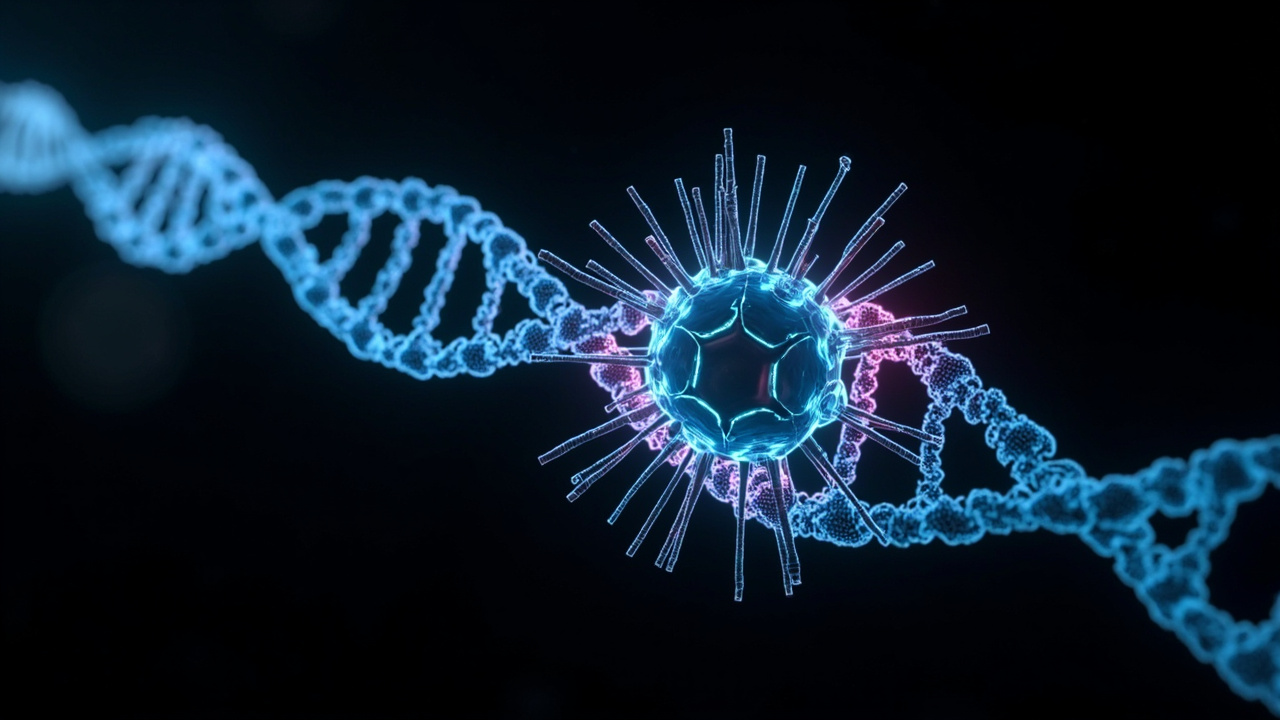
A Milestone in Generative Genomics
In a result that bridges artificial intelligence and synthetic biology, researchers at Stanford University and the Arc Institute have used generative AI to write the genomes of entirely new bacteriophages — viruses that exist nowhere in nature — and then brought those viruses to life in the laboratory. The work, led by Dr. Brian Hie and published on the preprint server bioRxiv before peer-reviewed publication, marks the first time a machine learning model has produced complete, functional viral genomes that successfully replicate when introduced to living cells.
The team leveraged two frontier genome language models, Evo 1 and Evo 2, which were trained on vast repositories of DNA sequence data. Unlike protein-focused models such as AlphaFold or ESMFold, Evo models operate at the level of entire genomes, treating DNA sequences much as a large language model treats text — learning the “grammar” and “syntax” of genetic code to generate novel, coherent sequences. The researchers prompted the models to design new phage genomes modelled on the well-characterized bacteriophage ΦX174, a virus with a compact 5,386-nucleotide genome that has served as a workhorse in molecular biology for decades.
From Digital Sequence to Living Virus
The experimental pipeline was deceptively straightforward in concept but extraordinarily ambitious in execution. The Evo models generated thousands of candidate genome sequences. From this pool, the researchers selected approximately 300 of the most promising designs. These digital genomes were then chemically synthesized — the actual DNA molecules were built nucleotide by nucleotide in the laboratory — and the resulting genetic material was introduced to cultures of Escherichia coli bacteria.
The results were striking. Of the roughly 300 synthesized genomes, 16 produced viable bacteriophages capable of infecting E. coli and — critically — replicating themselves. That is a success rate of roughly 5–6 percent, modest by some standards but remarkable for a first-of-its-kind demonstration. These were not copies of known phages. They were novel designs, sharing structural and functional properties with natural phages but containing genome sequences that have never been observed in the wild. In some cases, the AI-designed phages were effective against E. coli strains that had proven resistant to natural bacteriophages, suggesting the generative approach can produce solutions evolution has not yet explored.
Why Bacteriophages?
Bacteriophages — or simply “phages” — are viruses that exclusively infect bacteria. They are the most abundant biological entities on Earth, with an estimated 10³¹ phages on the planet at any given time. They do not infect humans, animals, or plants. This specificity makes them attractive candidates for phage therapy, a century-old idea that has gained renewed urgency as antibiotic resistance spreads. The World Health Organization has repeatedly warned that antimicrobial resistance is one of the top global public health threats, with drug-resistant infections killing millions annually.
Phage therapy offers a precision weapon: a phage that targets a specific bacterial pathogen can eliminate it while leaving the rest of the microbiome intact. The problem has always been discovery. Finding the right phage for a given infection is a laborious, slow process of isolation and screening. Generative AI could collapse that timeline dramatically. Instead of searching nature for a phage that happens to work, clinicians could one day design one on demand, tailored to the specific bacterial strain causing an infection — including antibiotic-resistant superbugs.
The Evo Model Family
The Evo models represent a distinct branch of AI development. While most generative AI attention has focused on large language models for text, image models for visual content, and protein structure predictors for biochemistry, genome-scale language models operate on an entirely different scale and with different constraints. DNA is written in a four-letter alphabet — A, C, G, T — but a single bacterial genome can contain millions of these letters, and arranging them correctly is the difference between a functional organism and cellular debris.
Evo 2, the larger of the two models used in this study, was trained on genomic data spanning the entire tree of life, from bacteria to humans. It learned the statistical patterns that distinguish a functional genome from random noise. Crucially, for this work, the researchers deliberately excluded human, animal, and plant pathogen sequences from the training data — a safety measure designed to limit the model’s ability to generate genomes that could threaten humans or agriculturally significant organisms.
Biosecurity in the Spotlight
Despite these precautions, the research has triggered a vigorous biosecurity debate. The Guardian headline captured the anxiety: “Safety fears as scientists make first viruses designed by AI.” The concern is not about the phages themselves — bacteriophages are harmless to humans — but about the precedent and the dual-use implications of the underlying technology.
If an AI model can design a functional virus from scratch, could a similar model, trained on different data, design a human pathogen? The Stanford team and independent biosecurity experts acknowledge the risk is real, if distant. The technical barriers remain substantial: human pathogens have larger and more complex genomes than phages, and models trained only on non-pathogenic data have limited capacity to generate dangerous sequences. But the trajectory is clear — as genome models grow more capable and training datasets expand, the gap between “could” and “can” will narrow.
Experts in synthetic biology governance have called for several measures: mandatory safety filtering in genome generation models, restrictions on training data, strengthened DNA synthesis screening protocols, and international coordination on AI-biosecurity standards. The current landscape is fragmented. While some DNA synthesis providers voluntarily screen orders for dangerous sequences, there is no universal requirement to do so.
Broader Implications for AI-Driven Science
The phage work is part of a larger trend: AI is increasingly moving from analysis to generation in the life sciences. AlphaFold predicted protein structures; Evo generates genomes. The next frontier may be AI models that can design entire synthetic organisms, metabolic pathways, or therapeutic molecules from scratch. This generative capability could revolutionize medicine, agriculture, and materials science — but it also concentrates enormous power in the hands of anyone with access to the models.
The Genesis Mission, the US government’s $5 billion initiative to embed AI across federal science agencies, explicitly targets AI for scientific discovery as a national priority. Work like the Stanford phage study validates that bet: AI is not just accelerating existing research workflows, it is enabling entirely new categories of scientific output that were previously impossible.
What Comes Next
The Stanford and Arc Institute team is already extending the work. Larger and more complex phage genomes are on the roadmap, as are models fine-tuned to target specific clinically relevant bacterial pathogens. Clinical applications, however, remain years away — phage therapy faces regulatory hurdles, manufacturing challenges, and the need for rigorous safety testing in humans.
In the nearer term, the research demonstrates a proof of concept that will resonate across the AI and biology communities. Generative models can write life. The question now is not whether this technology will advance, but how quickly, and whether our governance frameworks can keep pace.
For now, the 16 AI-designed phages sit in laboratory freezers — modest viruses that kill bacteria, built from code that no human wrote and no nature produced. They are a small milestone with enormous implications: the first artifacts of a new era in which intelligence, artificial and otherwise, designs the building blocks of life itself.
Sources
- [1] https://news.stanford.edu/stories/2026/08/evo-2-ai-tool-e-coli-killer-bacteriophages
- [2] https://cen.acs.org/biological-chemistry/genomics/ai-program-designs-new-bacteriophages/104/web/2026/08
- [3] https://www.theguardian.com/science/2026/aug/06/safety-fears-as-scientists-make-first-viruses-designed-by-ai
- [4] https://www.ft.com/content/5ab33fb4-2636-4bb0-aa0e-3da6a8f71838
- [5] https://www.biorxiv.org/content/10.1101/2025.09.12.675911v1
- [6] https://www.abc.net.au/news/2026-08-07/ai-models-design-viruses-not-found-in-nature-for-first-time/107007854
- [7] https://www.axios.com/2026/08/06/ai-virus-designed-bacteria-viruses