Microsoft Gears Up to Unveil Maia 300 AI Chip in Bid to Cut Nvidia Dependency
Microsoft is preparing to publicly unveil its next-generation Maia 300 AI inference chip this fall, with talks underway for over 300,000 units from TSMC for 2027 delivery.
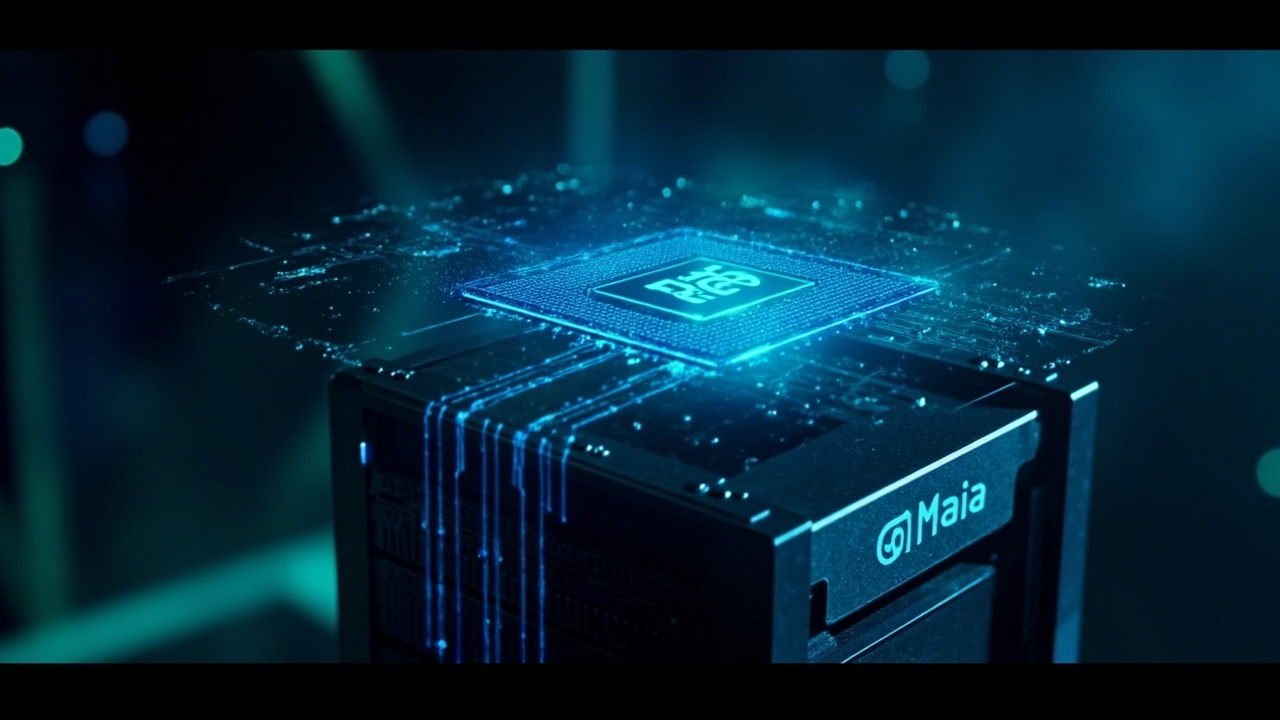
Microsoft is preparing to publicly unveil its next-generation Maia 300 AI inference accelerator this fall—potentially as soon as September 2026—marking the most aggressive step yet in the company’s sustained campaign to reduce its multibillion-dollar reliance on Nvidia GPUs. According to a report published by The Information on August 10, 2026, Microsoft has been in active talks with TSMC to secure manufacturing capacity for more than 300,000 Maia 300 units, with delivery targeted for 2027.
The news signals that Microsoft’s homegrown silicon program, once viewed as a slow-moving side project, is now gathering serious industrial momentum.
From Slow Start to Strategic Cornerstone
Microsoft’s in-house chip effort has not always enjoyed a reputation for speed. As recently as mid-2025, industry analysts noted that the company’s custom AI silicon roadmap was “significantly delayed more than expected,” with mass production timelines slipping and questions swirling about whether Microsoft could meaningfully compete with the incumbent GPU giants. The Maia 200—the direct predecessor to the upcoming Maia 300—was originally slated for earlier deployment before facing delays that pushed its production into 2026.
But the narrative has shifted decisively. When Microsoft officially launched the Maia 200 on January 26, 2026, it framed the chip as “the most performant, first-party silicon from any hyperscaler.” Built on TSMC’s 3-nanometer process node with over 140 billion transistors, the Maia 200 packs 216 GB of HBM3e memory delivering 7 TB/s of bandwidth alongside 272 MB of on-chip SRAM. Microsoft claimed it delivers over 10 petaFLOPS at FP4 precision and more than 5 petaFLOPS at FP8, while offering 30% better performance per dollar than the latest existing Azure hardware.
That launch repositioned the Maia program from a speculative bet into a strategic cornerstone of Microsoft’s infrastructure strategy. Now, the Maia 300 looks to build on that foundation at a dramatically larger scale.
The 300,000-Unit Ambition
The sheer volume under discussion is striking. Securing manufacturing capacity for over 300,000 Maia 300 chips from TSMC would represent one of the largest custom-silicon production commitments ever undertaken by a cloud provider. For context, Microsoft’s current deployment of Maia 200 chips, while significant, is a fraction of that number. The 300,000-unit figure suggests Microsoft envisions a future where a substantial portion of its AI inference workloads—those running the models that power Copilot, Azure OpenAI Service, and Microsoft’s own MAI model family—run on silicon it designs and controls.
CEO Satya Nadella has made reducing dependence on Nvidia a stated priority. Speaking recently about the economics of in-house silicon, Nadella revealed that running Microsoft’s own MAI models on custom Maia chips yields up to 40% better performance per watt compared to running on third-party GPUs. That efficiency translates directly into lower operating costs—an increasingly critical factor as inference, rather than training, comes to dominate AI infrastructure spending. Microsoft’s CTO has gone further still, reportedly expressing a desire to eventually swap the majority of the company’s AMD and Nvidia GPUs for homemade accelerators, with the pivot hinging on the success of next-generation Maia hardware.
The TSMC Dependency Wrinkle
There is, however, a notable irony in Microsoft’s independence push. While the company is determined to reduce its dependence on Nvidia for chip design, it remains deeply dependent on TSMC to actually manufacture those chips. TSMC’s 3nm process is the same cutting-edge node used for the Maia 200, and securing hundreds of thousands of units of advanced silicon requires locking in fab capacity years in advance—a process that places Microsoft in direct competition with Apple, Nvidia, AMD, and other TSMC customers for the foundry’s finite output.
This dynamic means Microsoft is trading one form of supplier dependency for another. It gains control over chip architecture, specifications, and pricing flexibility, but it does not achieve true vertical integration. The strategy works only as long as TSMC can deliver, and as long as the foundry’s capacity keeps pace with the explosive demand from every major AI player simultaneously.
Why Inference, Not Training, Is the Battleground
Microsoft’s Maia chips are designed first and foremost as inference accelerators—not training accelerators. This is a deliberate strategic choice that reflects where the economics of AI compute are heading. Training frontier models requires massive bursts of compute concentrated over weeks or months, a workload where Nvidia’s Hopper and Rubin architectures and their high-bandwidth interconnects remain dominant. But inference—the ongoing process of generating responses from already-trained models—is a continuous, high-volume operation that runs every second of every day across millions of user queries.
As models like GPT-5.6 and Microsoft’s own MAI series scale to serve billions of daily interactions, inference costs have become the single largest line item in AI infrastructure budgets. A chip that delivers even modest efficiency gains at inference scale can save hundreds of millions of dollars annually. The Maia 300, if it improves on the Maia 200’s already strong efficiency story, could materially reshape Microsoft’s cost structure for years to come.
What to Watch
The Maia 300 unveiling, expected this fall, will be closely watched for several key details: the chip’s process node (whether Microsoft sticks with 3nm or jumps to TSMC’s newer 2nm class), its memory configuration, performance benchmarks against Nvidia’s latest offerings, and—critically—real-world deployment timelines. Microsoft’s history of delays means that a chip unveiled in September 2026 may not reach meaningful production scale until well into 2027.
The broader implication extends beyond Microsoft. If the Maia 300 delivers on its promise, it will reinforce a clear industry trend: the major hyperscalers—Microsoft, Google with its TPU line, Amazon with Trainium, and Meta with its in-house accelerators—are all racing to build custom silicon that frees them from Nvidia’s pricing power. Nvidia still dominates training and retains enormous influence, but the inference battleground is wide open, and Microsoft is now one of the most committed combatants.
For the AI industry, Microsoft’s Maia 300 represents more than just another chip. It is a bet that the future of AI infrastructure will be defined not by who can buy the most GPUs, but by who can design the most efficient silicon for the workloads that actually generate revenue. If the 300,000-unit production target holds, that bet is about to get very real.
Sources
- [1] https://money.usnews.com/investing/news/articles/2026-08-10/microsoft-plans-to-unveil-its-new-maia-300-ai-chip-this-fall-the-information-reports
- [2] https://www.theinformation.com/articles/microsofts-homegrown-ai-chip-effort-shows-signs-life-slow-start
- [3] https://www.cryptopolitan.com/microsoft-maia-300-chip-september-reveal/
- [4] https://qz.com/microsoft-maia-300-ai-chip-unveil-fall-tsmc-081026
- [5] https://windowsforum.com/windows-news.4/microsoft-maia-300-300-000-azure-ai-chips-reported-for-2027.442237/
- [6] https://blogs.microsoft.com/blog/2026/01/26/maia-200-the-ai-accelerator-built-for-inference/