Singapore Raises 2026 Growth Forecast to 5.5% as AI Investment Boom Defies Global Headwinds
Singapore upgraded its 2026 GDP growth forecast from 2-4% to 4.5-5.5% as AI-driven semiconductor and electronics demand powered Q2 growth to 5.9% — even as its central bank warns the boom may be unsustainable.
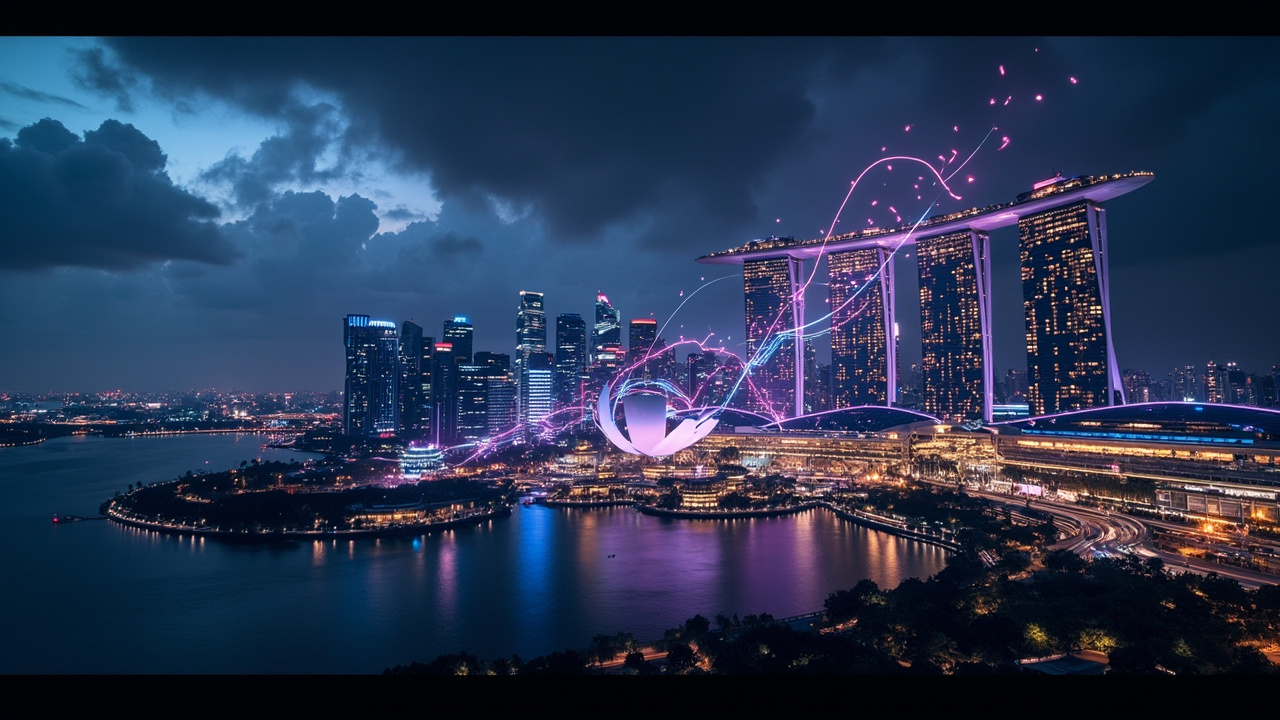
Singapore’s Ministry of Trade and Industry (MTI) delivered a striking vote of confidence in the artificial intelligence economy on August 11, 2026, raising the city-state’s full-year GDP growth forecast from 2.0–4.0% to 4.5–5.5%. The dramatic upward revision — among the largest single forecast upgrades in Singapore’s recent history — underscores how the global AI investment boom is rewriting economic expectations for nations positioned at the chokepoints of the semiconductor and data center supply chain.
The Numbers Behind the Upgrade
The forecast boost was anchored by second-quarter data that exceeded nearly every expectation. Singapore’s economy expanded 5.9% year-on-year in Q2 2026, revised up from the government’s own advance estimate of 5.7% and above the median economist forecast of 5.8%. First-half GDP growth came in at an even stronger 6.1% year-on-year, driven overwhelmingly by AI-related demand cascading through the manufacturing sector.
Manufacturing led the charge with a staggering 12.2% expansion, its strongest showing in recent quarters. Within that sector, electronics and precision engineering — the twin pillars of Singapore’s semiconductor ecosystem — were the primary engines. The country hosts critical fabrication, assembly, and testing operations for global chipmakers, and the surging demand for AI accelerators, high-bandwidth memory, and advanced packaging services has translated directly into record output.
Singapore’s non-oil domestic exports (NODX), a key barometer of trade health, surged 27.4% in the second quarter. Electronics NODX was particularly explosive: in June alone, electronic exports grew 105.1% year-on-year, building on a 94.8% increase in May. Enterprise Singapore subsequently upgraded its full-year NODX forecast to 14–16% growth, a dramatic increase from the previous 3–5% range that itself had been revised upward earlier in the year.
Why Singapore Is the AI Economy’s Quiet Winner
Singapore’s outsized benefit from the AI boom is no accident. The nation has spent decades cultivating a position as a critical node in the global semiconductor value chain — not as a headline chip designer like Taiwan’s TSMC or the United States’ Nvidia, but as an indispensable partner in packaging, testing, and specialized manufacturing. When Nvidia, AMD, and Broadcom ship their latest AI accelerators, many of those chips pass through Singapore’s industrial parks before reaching data centers worldwide.
Beyond semiconductors, Singapore has positioned itself as Asia’s premier hub for AI data center infrastructure. Major hyperscalers — Microsoft, Google, Amazon Web Services, and Meta — operate massive facilities in the city-state, drawn by its reliable power grid, political stability, favorable tax regime, and strategic location at the crossroads of Asian internet traffic. The AI compute buildout has poured billions in capital expenditure into construction, equipment, and services, creating a multiplier effect across the domestic economy.
The Monetary Authority of Singapore (MAS), the country’s central bank, noted in late July that the positive output gap — the extent to which actual GDP exceeds potential GDP — is now forecast to widen to 0.7% of potential GDP in 2026. This means Singapore’s economy is running above its sustainable capacity, a condition that historically signals building inflationary pressure.
The Central Bank’s Cautionary Counterpoint
While the headline numbers paint a picture of unbridled optimism, Singapore’s own central bank has struck a notably cautious tone — one that stands in stark contrast to the growth celebration. MAS Managing Director Chia Der Jiun used a July 28 briefing to explicitly flag the AI investment boom as a “major uncertainty” for both Singapore and the global economy.
The concern is twofold. First, there is growing skepticism about whether the massive capital being deployed into AI infrastructure — projected to exceed $500 billion globally in 2026 — will generate commensurate returns. “The returns on investments in AI are uncertain, while the costs of energy and chips have been climbing,” Chia warned. If those returns fail to materialize, the investment cycle could reverse sharply.
Second, MAS flagged the boom-bust risk more directly: a pullback in AI investments “could sharply weaken global growth.” The Financial Times reported that Singapore’s central bank considers the sustainability of AI spending to be a key risk to global financial stability — a remarkable assessment from an institution known for its measured, data-driven commentary.
This creates a paradox at the heart of Singapore’s upgraded forecast: the very boom driving unprecedented growth is also identified by the country’s most senior monetary officials as the single largest threat to its continuation.
Regional and Global Implications
Singapore’s experience is becoming a template for understanding how the AI economy reshapes national fortunes — and a warning about its volatility. The country’s upgrade from a modest 2–4% to a roaring 4.5–5.5% growth trajectory in a single revision illustrates the non-linear impact AI investment can have on trade-exposed economies.
Other Southeast Asian nations are watching closely. Malaysia and Vietnam, both expanding their semiconductor manufacturing bases, have reported similar AI-driven trade tailwinds. But Singapore’s uniquely deep integration into both the chip supply chain and the data center ecosystem gives it a dual exposure that amplifies both the upside and the downside.
The upgrade also carries geopolitical significance. At a time when the United States and China are locked in an escalating technology decoupling — with export controls on advanced chips, competing semiconductor industrial policies, and divergent AI governance frameworks — Singapore’s ability to serve as a neutral, trusted intermediary in the global AI supply chain has become a strategic asset. Its growth is, in part, a dividend of being the place where American, Chinese, and European technology interests can all do business.
What Comes Next
MTI’s upgraded forecast assumes that AI investment momentum continues through the second half of 2026. If the third and fourth quarters deliver growth consistent with the first half, Singapore will record its strongest annual economic performance in over a decade — powered not by financial services or tourism, its traditional growth drivers, but by the physical infrastructure of artificial intelligence.
Yet the risks remain real. MAS has warned that if the global AI investment cycle cools — whether due to disappointing model performance, regulatory crackdowns, energy constraints, or a broader macroeconomic slowdown — Singapore’s export-driven economy would be among the first to feel the chill. The 27.4% NODX surge could reverse as quickly as it arrived.
For now, though, Singapore is the clearest example of a national economy directly enriched by the AI revolution. The numbers speak for themselves: 5.9% Q2 growth, 12.2% manufacturing expansion, triple-digit electronics export growth, and a forecast upgrade that few would have imagined at the start of the year. Whether this trajectory is sustainable — or the leading edge of a bubble — remains the defining economic question of the AI era.
Sources
- [1] https://www.businesstimes.com.sg/singapore/singapore-raises-2026-growth-forecast-4-5-5-5-q2-growth-revised-5-9
- [2] https://www.channelnewsasia.com/singapore/economy-gdp-forecast-mti-growth-6310711
- [3] https://www.freemalaysiatoday.com/category/business/2026/08/11/singapore-raises-growth-forecast-to-as-high-as-5-5-on-ai-boom
- [4] https://business.financialpost.com/pmn/business-pmn/ai-boom-set-to-drive-singapore-growth-as-high-as-5-5-this-year
- [5] https://www.straitstimes.com/business/singapores-key-exports-rise-27-4-in-q2-as-ai-lifts-electronics-shipments
- [6] https://www.techmeme.com/260811/p3
- [7] https://www.indexbox.io/blog/singapore-raises-2026-gdp-growth-forecast-to-4555-on-ai-led-boom/
- [8] https://www.scmp.com/news/asia/southeast-asia/article/3362169/singapore-growth-hold-firm-ai-boom-major-uncertainty-central-bank