xAI's Grok Imagine Image 2.0: Designer-Grade AI Editing Climbs to #2 on the Arena
xAI's Imagine Image 2.0 brings region-level editing, multi-image blending, Smart Resize, and typography that rivals a human designer — leaping to second place on the image Arena leaderboard.
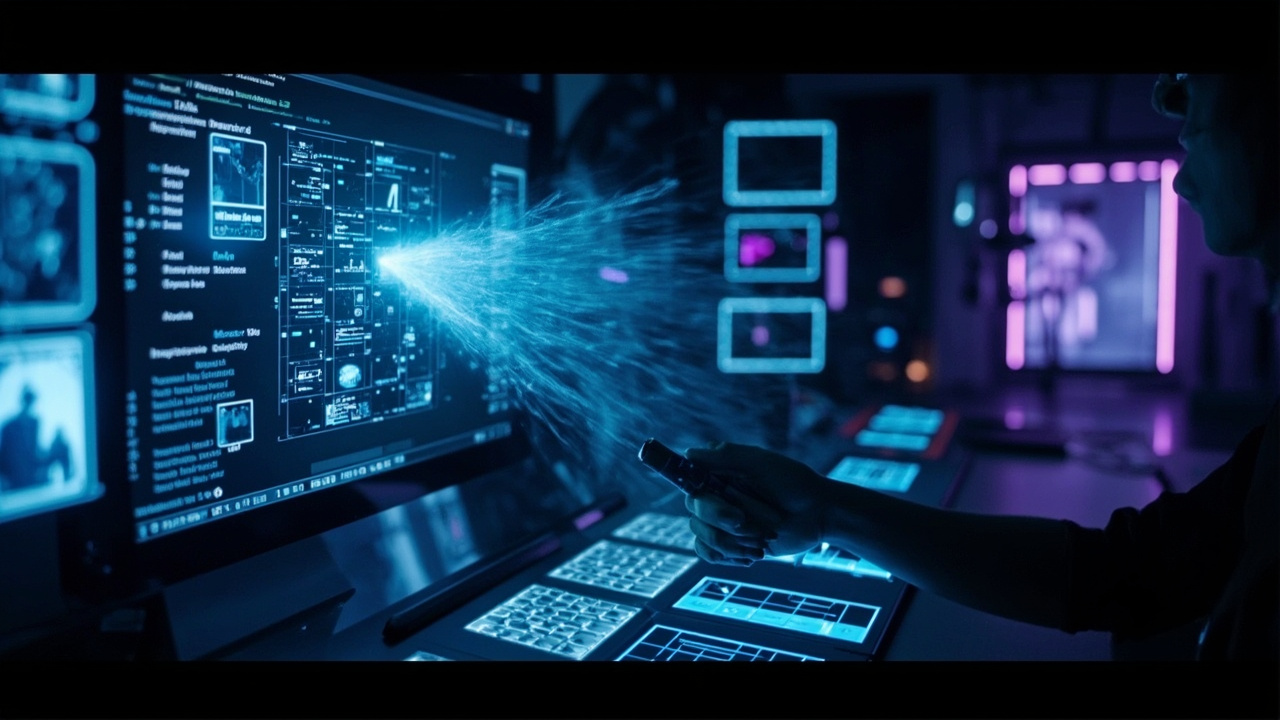
On August 7, 2026, Elon Musk’s xAI quietly shipped one of the most consequential AI image model updates of the year. Grok Imagine Image 2.0 — now generally available as the new “Quality Mode” on grok.com/imagine and across iOS and Android — doesn’t just generate prettier pictures. It fundamentally reframes what an AI image tool should do, treating editing as a first-class capability rather than an afterthought. And it immediately climbed to number two on the Artificial Analysis image Arena leaderboard, trailing only the long-reigning champion.
What Makes Image 2.0 Different
The previous generation of AI image models — from DALL-E to Midjourney to the original Grok Imagine — shared a common limitation: they were essentially slot machines. You typed a prompt, pulled the lever, and either loved or hated the result. Editing meant either accepting imperfections or re-rolling the entire image from scratch, hoping the next random seed would fix a specific detail. Image 2.0 breaks that paradigm with five interlocking capabilities that collectively transform the workflow from “generate and pray” to “generate and refine.”
Region-Level Editing with the Magic Wand
The headline feature is a magic wand tool that enables region-level editing. Instead of regenerating an entire image to fix a single element — a misshapen hand, an off-color background, a piece of text — users can now select a specific area and describe what they want changed. The model intelligently fills and blends the edited region while preserving the rest of the composition. This mirrors the non-destructive editing philosophy that professional photo editors like Adobe Photoshop pioneered decades ago, but powered entirely by natural language instructions. Early reviews from users who tested the feature note that the blending is remarkably seamless, with the edited regions matching surrounding lighting, texture, and style without visible artifacts or seams.
Multi-Image Blending: Up to Five References
Image 2.0 can ingest up to five reference images simultaneously and blend their elements into a single coherent output. This opens creative possibilities that were previously impossible with single-reference systems. A designer could combine a product photograph, a mood-board color palette, a texture sample, a compositional reference, and a typography style guide — then ask the model to synthesize all five into a unified marketing asset. The model doesn’t simply overlay or collage these inputs; it understands the semantic intent of each reference and integrates them at a deep structural level.
Smart Resize for Any Aspect Ratio
Smart Resize takes an existing image and intelligently extends it to fill any common aspect ratio without distortion or cropping. Supported ratios include 1:2, 9:16, 2:3, 3:4, 1:1, 4:3, 3:2, and the 16:9 widescreen standard. The model analyzes the original composition and generates contextually appropriate content to fill the expanded canvas — adding sky above a landscape, extending a tabletop beneath a product, or continuing a patterned wallpaper behind a subject. This solves a pain point that has plagued content creators since the explosion of multi-platform publishing: the same image needs to work as a YouTube thumbnail (16:9), an Instagram post (1:1 or 4:5), a TikTok cover (9:16), and a Pinterest pin (2:3).
Designer-Grade Typography
Perhaps the most quietly impressive upgrade is in text rendering. AI-generated images have long been notorious for garbled, nonsensical text — extra fingers get the headlines, but misspelled words and melted letters have been an even more persistent problem. Image 2.0 was specifically trained to plan typography and layout the way a human designer would, treating text as an integral part of the composition rather than a decorative afterthought. The model handles both text-based prompts and typography with notably higher fidelity, producing legible, well-kerned, contextually appropriate lettering across photography, design, and illustration styles.
Trained for Cross-Genre Fidelity
Under the hood, Image 2.0 was trained explicitly for fidelity across three distinct visual disciplines: photography, design, and illustration. Many image models excel in one genre but falter when asked to switch — a model trained primarily on photographs might produce washed-out illustrations, or vice versa. By treating these three genres as co-equal training objectives, xAI has produced a model that maintains consistent quality whether you’re generating a photorealistic product shot, a flat graphic-design poster, or a stylized digital painting.
The Arena Ranking: A Signal, Not a Destination
Climbing to second place on the Artificial Analysis image Arena is no small feat. The Arena uses blind, head-to-head human preference voting — the same methodology that has become the gold standard for LLM evaluation. Users are shown two images generated from the same prompt by different models and vote on which is better, with the results feeding into an Elo rating system. Reaching number two means Image 2.0 is winning a substantial majority of direct comparisons against every other image model except the current leader, and it did so within days of launch. Whether it can close the gap to number one — or whether a competitor leapfrogs it — will depend on sustained preference from the Arena’s voting community.
Pricing and Availability
Image 2.0 is available now across all of xAI’s consumer surfaces: grok.com/imagine on the web, and the Grok apps on iOS and Android. It appears as the new “Quality Mode” toggle within the existing Imagine interface. API access is listed as “coming soon,” though the existing Imagine API infrastructure already supports image generation and editing at competitive rates. According to xAI’s pricing page as of August 7, 2026, the grok-imagine-image model costs $0.002 per input image and $0.02 per output image at both 1K and 2K resolutions. For comparison, OpenAI’s DALL-E 3 charges $0.040 per standard image and $0.080 per HD image, making xAI’s offering roughly half the price at the standard tier and a fraction of the cost at higher resolutions.
The Bigger Picture: xAI’s Platform Strategy
The Imagine Image 2.0 launch is part of a broader xAI product offensive in the summer of 2026. Just days earlier, on July 29, xAI announced Grok Voice Think Fast 2.0, a speech-to-speech model that scored 82.9% on the Artificial Analysis speech index with a 0.70-second time-to-first-audio — pricing it at $0.08 per minute. The week before that saw Grok Imagine Video 1.5 with References. And Grok 4.5, xAI’s model for coding and agentic tasks, continues to be available on the xAI API at $2 per million input tokens. Together, these releases sketch a clear strategy: xAI is building a full-stack AI platform — text, voice, image, video — under the Grok brand, with aggressive pricing designed to undercut incumbents while climbing the benchmark leaderboards.
The image generation space has become one of the most fiercely competitive arenas in AI. Midjourney remains the aesthetic favorite among digital artists, OpenAI’s DALL-E benefits from deep ChatGPT integration, Google’s Imagen leverages Search and Workspace distribution, and Adobe’s Firefly is embedded directly in the creative tools that professionals already use. xAI’s advantage is the X (formerly Twitter) platform, where Grok is natively integrated and where viral image generation has proven to be a powerful engagement driver. By combining competitive quality, aggressive pricing, and native social distribution, Grok Imagine Image 2.0 positions xAI as a serious contender — not just a novelty — in the AI image generation wars.
Looking Ahead
The trajectory from Imagine Image 1.0 to 2.0 suggests that xAI is iterating rapidly and learning from user feedback. The emphasis on editing rather than just generation signals an understanding that real-world creative work is iterative, not one-shot. If the API opens soon at the rumored pricing, developers building creative tools, marketing platforms, and content pipelines will have a compelling new option. The real test will be whether Image 2.0 can maintain its Arena position as competitors respond — and whether the editing capabilities hold up under the scrutiny of professional designers who will push the magic wand and multi-reference blending to their limits.
For now, xAI has delivered a model that doesn’t just generate images — it collaborates on them. And in a market saturated with slot-machine generators, that distinction may prove decisive.
Sources
- [1] https://x.ai/news/grok-imagine-image-2
- [2] https://thenextweb.com/news/grok-imagine-image-2-editing-arena-ranking-spacexai
- [3] https://venturebeat.com/technology/openai-launches-gpt-5-6-cyber-with-reduced-refusals-95-completion-on-advanced-cybersecurity-tasks
- [4] https://www.basenor.com/blogs/news/grok-imagine-image-2-0-5-details-that-matter
- [5] https://startupfortune.com/grok-imagine-20-pushes-xai-deeper-into-openai-and-midjourney-territory/
- [6] https://medium.com/no-time/grok-imagine-image-2-0-launch-new-editing-tools-rank-2-on-arena-5415f984d9ff
- [7] https://docs.x.ai/developers/pricing
- [8] https://datanorth.ai/news/spacexai-releases-grok-imagine-image-2-0