OpenAI's First Device Is a Doughnut-Shaped Smart Speaker With Moving Parts
Bloomberg reveals OpenAI's first consumer hardware: a $300+ screenless smart speaker designed by Jony Ive, with a camera, battery, and moving parts that make it feel 'alive.'
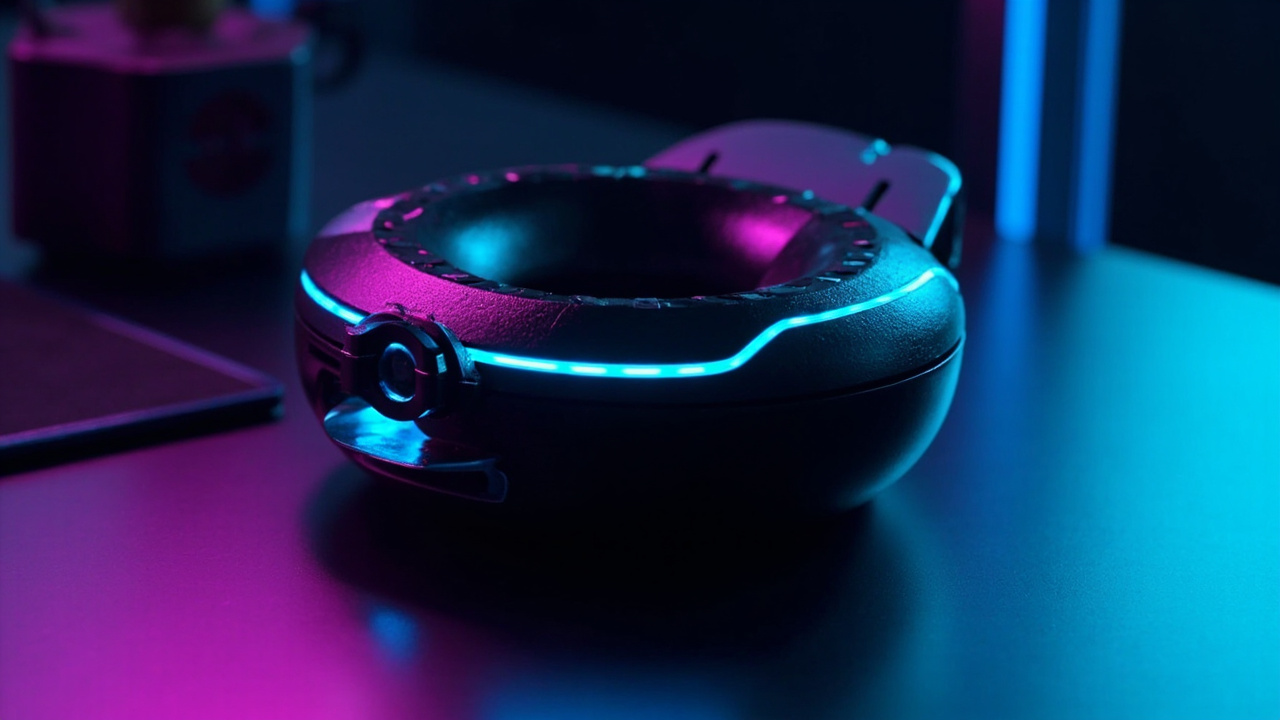
For a company that has built its empire entirely in software, OpenAI is about to make its most audacious bet yet: physical hardware. A cascade of leaks and Bloomberg reports throughout July and August 2026 has confirmed that OpenAI’s first-ever consumer device will be a smart speaker — but not the kind you’re used to. It’s a doughnut-shaped, screenless, battery-powered companion with a built-in camera, spatial sensors, and mechanical moving parts designed to make it feel, in the company’s own framing, “more alive.”
The device is expected to retail for between $300 and $400 when it launches, with most reporting pointing to a 2027 release. And the person leading its design is none other than Jony Ive, the legendary former Apple design chief who shaped the iPhone, iPad, and Apple Watch. The project is the first concrete product to emerge from OpenAI’s landmark $6.4 billion acquisition of io, the hardware startup Ive co-founded with Sam Altman, which closed in mid-2025.
What We Know About the Device
The picture assembled from Bloomberg’s Mark Gurman, Ars Technica, The Verge, and other reporting paints a device that defies easy categorization:
- Form factor: Doughnut- or hockey-puck-shaped, small enough to sit on a desk or table, and explicitly screenless — no display, no touchscreen interface.
- Moving parts: This is the detail that has captured the most attention. The device incorporates motorized mechanical elements that can move on their own, apparently to convey personality and presence. Bloomberg describes these as giving the device “character” and making it seem animate rather than inert.
- Camera and sensors: A built-in camera and environmental sensors let the device understand its surroundings — recognizing objects on a nearby table, perceiving room layout, and adapting its behavior to context.
- Battery-powered: Unlike most smart speakers that must remain tethered to a wall outlet, OpenAI’s device has a battery, making it genuinely portable. You can carry it from room to room.
- Voice-first interaction: Powered by ChatGPT’s conversational models, the device is designed around natural language. The voice mode is engineered to feel “human-like,” continuing OpenAI’s push toward real-time, emotionally responsive AI speech that began with Advanced Voice Mode.
- Smart-home hub: It will control smart-home appliances, play media, answer questions, and function as a general-purpose household companion.
The deliberate absence of a screen is perhaps the most consequential design choice. Every major smart speaker on the market — Amazon’s Echo line, Google’s Nest, Apple’s HomePod — has been gradually migrating toward screens, from the Echo Show to the Nest Hub. OpenAI is betting in the opposite direction: that conversational AI has become good enough that a visual interface is unnecessary, even a distraction. The device should be talked to, not looked at.
The Jony Ive Connection
The device’s provenance is inseparable from its design philosophy. OpenAI acquired io, the hardware startup co-founded by Jony Ive and Sam Altman, in May 2025 for approximately $6.4 billion in an all-stock deal. The acquisition brought roughly 55 engineers — many of them former Apple veterans — into OpenAI, while Ive’s design firm LoveFrom retained creative direction over the hardware program.
In a joint letter published at the time of the acquisition, Altman and Ive framed the effort as an attempt to build technology that feels fundamentally different from the smartphone paradigm. “We’re thrilled to share that the io Products, Inc. team has officially merged with OpenAI,” they wrote. Ive and LoveFrom remained independent, but the creative mandate for OpenAI’s hardware future was placed firmly in Ive’s hands.
The influence shows. The emphasis on minimalism — a single, screenless object with no obvious interface — echoes Ive’s most iconic Apple work. The doughnut shape, the premium materials, the obsession with making the device feel like an object worth living with rather than a gadget you tolerate: all are hallmarks of Ive’s design language. The moving parts, while unusual, fit within his long-stated belief that great design should evoke an emotional, almost animate response.
A Market Already Saturated — or Stagnant?
OpenAI is entering a smart-speaker market that, on paper, looks crowded. Amazon’s Echo devices, Google’s Nest Audio and Nest Hub, and Apple’s HomePod and HomePod mini have been competing for living rooms for years. The category was once heralded as the next major computing platform, but it has settled into something more prosaic: a convenient way to set timers, check the weather, and control lights.
OpenAI’s argument, implicitly, is that the incumbents have been constrained by weak AI. Alexa, Google Assistant, and Siri were built around command-and-response architectures — rigid intent recognition paired with scripted responses. They could never truly converse. ChatGPT, by contrast, can hold a sustained, context-aware dialogue, reason about complex questions, and adapt its tone. If the intelligence inside the speaker is genuinely different, the reasoning goes, then the product category itself becomes different too.
The pricing reflects this ambition. At $300–$400, the device would sit well above the mass-market Echo ($100) and HomePod mini ($99), in the premium tier occupied by the full-size HomePod ($299) and Echo Studio ($220). OpenAI is not trying to undercut on price; it’s trying to create a premium, AI-first product category that doesn’t yet exist.
The “Alive” Bet and Its Risks
The most striking — and polarizing — detail is the moving parts. The idea that a speaker should physically animate to convey personality is unusual enough that even sympathetic observers have struggled to picture it. OpenAI has confirmed that the device is not, contrary to some speculation, an Apple acquisition or partnership; it’s entirely an OpenAI product. But the concept of mechanical motion as an interface for personality is genuinely novel.
The risks are substantial. Privacy concerns around an always-on camera in the home are obvious, and OpenAI will need to make a compelling case for why ambient visual awareness is worth the trade-off. The company faces a brand-trust deficit in hardware: it has never manufactured a physical product, and its track record is entirely in software and APIs. There’s also the question of whether consumers want a companion — something that feels alive — or simply a better assistant. The former is a much harder sell.
And then there’s the Apple angle. According to Fortune reporting, Apple has privately argued that the device’s concept draws on ideas that originated within Apple during Ive’s tenure — a claim that, whether or not it has legal teeth, adds friction to an already high-stakes launch.
Why It Matters
Regardless of whether OpenAI’s speaker succeeds commercially, its arrival signals a structural shift in the AI industry. The major model labs are no longer content to be backend API providers. Google builds phones and earbuds. Meta builds glasses. Amazon builds Echo. And now OpenAI — the company that started as a research lab — is building its own hardware.
The bet is that the next frontier of AI is not just a better model, but a better interface for that model. If conversational AI is as transformative as OpenAI believes, then typing into a chat box is a transitional form. The natural endpoint is something ambient, always present, and responsive to the full richness of human communication — voice, gesture, context, environment. A screenless, moving, camera-equipped speaker is one possible answer to what that endpoint looks like.
We won’t know if it’s the right answer until 2027. But OpenAI has made clear that the era of AI-as-software-only is ending, and the race to define AI hardware has begun in earnest.
Sources
- [1] https://www.bloomberg.com/news/articles/2026-08-06/what-is-openai-s-device-a-doughnut-shaped-speaker-that-costs-over-300
- [2] https://www.bloomberg.com/news/articles/2026-07-14/openai-s-first-device-will-be-moveable-screenless-speaker-built-as-ai-companion
- [3] https://arstechnica.com/gadgets/2026/08/openais-expensive-smart-speaker-will-use-moving-parts-to-seem-more-alive/
- [4] https://techcrunch.com/2026/08/06/openais-new-ai-smart-speaker-will-reportedly-sell-for-between-300-and-400/
- [5] https://www.theverge.com/ai-artificial-intelligence/976431/openai-chatgpt-battery-smart-speaker-rumor
- [6] https://fortune.com/2026/07/15/openai-building-human-like-chatgpt-device-apple-jony-ive/
- [7] https://openai.com/sam-and-jony/