Anthropic Builds Its Own Data Center Empire: Theseus Infrastructure Partners with Macquarie and GIC
Anthropic launched Theseus Infrastructure with Macquarie and Singapore's GIC to build dedicated AI data centers — a vertical integration play that reshapes the AI infrastructure landscape ahead of its IPO.
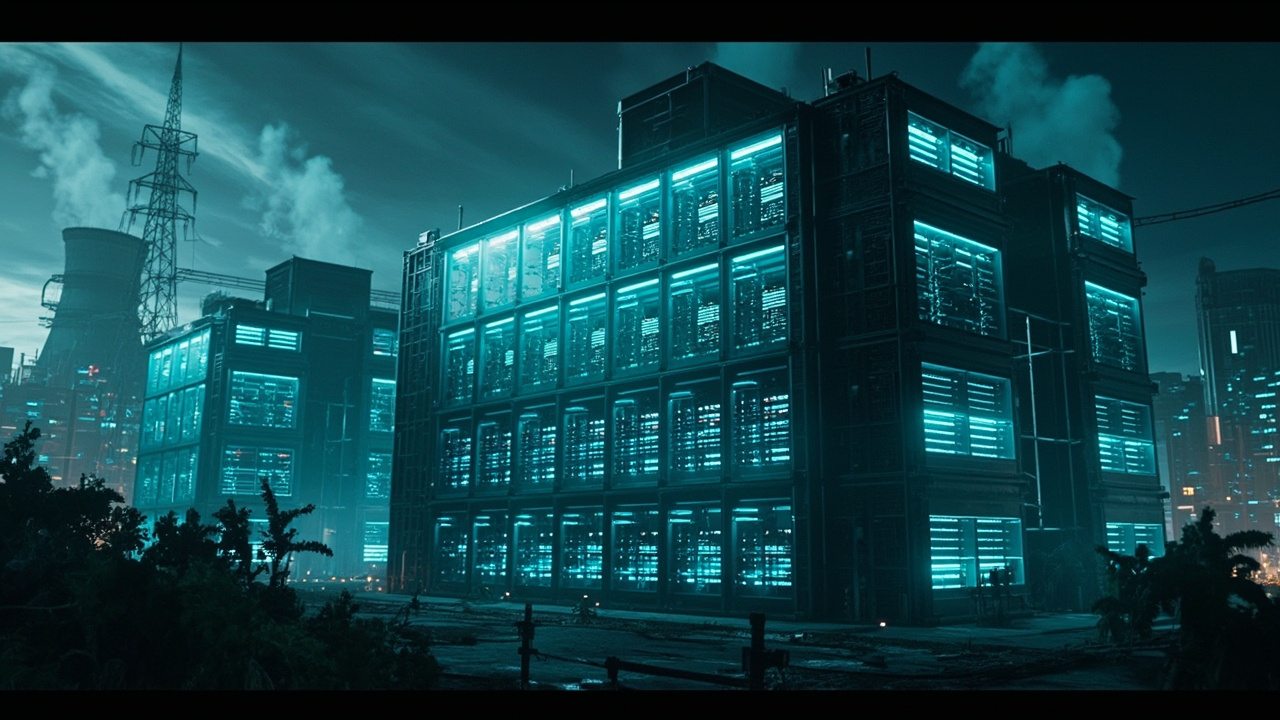
Anthropic has always positioned itself as the safety-conscious AI lab — the one more concerned with alignment than accumulation. But the company’s latest move shows just how aggressively it is now playing the infrastructure game. On August 10, 2026, Anthropic announced a strategic partnership with Macquarie Asset Management and Singapore’s sovereign wealth fund GIC to launch Theseus Infrastructure, a new platform dedicated to developing, owning, and operating AI data centers built exclusively for Anthropic’s use.
This is not a cloud rental agreement or a colocation deal. It is the creation of an entirely new real-estate-to-compute pipeline, with some of the world’s largest infrastructure investors footing the bill for facilities that Anthropic will lease back under long-term contracts. The message is unmistakable: Anthropic intends to own its compute destiny.
What Theseus Infrastructure Actually Does
The new entity — named after the mythological Greek hero who navigated the labyrinth — will develop purpose-built data center campuses with an initial focus on the United States. According to the announcement, Macquarie Asset Management and GIC will own the majority of the platform and fund most of the equity for each individual project. Anthropic, in turn, will serve as the anchor tenant, leasing capacity under long-term agreements.
The structure is a classic infrastructure-investor play: institutional capital takes on the capital-intensive real estate and power development risk, while the technology tenant provides the demand certainty that makes the project financeable. What makes it unusual — and frankly unprecedented at this scale in the AI sector — is that Anthropic is not just leasing space from an existing hyperscaler. It is directing the design of facilities purpose-built for its own training and inference workloads, including its custom Claude silicon initiative.
Investment amounts and specific project sizes have not been publicly disclosed. But the context tells you everything: Anthropic previously committed to spending $50 billion on US data center infrastructure, a pledge announced in November 2025 alongside a partnership with neocloud provider Fluidstack to build custom facilities in Texas and New York. Theseus Infrastructure appears to be the vehicle that operationalizes and dramatically expands that commitment.
Why Anthropic Needs Its Own Data Centers
The economics driving this decision are straightforward and brutal. Training frontier AI models like Claude requires tens of thousands of GPUs running for months at a time, consuming hundreds of megawatts of power. The companies that control that compute — and the cost of that compute — control their own fate.
Until now, Anthropic has relied heavily on cloud providers, primarily Amazon Web Services and Google Cloud, both of which are also investors in the company. But that reliance comes with a steep markup and a strategic vulnerability. Every dollar spent on cloud compute is a dollar that flows to a partner-turned-competitor’s bottom line. As Anthropic prepares for what is expected to be one of the largest tech IPOs in history — with confidential S-1 filings already submitted and valuations reportedly approaching $1 trillion — the company needs to demonstrate a path to margin expansion and infrastructure independence.
Theseus Infrastructure gives Anthropic three things it cannot get from hyperscalers: cost control, capacity guarantees, and strategic autonomy. By partnering with infrastructure investors rather than cloud giants, Anthropic avoids enriching the very companies it competes with. And by owning the relationship with the physical facilities — even if Macquarie and GIC hold the equity — Anthropic gains visibility and influence over power procurement, cooling design, and hardware deployment that no standard cloud contract provides.
The Bigger Infrastructure Picture
This move does not exist in isolation. Anthropic has been on an infrastructure acquisition spree throughout 2026. Just days before the Theseus announcement, the company signed a 20-year, $9.1 billion lease with Bitcoin mining firm Riot Platforms for 191 megawatts of compute capacity in Texas — the largest deal in the mining-to-AI conversion trend. The company is also building an in-house custom silicon team to design chips optimized for Claude, aiming to reduce its dependence on Nvidia GPUs.
Taken together, these moves paint a picture of a company executing a full-stack vertical integration strategy. Anthropic wants to control the silicon, the servers, the data center buildings, the power contracts, and the cooling infrastructure — everything except the mining of the raw materials. This mirrors the playbook that Meta, Google, and Amazon have been running for over a decade, but compressed into a dramatically shorter timeline.
What the Investors Get
For Macquarie Asset Management — which manages nearly $500 billion in assets and has deep experience in digital infrastructure — and for GIC, one of the world’s most sophisticated sovereign wealth funds, the appeal is obvious. AI data centers are the hottest asset class in real estate, with demand far outstripping supply. Power-constrained grids, multi-year interconnection queues, and skyrocketing land costs have made securing and building AI-grade facilities one of the most lucrative infrastructure plays available.
By backing Theseus, Macquarie and GIC get something rare: a creditworthy, IPO-bound anchor tenant with guaranteed long-term demand, in a sector where supply is the bottleneck. They also get to participate in the upside of the AI boom without taking on the technology risk of building models. It is an infrastructure investor’s dream scenario — predictable long-term cash flows from a tenant whose business is growing at triple-digit rates.
Reshaping the Competitive Landscape
The Theseus partnership has implications far beyond Anthropic’s own balance sheet. It signals that the AI infrastructure market is bifurcating. On one side are the hyperscalers — AWS, Google Cloud, Microsoft Azure — who want every AI lab to rent from them in perpetuity. On the other side are AI companies like Anthropic, OpenAI, and xAI that are increasingly determined to build their own infrastructure and break free of cloud dependency.
OpenAI, for its part, has been pursuing its own data center strategy with projects like the Stargate partnership and massive GPU procurement deals. But Anthropic’s approach through Theseus is structurally different: it leverages institutional infrastructure capital rather than relying on a single cloud partner or government-backed financing. If successful, it could become the template that other AI labs follow.
The timing is also critical. With compute demand projected to grow by orders of magnitude over the next few years and grid capacity tightening across the United States, the companies that lock in power and facilities now will have a durable competitive advantage. Those that wait may find themselves bidding against each other for an ever-shrinking pool of available megawatts.
Looking Ahead
Theseus Infrastructure is still in its early stages — no specific sites beyond the initial US focus have been announced, and the total investment commitment remains undisclosed. But the strategic logic is airtight, and the partners involved bring the capital, expertise, and patience required for a multi-decade infrastructure buildout.
For Anthropic, which was founded on the principle that AI development must be done responsibly, the irony is that the path to responsible scaling now runs directly through some of the largest physical infrastructure projects on the planet. The company that wanted to align AI with human values is now aligning steel, concrete, and cooling towers with its own commercial future. Theseus, after all, did not just escape the labyrinth — he owned it.
Sources
- [1] https://www.businesswire.com/news/home/20260809882025/en/Anthropic-Macquarie-Asset-Management-and-GIC-Announce-Strategic-Partnership-to-Develop-Dedicated-Data-Center-Infrastructure-at-Scale
- [2] https://www.macquarie.com/us/en/about/news/2026/anthropic-mam-gic-data-centre-infrastructure-partnership.html
- [3] https://www.bloomberg.com/news/articles/2026-08-10/anthropic-macquarie-and-gic-form-venture-for-ai-data-centers
- [4] https://www.straitstimes.com/business/companies-markets/anthropic-gic-and-macquarie-form-venture-to-build-ai-data-centres
- [5] https://thenextweb.com/news/anthropic-macquarie-gic-theseus-infrastructure-data-centre-partnership
- [6] https://www.datacenterdynamics.com/en/news/gic-and-macquarie-form-theseus-infrastructure-to-serve-anthropics-data-center-needs/
- [7] https://finance.yahoo.com/technology/ai/articles/anthropic-partners-macquarie-gic-build-131124573.html
- [8] https://therealdeal.com/national/2026/08/11/anthropic-recruits-macquarie-gic-for-data-center-venture/
- [9] https://www.hpcwire.com/off-the-wire/anthropic-macquarie-and-gic-launch-theseus-infrastructure-for-ai-data-centers/
- [10] https://www.anthropic.com/news/anthropic-invests-50-billion-in-american-ai-infrastructure