Google's AMIE AI Matches Board-Certified Doctors in Real-Time Video Consultations
Google Research demonstrates AMIE — an AI system that conducts expert-level real-time video medical consultations, matching or beating primary care physicians on diagnostic accuracy, empathy, and clinical reasoning.
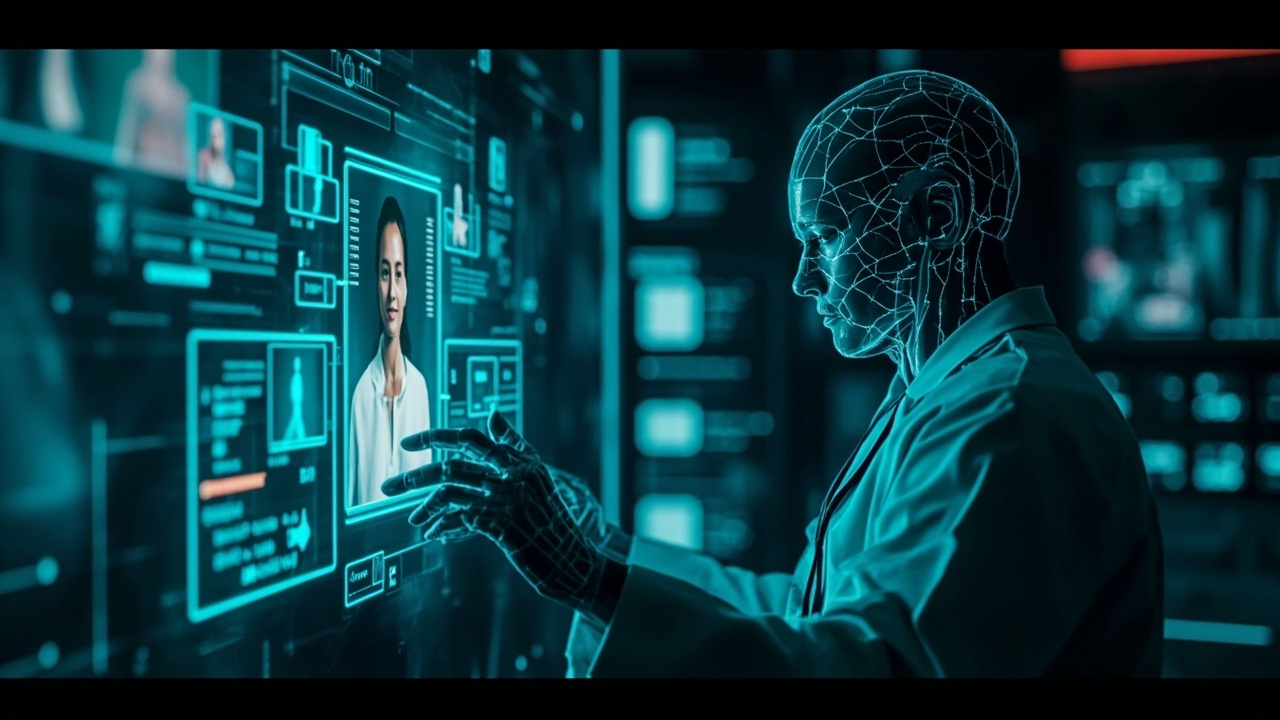
Google’s medical AI system, AMIE (Articulate Medical Intelligence Explorer), has reached a milestone that many in the medical community considered years away: it can now conduct real-time video consultations with patients at a level that matches — and in several dimensions exceeds — board-certified primary care physicians. Published on August 11, 2026, in a paper titled “Towards Expert-level Medical AI for Real-time Video Consultations” (arXiv: 2608.09861), the results are being hailed as a watershed moment for clinical AI.
What AMIE Did
In a randomized, multi-arm evaluation study, Google pitted AMIE against ten board-certified US primary care physicians (PCPs) in 100 simulated video consultations with professional patient actors. An independent panel of 20 experienced primary care clinical evaluators assessed the interactions, drawing on a staggering 12,747 expert annotations from 29 specialists across the study.
The design was rigorous: AMIE didn’t just chat. It watched. It listened. It interpreted visual and auditory cues from the patient actor in real time, guided virtual physical examinations by asking the actor to perform specific movements or show specific areas of concern, and then reasoned diagnostically — all within the flow of a live video conversation.
This is a significant evolution from AMIE’s earlier text-only incarnation. The system now operates as a fully multimodal clinical agent, processing facial expressions, skin conditions, gait, vocal characteristics, and other physical signals that a human doctor would naturally observe during a video visit.
The Numbers Are Striking
The headline result: AMIE Video achieved 91% diagnostic accuracy, with its top-ranked differential diagnosis matching the prespecified reference diagnosis in 91 out of 100 cases. Its overall evaluation score across the 100 simulated consultations was 83%, placing it on par with — and frequently above — the board-certified PCPs in the same study.
Clinical evaluators rated AMIE as equivalent to or better than PCPs across multiple clinical rubrics: history-taking, diagnostic reasoning, management recommendations, and physical observation and examination. Perhaps most surprisingly, patient actors rated AMIE favorably compared to human doctors on empathy, rapport, and confidence in the care they received. They also preferred the video experience over AMIE’s earlier text-chat interface, citing the ability to see and be seen as a major factor in building trust.
Building on a Proven Track Record
This video consultation capability is the latest advance in a research program that has been steadily accumulating evidence for over two years. AMIE first gained attention in January 2024 with the arXiv preprint “Towards Conversational Diagnostic AI,” which showed the system outperforming PCPs on diagnostic accuracy and superior performance on 28 of 32 clinical axes as rated by specialist physicians. That work was subsequently published in Nature in April 2025 (s41586-025-08866-7), with updated results showing AMIE superior on 30 of 32 specialist-rated axes and 25 of 26 patient-rated axes.
Later in 2025, Google demonstrated that AMIE could interpret medical imaging — X-rays and MRIs — during diagnostic conversations, effectively giving the AI system the ability to “see” radiological data and incorporate it into its clinical reasoning. A real-world clinical feasibility study further validated the system, showing that AMIE matched the final diagnosis within its top seven diagnostic possibilities in 90% of real clinical cases.
The August 2026 video consultation study brings all of these capabilities together into a single, real-time, multimodal interaction — the closest simulation yet of what a full telehealth visit actually looks like.
Why This Matters
The implications extend well beyond benchmark performance. Telehealth adoption surged during the COVID-19 pandemic and has remained a permanent fixture of healthcare delivery, yet the quality of remote consultations has always been constrained by the limits of what a physician can observe through a screen. AMIE’s ability to interpret visual and auditory cues in real time — potentially with greater consistency and attention than a fatigued human clinician — could address some of these limitations.
For regions facing critical shortages of primary care physicians, particularly rural areas and developing nations, an AI system that can deliver expert-level diagnostic consultations via video could be transformative. Google has explicitly framed AMIE as a research system aimed at augmenting, not replacing, clinicians — but the performance bar it has set raises serious questions about the future division of labor between human and AI practitioners.
The empathy results deserve particular attention. AMIE’s ability to build rapport with patient actors — sometimes more effectively than the human doctors in the study — challenges a common assumption that AI systems will always fall short on the human side of medicine. Whether simulated empathy from an AI system is ethically equivalent to genuine human empathy is a question the medical community will need to grapple with.
Caveats and What’s Next
Google has been careful to emphasize that AMIE remains a research system, not a product. The study used simulated consultations with trained patient actors, not real patients with real ailments. The clinical scenarios, while diverse and designed by medical experts, are still a controlled subset of the full spectrum of cases a real primary care physician encounters daily. Real-world clinical deployment would require extensive regulatory review, safety validation, and integration into existing healthcare workflows.
There are also open questions about how AMIE performs with populations not well-represented in its training data, how it handles edge cases and rare conditions, and what happens when the video feed is degraded or the patient’s presentation is ambiguous in ways the training data didn’t cover.
Nonetheless, the trajectory is unmistakable. In just over two years, AMIE has progressed from a text-based diagnostic chatbot that beat doctors on paper benchmarks to a fully multimodal video consultation agent that matches board-certified physicians on live, real-time clinical encounters — and makes patients feel heard while doing it. The question is no longer whether AI can perform at a clinical level in telehealth. It’s how quickly the healthcare system can adapt to a reality where it already does.
Sources
The full research paper, Google’s blog announcement, and independent coverage are linked in the sources section below.
Sources
- [1] https://blog.google/innovation-and-ai/models-and-research/google-research/amie-video-consultations/
- [2] https://research.google/blog/advancing-amie-towards-expert-level-audio-visual-clinical-consultations/
- [3] https://arxiv.org/html/2608.09861
- [4] https://www.news-medical.net/news/20260812/AI-took-on-doctors-in-simulated-video-consultations-and-the-results-were-striking.aspx
- [5] https://alphasignal.ai/news/google-s-amie-video-ai-matches-board-certified-doctors-in-live-consultations