Samsung's On-Device Health AI: xMAE and HiMAE Bring Clinical-Grade Biosignal Analysis to the Wrist
Samsung Research America unveiled two health foundation models — xMAE and HiMAE — that analyze ECG, PPG, and sleep biosignals directly on smartwatch hardware with sub-millisecond inference, no cloud required.
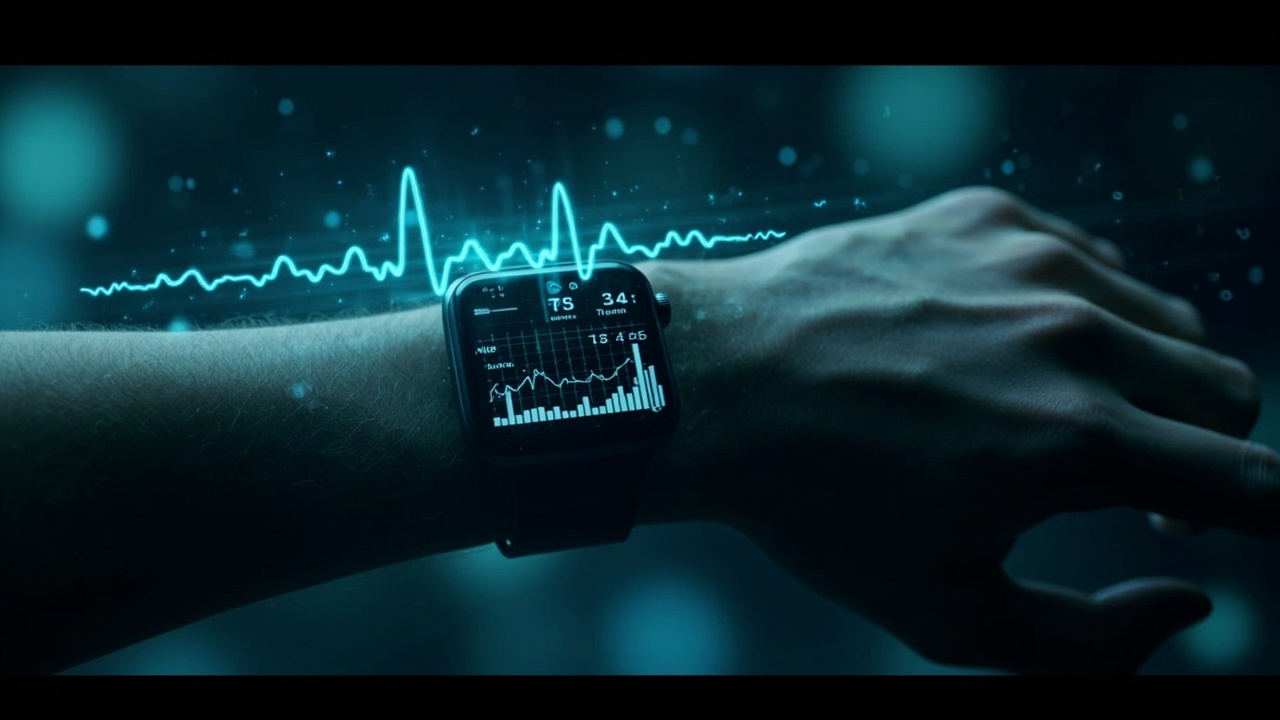
Samsung Research America’s Digital Health Team has pulled back the curtain on two AI foundation models purpose-built for wearable health: xMAE and HiMAE. Announced on August 14, 2026, the models can analyze biosignals — heart activity, sleep patterns, and physical activity — directly on smartwatch-class hardware, without sending raw physiological data to the cloud. Both models earned acceptance at top-tier AI conferences: xMAE at the International Conference on Machine Learning (ICML), and HiMAE at the International Conference on Learning Representations (ICLR).
The unveiling is not an isolated research demo. It is the technical backbone of the Connected Care vision Samsung laid out at the Health Forum during Galaxy Unpacked in July 2026 — a strategic shift from reactive sick care toward preventive, personalized, and connected health monitoring. Samsung’s research team positions health foundation models as a core component of the next generation of consumer health experiences.
Why Foundation Models for Biosignals?
A health foundation model applies the same self-supervised learning recipe that powers large language models — but to physiological time series. Instead of predicting the next word, the model reconstructs masked portions of biosignal data, discovering meaningful patterns in unlabeled streams collected by smartwatch sensors. After pretraining on large health datasets, a single model can support a wide range of downstream tasks: biosignal analysis, biomarker development, and health issue prediction.
This matters because labeled medical data is scarce and expensive. Sleep staging labels require overnight polysomnography; cardiac labels require clinical review. Self-supervised pretraining sidesteps that bottleneck by learning from the vast quantities of unlabeled sensor data that wearables already generate every second of every day.
Sharanya Desai, Head of Digital Health Algorithms at Samsung Research America, framed the significance: “This research is significant because it lays the technical groundwork for delivering health insights that are efficient, precise, and continuous through a health foundation model. We will continue to develop and advance health foundation models that can be applied to a variety of biosignals and health features that can operate on-device with limited sensors and computing resources.”
xMAE: Learning Cardiology from Light
The first model, xMAE (Physiology-Aware Masked Cross-Modal Reconstruction for Biosignal Representation Learning), exploits a physiological quirk: two very different cardiac signals carry information about the same heartbeat.
Electrocardiography (ECG) measures the heart’s electrical activity directly, with clinical precision. It can identify abnormal heart rhythms and risks associated with conditions such as atrial fibrillation. The catch: wearable ECG readings require the user to stop and actively take a measurement — typically touching the watch bezel for 30 seconds.
Photoplethysmography (PPG) takes the opposite approach. Optical sensors detect changes in blood volume passively and continuously, no user action required. But PPG is an indirect proxy for cardiac function, with less diagnostic resolution than ECG.
Because both signals originate from the same cardiac activity, they occur with a characteristic time lag — Samsung compares it to hearing thunder after seeing lightning. xMAE learns that temporal relationship by reconstructing masked segments of ECG from PPG data. In effect, the model learns to infer clinical-grade electrical cardiac patterns from the continuous optical signal that a smartwatch already records around the clock.
The scale of training is notable: Samsung pretrained xMAE on approximately 9,400 hours of paired ECG and PPG data. The results turned heads in academic circles — xMAE outperformed unimodal biosignal models and existing multimodal learning methods in 15 of 19 evaluation tasks, spanning cardiovascular disease prediction, abnormal test-result detection, and sleep-stage classification. Just as important for real-world deployment, the learned features transferred across different sensor devices, body locations, and data-gathering environments.
The practical implication is significant: continuous, ECG-level cardiac monitoring from a passive wrist sensor, 24 hours a day, with no manual measurements — a potential game-changer for catching conditions like atrial fibrillation before they become emergencies.
HiMAE: One Model, Every Time Scale
The second model, HiMAE (Hierarchical Masked Autoencoder), attacks a different structural problem in wearable data: time scale.
Health signals live at radically different temporal resolutions. A heartbeat unfolds in milliseconds. Sleep architecture emerges over hours. Activity trends and training adaptations accumulate across days and weeks. Most health AI models pick a single time scale and lose the rest. HiMAE’s answer is a hierarchical convolutional encoder-decoder that uses multiple encoders to analyze short bursts and long segments simultaneously — zooming in on rapid signals like individual heartbeats while still capturing slow-burning patterns like sleep quality and activity trends.
The arXiv paper (arXiv:2510.25785) frames this as the “resolution hypothesis”: temporal resolution is a fundamental axis of representation learning, with different clinical and behavioral outcomes relying on structure at distinct scales. HiMAE transforms resolution from a hyperparameter into a probe for interpretability — researchers can systematically evaluate which temporal scales carry predictive signal for each health task.
The efficiency numbers are remarkable. A single pretrained HiMAE model handles classification, numerical prediction, and data generation — three task families — while remaining orders of magnitude smaller than comparable foundation models. Samsung reports sub-millisecond inference on a smartwatch-class CPU, fast enough for genuinely real-time, on-device analysis. The paper’s authors note that HiMAE “achieves sub-millisecond inference on smartwatch-class CPUs for true edge inference,” positioning it as both an efficient learning method and a discovery tool for scale-sensitive structure in wearable health.
The Strategic Bet: Privacy and Vertical Integration
The on-device emphasis is deliberate strategy, not incidental engineering. Apple processes some health data locally but still leans on cloud infrastructure for complex AI tasks. Google’s Fitbit ecosystem relies on server-side processing for deeper insights. Samsung is betting that privacy-conscious consumers — and, increasingly, regulators — want biosignal data analyzed locally, never leaving the wrist.
Subbu Venkatraman, Head of the Digital Health Research Lab at Samsung Research America, emphasized the scientific contribution: “Biosignals are inherently dynamic, with unique time-varying physiological properties. The key contribution of this research lies in proving the viability of health foundation models capable of capturing both the inter-signal relationships and their underlying temporal structures.”
Samsung also holds a structural advantage over emerging health AI players like Whoop and Oura: vertical integration. The company controls the sensors, the silicon, the operating system, and now the foundation models that interpret the data — allowing co-design of hardware and AI that pure software players cannot easily replicate.
Peer acceptance at ICML and ICLR matters here too. It signals that Samsung is doing legitimate AI research recognized by the academic community, not product marketing dressed up as science — a distinction that carries weight as health AI comes under increasing regulatory and clinical scrutiny.
What Comes Next
Foundation models trained on unlabelled physiological streams provide a mechanism to extract diagnostic markers, run predictive health classifications, and generate user guidance from consumer hardware — all without continuous server connectivity. As Samsung translates this research into Galaxy Watch features under its Connected Care vision, the line between consumer wearable and medical-grade monitor will continue to blur. For the hundreds of millions of people already wearing smartwatches, the next generation of health insights may arrive not as an occasional cloud report, but as a continuous, private conversation between algorithm and wrist.
Sources
- [1] https://news.samsung.com/global/from-biosignals-to-health-insights-samsung-researchs-work-on-health-foundation-models
- [2] https://www.artificialintelligence-news.com/news/samsung-health-ai-models-analyse-wearable-biosignal-data/
- [3] https://arxiv.org/abs/2510.25785
- [4] https://www.techbuzz.ai/articles/samsung-unveils-on-device-health-ai-models-for-wearables