Nvidia Nears $100 Billion Backstop Deal for OpenAI's Ohio Mega Data Center
Nvidia is closing in on a deal to guarantee roughly $100 billion in financing for OpenAI's 10-gigawatt Ohio data center campus — a downsized but still unprecedented bet on AI infrastructure.
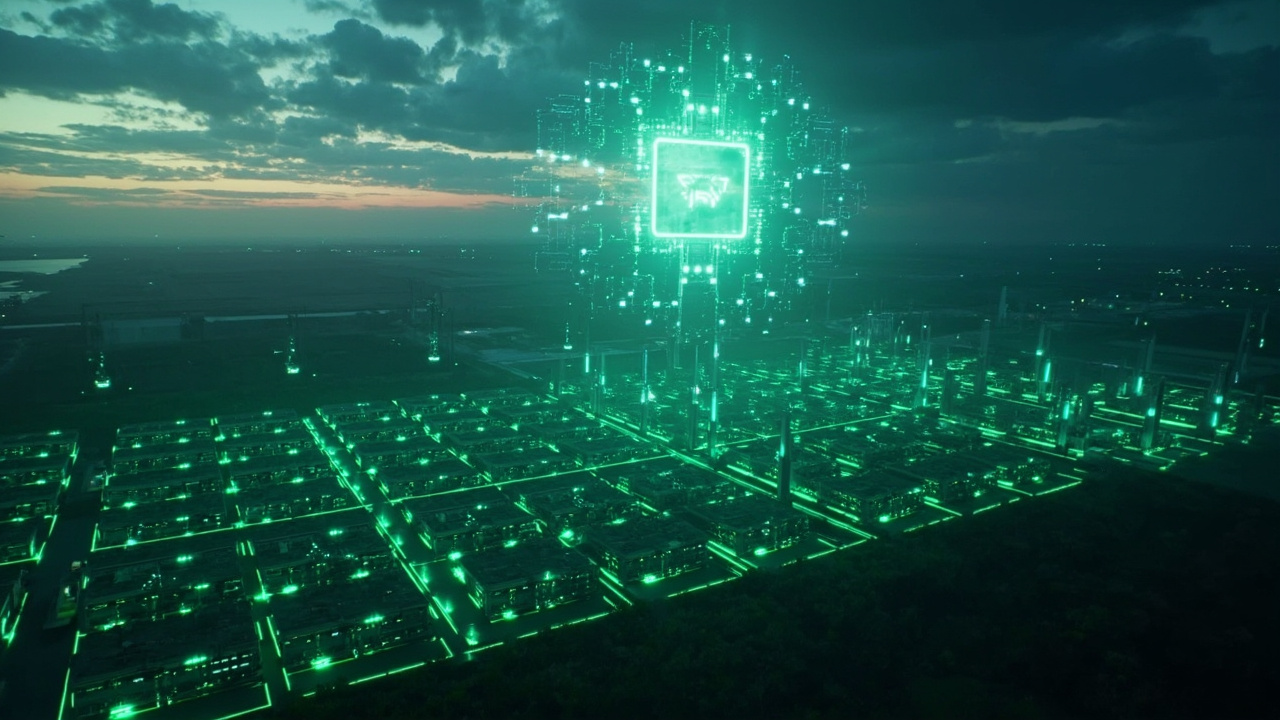
The most consequential AI infrastructure deal of the year is reportedly close to landing — in a smaller form than originally envisioned. According to fresh reports from The Information and The Wall Street Journal published on August 15, 2026, Nvidia is nearing an agreement to guarantee roughly $100 billion in financing that would allow OpenAI to lease and operate a colossal data center campus in Pike County, Ohio. That is half the size of the $250 billion backstop the two companies were discussing just three weeks ago, but it would still rank among the largest financial commitments ever made in the technology industry.
What the Deal Involves
At the heart of the arrangement is a leasing structure with an unusual twist: Nvidia would not simply sell chips to OpenAI. Instead, the chipmaker would use the strength of its own balance sheet — one of the most valuable in corporate America — to guarantee debt that OpenAI raises to lease the campus. Lenders who might balk at underwriting a private AI lab burning billions of dollars a year become far more comfortable when the guarantee carries Nvidia’s credit.
The project itself is staggering in scale. The campus is planned to deliver up to 10 gigawatts of compute capacity — roughly the peak power demand of several nuclear power plants — on federally owned land in southern Ohio. It is being developed with involvement from SoftBank’s energy subsidiary, which is handling the power and site development side of the equation. Total project costs have been estimated at more than $500 billion, which would make it the single most expensive data center project in history by a wide margin. Reports suggest the deal could close in the fourth quarter of 2026, pending regulatory review.
Why the Guarantee Shrunk from $250 Billion to $100 Billion
The downsizing is the most telling detail in the new reports. When talks of a $250 billion backstop first surfaced in late July, via the Wall Street Journal and CNBC, observers immediately flagged the circular-financing risk embedded in the arrangement: Nvidia guarantees debt so OpenAI can lease data centers filled with Nvidia GPUs, generating revenue that flows back to Nvidia as chip purchases. The larger the guarantee, the more the loop resembles vendor financing at civilizational scale — a model that famously ended badly for telecom equipment makers in the early 2000s.
Trimming the initial backstop to about $100 billion, covering roughly half the project, appears to be a deliberate de-risking move. It keeps Nvidia’s exposure at a level its cash flows can credibly absorb while still unlocking enough lender confidence to get the first phases of the campus financed and built. The structure reportedly leaves room for the guarantee to expand later if the project performs — an incremental approach that reduces the chance of a single catastrophic misstep.
The Circular Finance Question
The deal renews a debate that has shadowed the AI buildout since OpenAI and Nvidia announced their 10-gigawatt strategic partnership in late 2025. Nvidia has already committed to investing in OpenAI; OpenAI uses raised capital to buy Nvidia systems; the GPUs are deployed in data centers that Nvidia sometimes helps finance. Money circulates through the ecosystem, inflating reported revenue on multiple ledgers at once.
Defenders of the structure argue that this is how frontier infrastructure has always been financed — railroads, fiber networks, and power grids all involved interlocking commitments among suppliers, operators, and financiers. Skeptics counter that the difference is end demand: railroads moved freight that customers paid for, whereas the ultimate demand for AI compute remains unproven at the scale these projects assume. If enterprise and consumer AI revenue falls short of projections, the debt servicing on a $500 billion campus becomes an albatross — one that Nvidia, as guarantor, would inherit.
Why It Matters
The Ohio deal matters on three levels. First, it signals that compute scarcity remains the binding constraint on frontier AI development. OpenAI is willing to commit to a decade-plus lease on 10 gigawatts of capacity because its binding constraint is chips and power, not demand for training runs. Second, it marks a structural shift in Nvidia’s role: from component supplier to infrastructure financier. The company that once sold graphics cards now underwrites the industrial base of the AI economy — a position of enormous power and equally concentrated risk. Third, it establishes a template. If the Ohio structure works, expect to see it replicated for other hyperscale AI campuses, with chipmakers and cloud providers competing to wrap their credit around the next generation of gigawatt-scale facilities.
For southern Ohio, the economic stakes are direct. Pike County, a region that has watched coal and enrichment industries fade, stands to become one of the largest concentrations of digital infrastructure on Earth, with thousands of construction and operations jobs attached — provided the financing closes.
What to Watch
The immediate milestone is a signed agreement, targeted for Q4 2026. Beyond that, watch for regulatory scrutiny: a guarantee of this size, binding the dominant AI chip supplier to its largest customer, is likely to attract antitrust attention. Watch also for the first tranche of debt raised against the guarantee — its pricing will reveal how lenders genuinely price AI infrastructure risk. And watch Nvidia’s balance sheet disclosures, which will need to make the contingent liability legible to shareholders.
One thing is certain: the era in which AI data centers were financed like ordinary real estate is over. The Ohio campus, with Nvidia’s $100 billion signature on it, is the clearest signal yet that building frontier AI is now a sovereign-scale capital project — with sovereign-scale risks attached.
Sources
Sources for this article are auto-rendered from the frontmatter above, including original reporting from The Information, The Wall Street Journal, CNBC, The New York Times, and Reuters.
Sources
- [1] https://www.theinformation.com/articles/nvidia-nears-deal-guarantee-100-billion-financing-massive-data-center
- [2] https://www.wsj.com/tech/nvidia-downsizes-plans-for-250-billion-guarantee-of-openai-data-center-b56c38d3
- [3] https://www.cnbc.com/2026/07/27/nvidia-and-openai-in-talks-for-up-to-250-billion-dollar-ai-backstop.html
- [4] https://www.nytimes.com/2026/07/27/technology/openai-data-center-nvidia.html
- [5] https://www.reuters.com/technology/openai-weighs-leasing-ohio-data-center-with-nvidia-backing-information-reports-2026-06-10/