Texas Hits Pause: Abbott's Data Center Audit Freezes 49.8 GW of AI Infrastructure
Governor Abbott's statewide audit has frozen Texas's 474 GW interconnection queue — 20% of America's data center pipeline — as Trump calls the pause 'a mistake' and Fort Worth enacts its own 90-day moratorium.
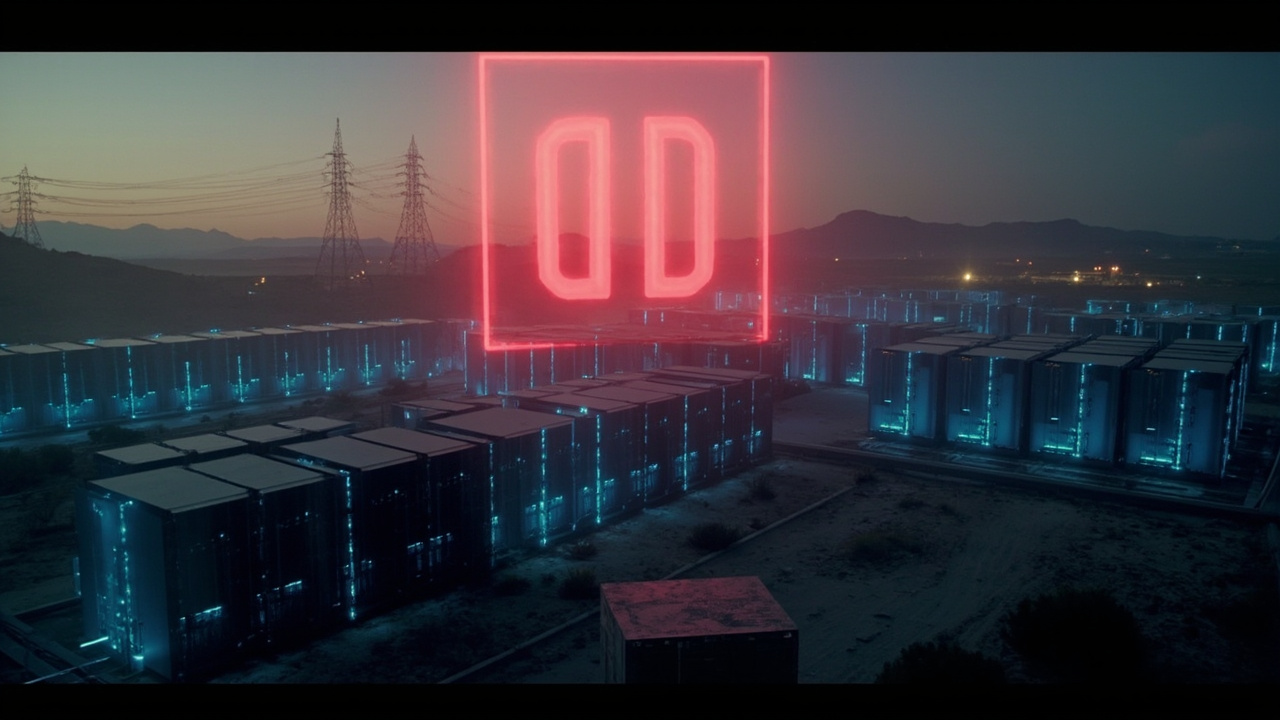
Texas spent years marketing itself as the “epicenter” of the AI buildout. Now it has hit the brakes — hard.
On August 3, 2026, Governor Greg Abbott directed the Public Utility Commission of Texas (PUCT) and grid operator ERCOT to conduct a “comprehensive verification and audit” of every data center project seeking connection to the state’s power grid. The order freezes approvals across an interconnection queue holding approximately 474 gigawatts of proposed load — more than five times ERCOT’s all-time record peak demand — of which roughly 90 percent is data centers. According to the governor’s office, no project moves forward until the audit is complete.
Twelve days later, the consequences are still unfolding: Bloomberg NEF warns that nearly a fifth of the entire U.S. data center pipeline is at risk of delay, President Trump has publicly broken with his fellow Republican over the policy, and cities across North Texas are following the state’s lead with moratoriums of their own.
What the audit order actually does
Abbott’s directive instructs the PUCT and ERCOT to verify each proposed project’s energy and water usage, financing, and readiness before granting grid approval. The trigger was scale: ERCOT’s interconnection queue has swollen past 1,800 individual projects totaling more than 474 GW, a figure so far beyond the grid’s physical capacity that regulators could no longer distinguish serious builders from speculators parking land in the queue.
The order lands hardest on ERCOT’s “Batch Zero” — the fast-track lane created to speed large loads onto the grid. ERCOT has already suspended previously scheduled Batch Zero milestones while the audit proceeds, and projects that expected to reach financial close this quarter are now in regulatory limbo. Law firm Akin Gump notes that the pause applies even to projects that had cleared earlier screening, since the audit is a precondition for any new approval going forward.
The numbers: 49.8 GW and up to $15 billion at stake
Bloomberg NEF’s analysis, published August 6, quantifies the blast radius. Of the 474 GW in the queue, BNEF tracks roughly 50 GW of data center projects far enough along to be affected in the near term. The pause specifically endangers 49.8 GW of new load — almost 20 percent of the entire U.S. data center pipeline.
The financial exposure is equally stark:
- Up to $15 billion in project costs could be consumed by delays, financing carry, and renegotiated contracts, BNEF estimates.
- Revenue losses could reach $8 billion by Q1 2027, assuming 60 percent of the delayed capacity is AI-related — a conservative assumption given that hyperscalers dominate the Texas queue.
- Texas accounts for a disproportionate share of national data center construction precisely because of its cheap power, deregulated grid, and governor who spent 2025 and early 2026 courting the industry. The audit pauses that flywheel at full speed.
Trump vs. Abbott: the coalition cracks
The most striking political development came August 7, when President Trump publicly criticized the pause in an interview with Punchbowl News. “I saw Texas the other day sort of is against data centers,” Trump said. “I think that’s crazy. They’re tremendously important for the economics.” He added that “for Texas to say no to data centers is a mistake in the strongest way.”
Abbott, never one to back down, defended the policy the same day: the audit protects ratepayers and grid reliability without killing projects — it merely verifies that companies can actually deliver what they claim. The rift is notable because both men had championed the AI buildout; the disagreement is over sequencing and trust, not goals. Texas Attorney General Ken Paxton has also weighed in, and industry observers read the combined signals as pressure on ERCOT to finish the audit quickly rather than abandon it.
The local revolt: Fort Worth and Hill County
While the state-level fight draws headlines, the more durable shift may be happening at city council meetings. On August 12, the Fort Worth City Council voted unanimously — after hours of public testimony — to initiate a 90-day moratorium on new data center construction inside city limits. City staff will use the window to evaluate noise, water supply impacts, and land use, with permanent zoning rules to follow.
Fort Worth is not an outlier. Hill County commissioners approved a one-year moratorium after residents packed a public meeting. Alabama communities have pushed back on data centers ahead of the governor’s race. And a 2025 Texas law that restricted municipal moratoriums on certain development types hasn’t stopped councils from finding other tools — Fort Worth’s pause, for instance, carves out projects outside city limits but supplied by its municipal water system, extending its reach into extraterritorial territory.
Is the pause “big bark, no bite”?
Not everyone thinks the freeze will bite. Energy analytics firm Enverus published an analysis titled “Big Bark, No Bite,” arguing that ready projects continue moving through Batch Zero unaffected, and that the audit targets tax-break verification and community impact rather than an outright ban. Under this reading, the order is political theater — Abbott signaling responsiveness to grid anxieties while letting serious projects proceed.
The truth likely sits between the two readings. The audit is real, its scope is unprecedented, and BNEF’s 49.8 GW estimate is based on actual project timelines, not rhetoric. But Texas has strong incentives to resolve it fast: every quarter of delay pushes revenue-hungry AI workloads toward rival states, and the governor who ordered the pause is the same one who recruited those workloads in the first place. Watch for the audit to conclude with tightened verification standards rather than mass rejections — a speed bump, not a wall.
Why this matters beyond Texas
The Texas pause is the sharpest signal yet that the AI infrastructure boom has outpaced the physical and political systems meant to support it. Interconnection queues across the country are drowning in speculative requests; Texas, with its famously independent grid, is simply the first to stop and count. How the audit resolves — quickly and credibly, or slowly and litigiously — will shape where the next hundred gigawatts of AI compute actually land.
For the AI industry, the lesson is uncomfortable: the binding constraint on scaling is no longer chips. It’s water, wires, permits, and voters.
Sources
- [1] https://gov.texas.gov/news/post/governor-abbott-directs-comprehensive-data-center-audit
- [2] https://www.texastribune.org/2026/08/03/texas-data-center-project-audit-greg-abbott/
- [3] https://www.utilitydive.com/news/texas-hits-pause-data-center-interconnections/827046/
- [4] https://www.utilitydive.com/news/texas-data-center-pause-puts-us-pipeline-risk-of-delay-bnef/827185/
- [5] https://www.texastribune.org/2026/08/07/donald-trump-texas-data-centers-greg-abbott/
- [6] https://www.datacenterdynamics.com/en/news/city-council-in-fort-worth-texas-issues-temporary-data-center-moratorium/
- [7] https://www.powermag.com/texas-audit-could-delay-49-8-gw-of-data-center-load-cost-projects-up-to-15-billion-bnef-warns/