Sainsbury's Suspends Store AI Face Scanning After Second Wrongful Ejection
A UK supermarket giant paused live facial recognition at its East Dulwich store after staff wrongly ejected a shopper — the second such incident this year, weeks after announcing a 200-store rollout.
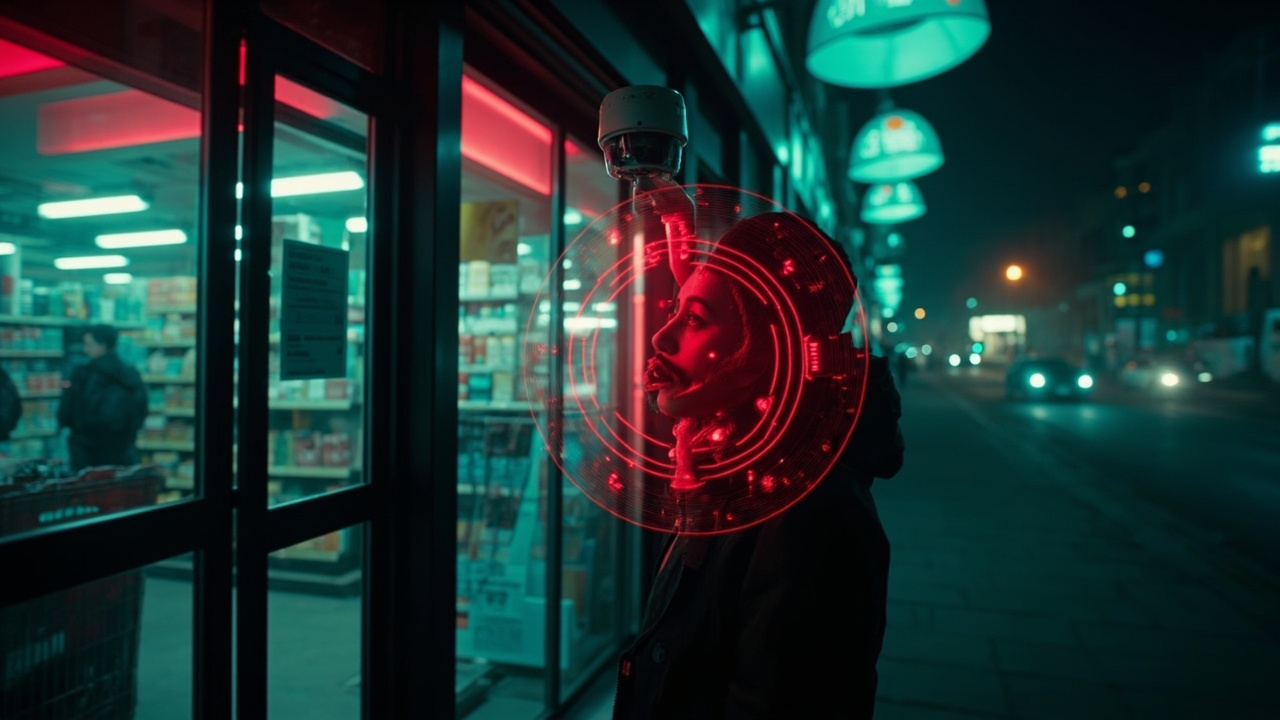
One of Britain’s largest supermarket chains has been forced to suspend the use of live facial recognition (LFR) at a London store after staff wrongly ejected an innocent shopper in response to an AI alert — the second wrongful ejection at the chain this year, and a cautionary tale about what happens when human judgment is delegated to opaque watchlists.
What happened
On August 6, 2026, Matt Arnold, a 46-year-old comedy promoter, was shopping at Sainsbury’s East Dulwich superstore in south London. He was using a self-service checkout and called a staff member over to approve an alcohol purchase. Instead of a routine age check, two store managers approached him, refused to serve him, and linked him to an incident earlier that week. Arnold was told the store’s facial recognition system had identified him in connection with a previous offence, and he was escorted from the premises.
As he left, Arnold looked behind him and saw what he believed was a security alert displaying his face inside a red circle.
“They came over and said I had to leave,” Arnold told the BBC. “The staff member said I’d been identified by the AI, and the cameras had flagged me. A shoplifter does not walk around with that much shopping, they don’t scan it through, they don’t put their Nectar card through. But what upset me was thinking this is what the future could be – people just listen to what the machine tells them to do without thinking about the consequences.”
By August 17, the story had made national headlines across the BBC, The Register, and retail press. Sainsbury’s confirmed it had temporarily suspended LFR alerts at the store while reviewing internal processes and considering additional staff training.
“Human error, not the technology”
Sainsbury’s attributed the incident to human error rather than a false match by the Facewatch system that supplies the technology. “We have contacted Mr Arnold to apologise for his experience at our Dulwich superstore,” a spokesperson said. “The incident was caused by human error, not the facial recognition technology. Customers can be reassured that the Facewatch system has a 99.98 percent accuracy rate, and every match is reviewed by a trained manager.”
Facewatch, for its part, said the technology “was not at fault in this incident. A correct alert was sent to the retailer, but was subsequently subject to human error in the way it was handled and communicated by the retailer.”
The Register asked Sainsbury’s to clarify exactly what the human error was in this case; the company did not reply.
The framing matters. If the system is never at fault and the humans are always at fault, then the system’s claimed 99.98 percent accuracy figure becomes unfalsifiable — every failure is reclassified as operator error after the fact. And when The Register pressed for specifics about what the “human error” actually consisted of, Sainsbury’s did not respond.
A pattern, not an outlier
This is the second such incident at Sainsbury’s this year. In February, Warren Rajah was wrongly removed from the chain’s Elephant and Castle store after being misidentified. As in the current case, Sainsbury’s maintained the Facewatch system had worked as intended — the system had correctly identified someone linked to a previous theft, but staff responding to the alert simply approached the wrong person. Rajah described being approached by three store managers holding smartphones, who looked at the screen, then at him, told him to leave, and pointed to a facial recognition flyer posted near the entrance.
Other wrongful interventions involving the technology have been reported at UK retailers including B&M, Budgens, Costcutter, Iceland, Southern Co-op, Spar, and Sports Direct.
The 200-store context
The suspension lands at an awkward moment for Sainsbury’s. Just last month, the supermarket announced a major expansion of its LFR deployment, confirming plans to install the technology in up to 200 stores by the end of 2026 to tackle shoplifting. The system currently operates in 55 stores, and Sainsbury’s claims that 90 percent of people identified through the system do not return to the store.
That 90 percent figure, presented as a success metric, is itself revealing: it describes the behaviour of people flagged by a watchlist entry they never agreed to be on, with no due process for removal. Privacy campaigners Big Brother Watch, who have campaigned against the rollout, argue that “Sainsbury’s and Facewatch are adding customers to secret watchlists with no due process, meaning people are being falsely accused” — a process they describe as punishment without trial.
The automation bias problem
The deeper issue this incident exposes is automation bias — the human tendency to defer to machine output, especially under pressure. Store managers receiving a live alert, with a face in a red circle, have seconds to decide whether to confront a shopper. The system’s framing does the interpretive work: this person is flagged, therefore this person is suspect. Arnold’s own observation cuts to the heart of it: “people just listen to what the machine tells them to do without thinking about the consequences.”
Notably, both Sainsbury’s and Facewatch agree the machine behaved correctly, and both concede the outcome was wrong. That combination — a “correct” alert and a wrongful ejection — is precisely the failure mode that human-in-the-loop systems are supposed to prevent. The review-by-trained-manager safeguard Sainsbury’s cites is the same safeguard that failed in both the Rajah and Arnold cases.
What to watch
Three things make this story worth following. First, whether the East Dulwich suspension becomes permanent or quietly reverts once headlines fade — the Elephant and Castle case earlier this year followed a similar review-and-resume pattern. Second, whether UK regulators or courts impose meaningful accuracy or due-process requirements on retail LFR; the technology sits in a regulatory gap, with police use of LFR having survived a legal challenge at the Court of Appeal level, while private retail deployment faces largely voluntary oversight. Third, whether the 200-store expansion proceeds on schedule despite two public wrongful ejections in a single year.
For an industry racing to put AI judgment into everyday retail operations, the East Dulwich incident is a compact demonstration of the gap between lab-grade accuracy statistics and street-level outcomes. A system that is 99.98 percent accurate on paper still produced a humiliating wrongful ejection — twice — because accuracy of the model is not the same as correctness of the outcome. The humans in the loop trusted the machine, the machine’s vendor says the machine was right, and the shopper was still marched out of the store for the crime of buying groceries.
Sources
- [1] https://www.theregister.com/ai-and-ml/2026/08/17/sainsburys-staff-eject-wrong-shopper-after-facial-recognition-alert-again/5288602
- [2] https://www.bbc.co.uk/news/articles/cddjlmeqjgyo
- [3] https://www.retailgazette.co.uk/blog/2026/08/sainsburys-pauses-ai-facial-recognition-cameras-after-shopper-wrongly-ejected/
- [4] https://bigbrotherwatch.org.uk/press-releases/response-to-sainsburys-trial-of-live-facial-recognition-in-stores/