Uber Bets on the Sky: Zipline Partnership Targets One Million Drone Deliveries a Day by 2029
Uber and Zipline announced a strategic partnership to bring autonomous drone delivery to Uber Eats, starting in Dallas and Houston later this year and scaling toward one million deliveries per day by the end of 2029.
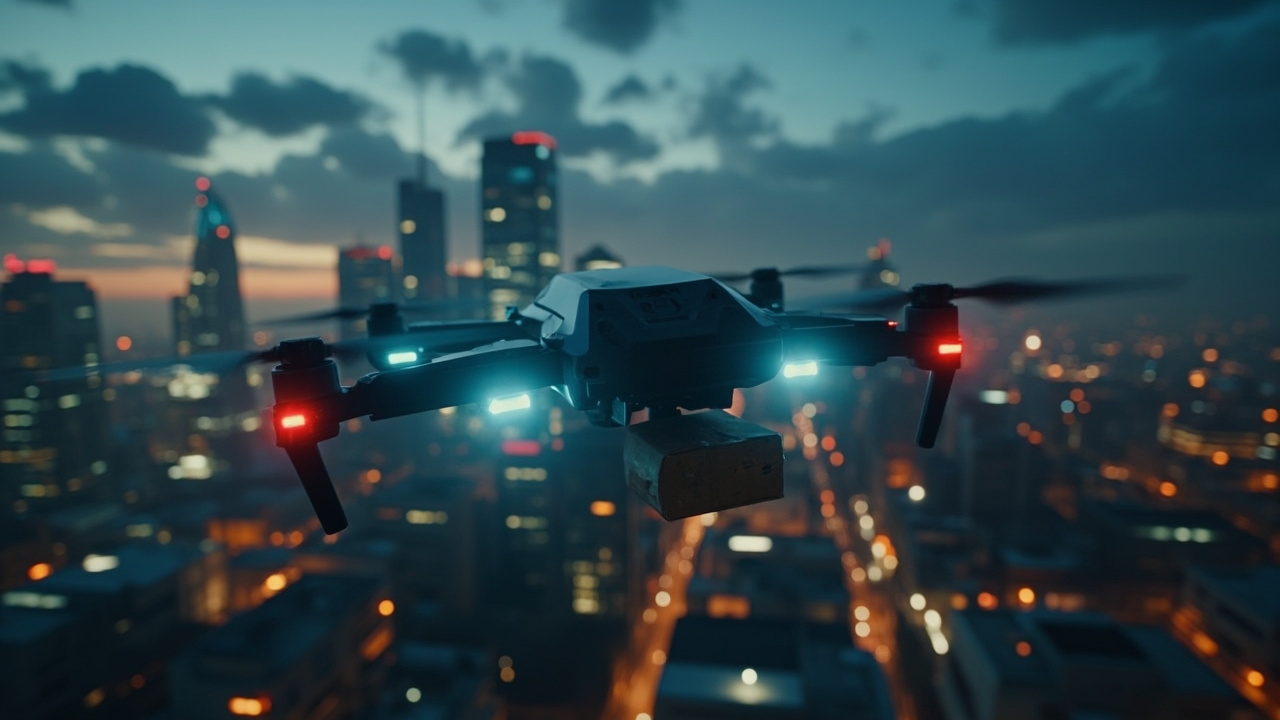
One day after the messy unraveling of its sidewalk-robot alliance became yesterday’s news, Uber has made clear where it thinks autonomous delivery actually scales: straight up. On August 17, 2026, Uber and Zipline announced a strategic partnership to put autonomous drone delivery on Uber Eats, with first deployments later this year in markets where Zipline already operates — Dallas and Houston among them — and a shared ambition that sounds almost absurd on its face: one million drone deliveries per day by the end of 2029.
Uber will also make a strategic investment in Zipline, though neither company disclosed the size or terms. The pairing connects one of the world’s largest delivery platforms — hundreds of thousands of merchants, many millions of daily orderers — with the operator of the world’s largest commercial drone delivery network. If the target is even loosely achieved, this becomes the largest deployment of autonomous aircraft over civilian airspace in history.
What the partnership actually does
The mechanics are simple from the customer’s side: in participating areas, Uber Eats users will see drone delivery as an option for eligible orders, with Zipline’s autonomous aircraft completing the drop in roughly 5–10 minutes. Behind the scenes, Uber describes this as the next tile in what it calls “the world’s most flexible hybrid delivery network” — a system that matches each order to the best mode of transport, whether that’s a human courier, a sidewalk robot, or a drone.
For Zipline, the deal is a distribution unlock. The company spent its first decade building medical logistics networks — it operates on four continents, serves more than 5,000 hospitals and health facilities, and is credited with saving more than 12,000 lives a year through blood and vaccine deliveries in countries like Rwanda and Ghana. Its operational record is genuinely unmatched in commercial autonomy: more than 135 million autonomous miles flown (the equivalent of driving every road in America 32 times, by the company’s math), 2.7 million deliveries of more than 20 million items, and a delivery taking off somewhere in its network about every 20 seconds.
But until now, Zipline’s U.S. consumer business has lived inside separate marketplaces and bespoke retail integrations — Walmart in the Dallas-Fort Worth area, restaurant partners in Texas. Uber Eats puts drone delivery inside an app that a huge share of American consumers already have installed and open at dinner time. That is the difference between a novelty and infrastructure.
The quotes tell the story
“Zipline has built incredible technology, and Uber connects many millions of people with local merchants every day,” said Uber CEO Dara Khosrowshahi. “Together, we’re shaping the future of delivery by creating a faster, more sustainable way for people to get what they need.”
Zipline co-founder Keller Cliffton went bigger: “Teleportation isn’t science fiction anymore. It’s becoming part of everyday life. Every great transportation revolution has changed where people live, how businesses operate, and how economies grow. Together with Uber, we’re taking the next step toward building a world where getting what you need is as fast and effortless as sending a text, no matter where you are.”
Marketing flourish aside, the underlying claim — that sub-10-minute aerial delivery changes consumer behavior the same way one-day shipping did — is the actual thesis of the deal. Zipline’s pitch is that drones cut delivery times, costs, and emissions simultaneously, which is the rare triple that road-based logistics has never managed.
Read the fine print: it’s a target, not a fleet
The one-million-per-day figure deserves a cold shower. It is a stated ambition, not current operating scale. Zipline delivers a package every 20 seconds today — roughly 4,300 deliveries a day across its entire global network. Reaching one million daily deliveries in under three and a half years implies a scale-up of more than 200x, requiring thousands of aircraft, a step change in charging and loading automation, airspace approvals across dozens of metropolitan areas, and per-flight economics that don’t currently exist at that volume.
There are encouraging signs beneath the headline number. Roughly 70% of Zipline’s flights now happen in the United States, where it has expanded beyond healthcare into retail and food, including Texas, Arkansas, and Ohio, plus a Cleveland Clinic home-delivery operation and an Austin launch. The competitive field — Wing (Alphabet), Flytrex, and DoorDash’s vertically-integrated drone program — is also scaling, but none has a distribution channel like Uber Eats.
Why this matters for the autonomous economy
The context makes the deal sharper. Uber has spent 2026 aggressively re-sorting its autonomy portfolio: it exited its entire stake in Serve Robotics earlier this month after that company’s sidewalk robots struggled with unit economics, and it previously invested in Flytrex for drone delivery in 2025. The pattern is unmistakable — Uber is behaving like a platform picking winners among transportation modes rather than a company married to any one robot. Sidewalk robots disappointed; the sky is the next bet.
For the broader AI and robotics industry, the partnership is a signal that autonomous delivery is graduating from pilot purgatory. When drone delivery lives in a dedicated app, it’s an experiment. When it’s a toggle next to “standard” and “priority” on an app with tens of millions of users, it’s a product category. The 2029 target will almost certainly slip or shrink — big infrastructure timelines always do — but the direction is now unambiguous: the race to own sub-10-minute logistics in America has gone aerial, and Uber just bought itself a seat at the front of the formation.
The first flights are expected before the end of 2026. Watch Dallas.
Sources
- [1] https://investor.uber.com/news-events/news/press-release-details/2026/Uber-and-Zipline-Partner-to-Bring-Drone-Delivery-to-Millions-of-Americans/default.aspx
- [2] https://www.reuters.com/business/autos-transportation/uber-zipline-partner-us-drone-delivery-uber-eats-2026-08-17/
- [3] https://dronelife.com/2026/08/17/uber-and-zipline-target-one-million-drone-deliveries-a-day-by-2029/
- [4] https://uk.finance.yahoo.com/news/uber-drone-startup-partner-hit-193411135.html