Nvidia Finalizes $105 Billion Guarantee for OpenAI's Ohio AI Megacampus
Nvidia locked in a restructured $105 billion credit guarantee for OpenAI's Ohio data center and will invest $1.5 billion in SB Energy, backing an initial 4.25 GW of AI compute.
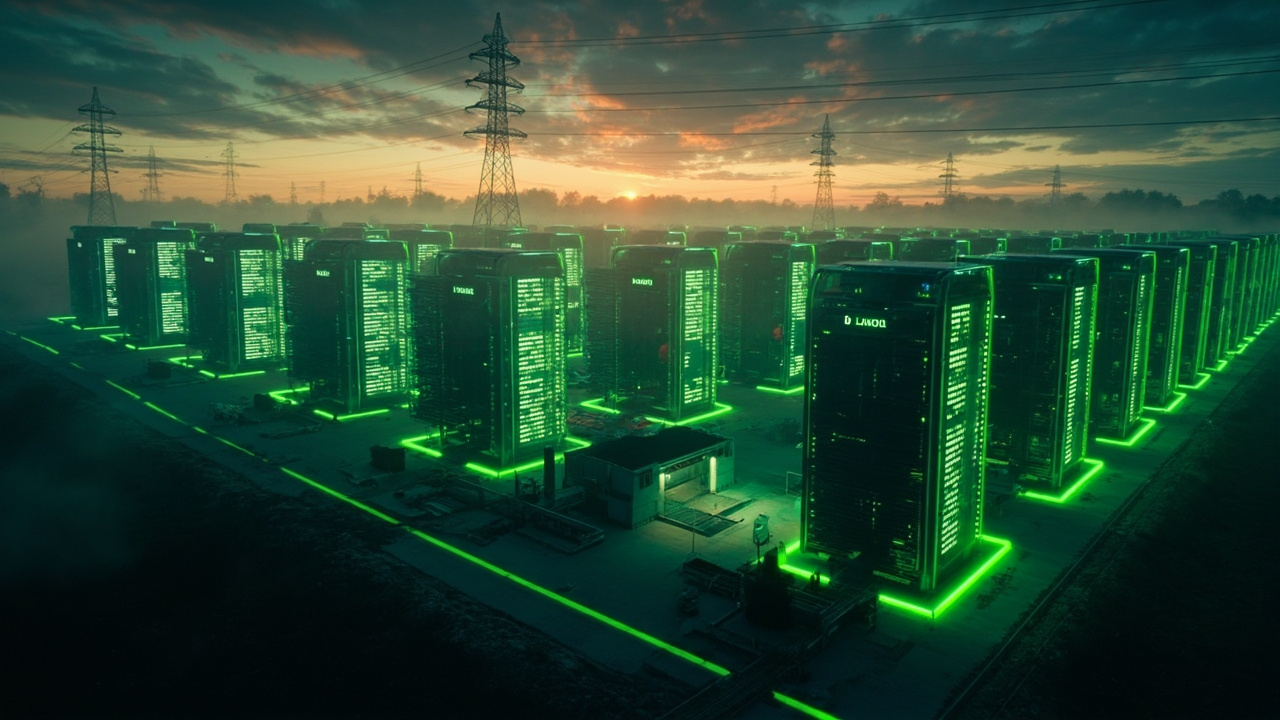
After weeks of intense negotiation — and a very public bout of investor anxiety — Nvidia has finalized the financial architecture behind one of the largest infrastructure projects in American history. The company confirmed on August 17 that it will provide a credit guarantee of up to $105 billion to help OpenAI lease a sprawling AI data center campus in southern Ohio, and that it will invest $1.5 billion in SB Energy, the SoftBank-backed developer building the site.
The deal is a landmark moment for the AI buildout: a chipmaker now stands as the financial backstop for its own biggest customer’s compute capacity, effectively underwriting demand for its own products at a scale never seen before.
What Was Announced
According to Nvidia’s official announcement and reporting from Reuters and CNBC, the guarantee centers on SB Energy’s PORTS-Pike Technology Campus in Pike County, Ohio — a site on federal land that will exclusively host Nvidia AI compute. The headline numbers:
- Up to $105 billion in credit support from Nvidia, backing OpenAI’s lease of the facility
- An initial 4.25 gigawatts (IT-GW) of computing capacity, with an option for an additional 3.75 IT-GW, taking the campus to roughly 8 gigawatts
- A $1.5 billion equity investment in SB Energy itself, aligning Nvidia with the developer rather than just the tenant
- Nvidia’s credit support covers land, power, and shell buildout — the foundational layers of the campus before a single GPU rack is installed
Jensen Huang told investors the site could ultimately contribute as much as $200 billion to Nvidia’s revenue, a figure that underscores why the company is willing to take on such extraordinary financial exposure.
From $250 Billion to $105 Billion: The Story Behind the Number
The final deal is dramatically smaller than what was on the table just three weeks ago. In late July, The Wall Street Journal and The Information reported that Nvidia was in talks to guarantee roughly $250 billion in financing for the project — a number that would have made Nvidia’s balance sheet the effective insurer of a project estimated to cost up to $500 billion in total with an original vision of 10 gigawatts of capacity.
The market reaction was brutal. Investors balked at the circularity of the arrangement: Nvidia guaranteeing debt so its customer could buy Nvidia chips, with SoftBank managing the financing in between. The concern wasn’t abstract — it echoed the vendor-financing structures that unrrolled telecommunications equipment makers in the early 2000s, where chip and hardware suppliers loaded up customers with debt to inflate near-term revenue.
Nvidia’s response was to restructure. By mid-August, reporting indicated the guarantee would shrink to “less than $120 billion,” and the final landed number of $105 billion — paired with the smaller $1.5 billion SB Energy stake (down from a reported $3 billion under discussion) — represents a deliberate de-risking. The phased structure matters too: the initial 4.25 GW commitment keeps the first tranche of exposure bounded, and the 3.75 GW option only triggers if the economics justify it.
Why It Matters
1. The AI capex arms race now has a lender of last resort — and it’s a supplier. OpenAI and Anthropic are collectively on the hook for over $1.1 trillion in compute spending commitments. Deals like this one are how those paper commitments become concrete megawatts. When traditional project finance hesitates at $500 billion data centers, the chip vendor itself is stepping in to make the math work.
2. It signals where Nvidia thinks the risk really sits. A company doesn’t put $105 billion of credit behind a single customer site unless it believes the demand for AI compute is durable for decades. Nvidia is effectively betting its balance sheet that OpenAI’s revenue growth — and the broader enterprise demand for frontier AI — will absorb 8 gigawatts of capacity in middle America.
3. Rural Ohio is becoming the physical center of the AI economy. The PORTS-Pike campus sits on a former federal site in Pike County, transforming one of Ohio’s more economically challenged regions into potentially the densest concentration of AI compute on Earth. The land, power, and buildout guarantee means Nvidia is now materially invested in the region’s grid, construction pipeline, and labor market.
4. Investor discipline worked — for now. The downsizing from $250 billion to $105 billion shows that even in AI mania, public-market pressure can force structural prudence. Nvidia chose protecting its multiple over maximizing near-term sell-through, a trade-off that would have been unthinkable during the frenzied 2024–2025 buildout phase.
The Open Questions
The restructuring answers how much risk Nvidia will take, but not whether the underlying bet is sound. Can OpenAI’s revenue actually support lease payments on 8 gigawatts of compute? What happens to the $105 billion guarantee if the initial 4.25 GW phase underperforms? And does the exclusive-hosting arrangement — the campus will run only Nvidia compute — raise antitrust questions as regulators scrutinize the AI supply chain?
There’s also the SoftBank dimension. SB Energy developing the site with Nvidia credit support and OpenAI as anchor tenant recreates a triangular structure where everyone’s incentives point the same direction: more compute, faster. That alignment is efficient when demand is infinite and dangerous when it isn’t.
The Bottom Line
The $105 billion guarantee is simultaneously a de-escalation and an escalation. Nvidia cut its exposure nearly in half from the July proposal, but a nine-figure-billion commitment to a single customer campus is still without precedent in the technology industry. The deal converts abstract AI demand forecasts into steel, concrete, and silicon in southern Ohio — and it makes Nvidia’s fortunes inseparable from OpenAI’s for at least the next decade.
Whether this ages as the shrewdest vertical integration in tech history or as the moment the AI bubble learned vendor financing’s oldest lesson will depend entirely on whether the world keeps wanting more compute. For now, the shovels are in the ground.
Sources
- [1] https://www.reuters.com/business/media-telecom/nvidia-invest-15-billion-sb-energy-under-openai-data-center-deal-2026-08-17/
- [2] https://nvidianews.nvidia.com/news/nvidia-guarantees-sb-energy-s-ports-pike-technology-campus-in-ohio-to-exclusively-host-nvidia-ai-compute
- [3] https://www.cnbc.com/2026/08/17/nvidia-financing-open-ai-data-center-ohio.html
- [4] https://www.theinformation.com/articles/nvidia-nears-deal-guarantee-100-billion-financing-massive-data-center
- [5] https://www.wsj.com/tech/nvidia-downsizes-plans-for-250-billion-guarantee-of-openai-data-center-b56c38d3