Ex-SpaceX Engineers Launch 1872, an AI-Run Robotic Factory for Steel Fabrication
Three Raptor-engine veterans opened Factory One in Cincinnati, where an AI 'Architect' plans jobs and a 'Conductor' orchestrates robots to weld steel skids for data centers and SMRs — attacking a US shortage of 320,500 welders.
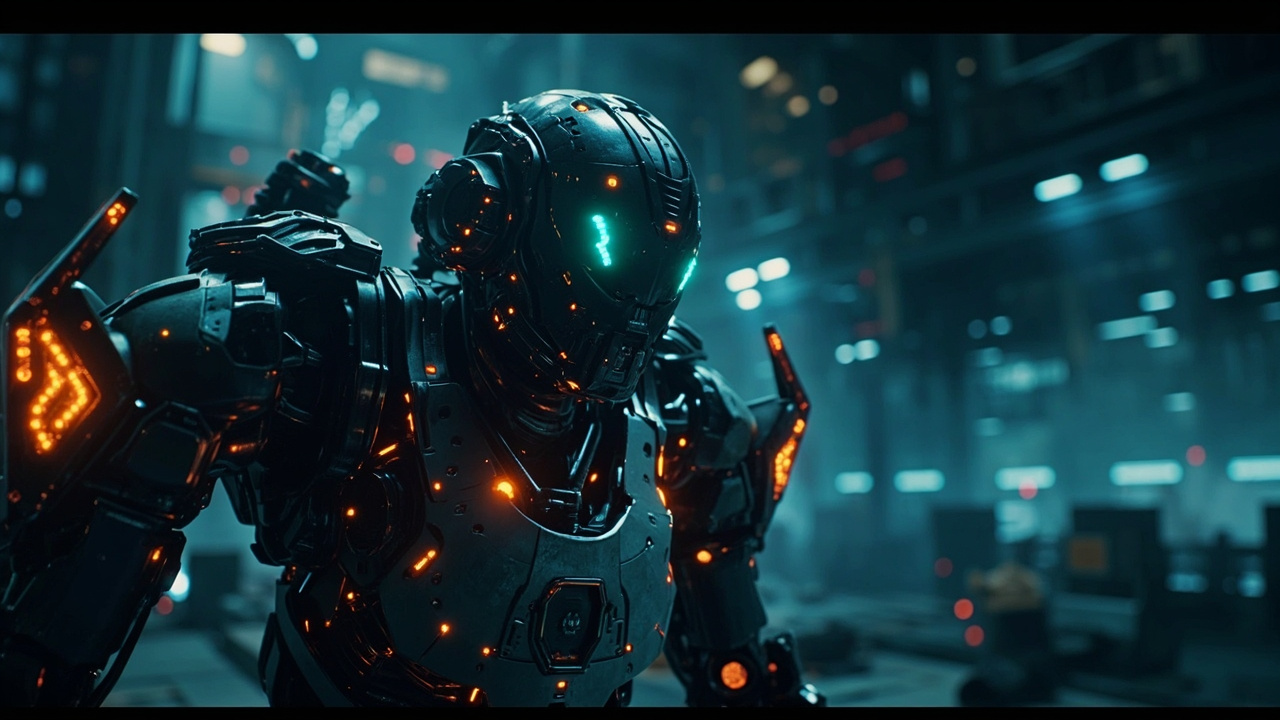
The AI infrastructure boom has a bottleneck that no amount of GPUs can solve: there aren’t enough welders to build the buildings. This week, a startup called 1872 backed by three former SpaceX engineers stepped forward with a concrete answer — an AI-driven “factory model” that plans, prices, and physically fabricates heavy steel components with a fleet of orchestrated robots.
From Raptor engines to steel skids
1872 officially launched on July 22, 2026, with a ribbon-cutting ceremony at its Factory One facility in Cincinnati, Ohio. The company is the work of cofounders Dan Summers, Brian Mongilio, and Michael Grant, all SpaceX alumni. Summers oversaw the engineering team responsible for fabricating and integrating the Raptor engines that power the Super Heavy booster on SpaceX’s Starship launch system.
That heritage matters more than the rocket-and-steel optics suggest. At SpaceX, the Raptor team used what Summers calls “intelligent software” to track and manage physical manufacturing — software engineers embedded with hardware engineers, building the system that builds the engine alongside the engine itself. With every engine different and change flowing through the pipeline constantly, that software was, in Summers’s words, the “secret sauce” that took Raptor from a first full-scale concept to a production version within three years — a cycle that typically exceeds two decades for jet engines.
1872 is now transplanting that playbook into one of the least digitized corners of American heavy industry. The company raised a $15 million seed round from private funds advised by The O.H.I.O. Fund — one of the largest seed rounds in Ohio’s history — and operates with a lean team of about 11 people.
Why steel skids?
The startup’s first product is deliberately unglamorous: the steel skid, a rectangular steel frame that serves as a movable foundation for modular buildings. Skids are “lower precision components” compared with aerospace-grade parts, which means more tolerance for automation error while still producing something genuinely useful. They are also consumed in enormous quantities by exactly the customers racing to build right now — AI data center developers and small modular nuclear reactor (SMR) projects.
“We’re starting with more of the less sexy components on the critical infrastructure side that are really important to our ability to build stuff and that consume a ton of skilled labor and resources,” Summers told Ars Technica’s Jeremy Hsu.
The economics are being reshaped by a labor crunch. The American Welding Society estimates the US will need 320,500 new welding professionals by 2029, driven by retirements from an aging workforce and soaring demand. Tightened immigration restrictions have further squeezed welding-intensive industries such as shipbuilding. “The problem that we are trying to solve is, how do we build more things with a decreasing pool of skilled labor to do it with,” Summers said.
Architect and Conductor: the software stack
The heart of 1872’s model is a two-layer AI system the company compares to a digital architect and a factory-floor conductor:
- Architect ingests a customer’s digital design files and generates a complete manufacturing plan — scheduling, pricing, and sourcing the necessary steel materials — without human quoting engineers in the loop.
- Conductor executes that plan by orchestrating the physical factory: directing robotic arms (some built in-house, some from partners), coordinating material handling, and eventually managing autonomous vehicles that shuttle parts between workstations or arms riding rails along production lines.
“Our differentiator is our ability to take robotic systems that are either built by us or built by partners, pull them into a single system, and orchestrate them together,” Summers said. The company uses customized off-the-shelf AI models — including large language models — and plans to add physics-based simulation models that can accurately represent manufacturing processes on the floor. Every production run generates training data intended to make the Architect smarter over time.
The numbers behind robotic welding
1872’s key robotics partner is Columbus-based Path Robotics, whose arc-welding systems illustrate why automation is winning on the factory floor:
| Metric | Robotic (Path) | Manual (human) |
|---|---|---|
| First-pass yield | 95–100% | lower, with rework/scrap |
| Arc-on time | ~70% of working time | 10–12% |
| Cost per weld inch | ~$0.12 | ~$0.78 |
The robot holds its welding arc nearly seven times longer per shift than a human, because people spend most of their time aligning, repositioning, and adjusting rather than laying beads. Path claims an 85% reduction in welding costs at scale.
But welding isn’t actually the bottleneck. A skid takes just two to four hours to weld — while assembling all the cut components in preparation can take four to five days. “The whole name of the game is how do we keep that machine fed,” Summers said. That reframing — automation as a materials-logistics problem rather than a joining problem — is where 1872 believes its orchestration software can differentiate.
Autonomy with an off-ramp
Notably, 1872 is not chasing lights-out manufacturing as ideology. The company began with human workers establishing a manual production process, then layered automation on top. “We may achieve 80 percent autonomous operations, and we may decide that it makes sense to stop there because there’s just diminishing returns to go to full 100 percent,” Summers said.
The immediate roadmap: a prototype factory automating most of the steel fabrication process by 2027, with the next 12 months spent “peeling back the layers of the onion” on manual processing — both on the physical floor and in the digital back office. If skids succeed, 1872 plans to expand into structural frames and enclosures. The $15 million round is sized to launch Factory One, build out the automation stack, and reach profitability.
Why it matters
The AI buildout is often framed as a chips-and-power problem, but construction labor is an equally hard constraint — and one that money alone can’t fix at current training rates. 1872 represents a growing pattern: aerospace-grade software discipline applied to commodity heavy industry, betting that orchestration AI, not any single robot, is the unlock. If the model works, robotic fabrication could become a standard subcontracting layer for data centers, SMRs, and beyond — and Cincinnati, an old steel town, may find itself with an unexpected role in the AI supply chain.
Watch this space: whether 1872 hits its 2027 automation milestone will be an early signal of whether “AI-native manufacturing” is a real category or a seed-round narrative.
Sources
- [1] https://arstechnica.com/ai/2026/08/former-spacex-engineers-are-building-a-robotic-factory-for-making-steel-parts/
- [2] https://www.bizjournals.com/cincinnati/news/2026/07/22/robotic-welding-firm-1872-ai-spacex-alum-ohio-fund.html
- [3] https://pulse2.com/1872-launches-autonomous-steel-fabrication-factory-in-cincinnati-closes-15-million-seed-round/
- [4] https://www.cleveland.com/advanceindustry/2026/07/spacex-alumni-launch-ai-driven-steel-fabrication-factory-in-cincinnati.html
- [5] https://www.ohiotechnews.com/1872-launches-autonomous-steel-factory-cincinnati-seed-round/
- [6] https://www.metalformingmagazine.com/article/?/welding-and-joining/assembly/autonomous-steel-fabrication-factory-model-launches-in-cincinnati