Ten Thousand H200s Each: ByteDance and Tencent Get Their Nvidia Chips — but Beijing Keeps Them in Hong Kong
FT reveals ByteDance and Tencent have each received ~10,000 Nvidia H200 processors — the first sizeable shipments since US approval — but Chinese regulators are directing the hardware to Hong Kong to shield domestic chipmakers.
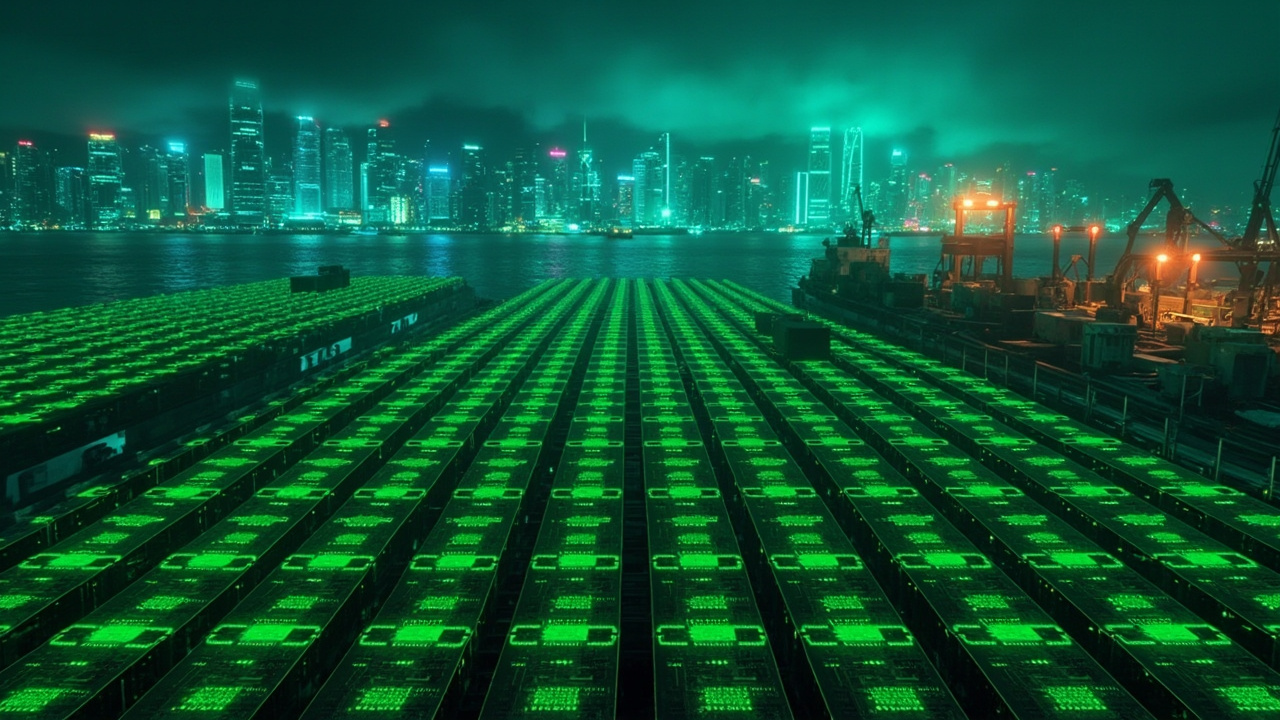
The strangest chapter yet in the US-China chip war was written this week. According to a Financial Times exclusive published Tuesday and picked up by Reuters, ByteDance and Tencent have each taken delivery of roughly 10,000 Nvidia H200 processors in recent weeks — the first sizeable shipments to reach Chinese buyers since Washington approved the sales. But there is a catch that says everything about where the technology standoff now stands: the chips are not going to mainland China. They are being staged in Hong Kong, at the explicit direction of Beijing.
What the FT found
Citing two people with knowledge of the matter, the FT reports that the two tech giants — the parent companies of TikTok/Douyin and WeChat, respectively — have each received about 10,000 H200 units, among Nvidia’s most powerful AI accelerators. A few other Chinese technology groups are expected to line up similar-sized shipments soon.
The numbers matter because of what was previously authorized. In May, the US government cleared around ten Chinese firms — including Alibaba, Tencent, ByteDance, and JD.com — to purchase Nvidia’s H200 chips, with each buyer permitted up to 100,000 units. Yet until now, virtually none of that licensed volume had actually moved. As one former US official noted to the Council on Foreign Relations earlier this year, Washington had issued licenses covering some 750,000 H200 chips, but the shipments remained “stalled on the Chinese side.”
Last month, a top US official told Congress that a small number of H200 chips had finally shipped to China. The FT report now puts concrete figures on that trickle — and reveals the unusual logistics behind it.
Why the chips are parked in Hong Kong
The central revelation is Beijing’s posture. Chinese regulators, according to the report, have told companies they may ship the processors to Hong Kong — which operates outside mainland China’s customs border — and use them there. The deliberate goal is to keep the hardware out of the mainland in order to support the growth of domestic chipmakers.
This is the culmination of a policy whipsaw that has run all year:
- January 2026: Within roughly a day of Washington’s initial approval, Chinese customs agents were instructed that H200 chips were “not permitted” to enter China, stranding an estimated $54 billion in orders. Beijing also advised domestic firms against buying US-made accelerators. Nvidia suppliers reportedly paused H200-related output for the China market.
- May 2026: The US formally cleared about ten Chinese firms to buy the H200, with Nvidia CEO Jensen Huang framing it as a breakthrough and reportedly visiting Beijing amid the negotiations.
- August 2026: The first meaningful volumes are finally flowing — but into Hong Kong rather than the mainland, under a regime that treats the city’s separate customs territory as a pressure valve.
The arrangement is an elegant piece of geopolitical hedging. Chinese AI companies get access to the compute they desperately need for training and inference. Beijing simultaneously keeps its official ban on mainland imports intact, preserving protection and demand certainty for homegrown accelerators — most visibly Huawei’s Ascend line, which is racing toward its own next-generation debuts this month. Everyone gets a face-saving half-win; nobody gets everything.
Why this matters
For Nvidia, even partial Chinese demand is material. The H200 is the Hopper-generation flagship that sits just below the Blackwell family in Nvidia’s portfolio, and China was historically one of its largest markets. A sustained resumption of shipments — even capped at a fraction of the 750,000 licensed units, even warehoused in Hong Kong — would claw back revenue the company had written off during the two-year export-control freeze. Nvidia did not immediately respond to a Reuters request for comment on the FT report, and Reuters said it could not independently verify the details.
For Chinese AI labs, 10,000 H200s per company is meaningful but not transformative compute. ByteDance — whose Seedance video models and Seed foundation models are trained on massive GPU fleets — and Tencent can route serious workloads through Hong Kong data centers. But the volumes are a rounding error against the 400,000+ units Chinese regulators were reported to have approved in principle back in January. Hong Kong’s data-center capacity, power constraints, and connectivity to mainland networks now become strategic variables in their own right.
For US export policy, the Hong Kong workaround exposes how difficult it is to weaponize semiconductor access in both directions. Washington spent months negotiating licenses with compliance conditions — US officials had discussed measures like revenue-sharing arrangements and third-party testing for China-bound chips. Beijing answered by conditioning the demand side: you may buy, but you may not fully import. The result is a gray zone where chips flow to a customs limbo that serves both governments’ competing objectives.
For China’s domestic chip push, the policy is a straightforward industrial subsidy by restriction. Every H200 that stays out of the mainland is capacity that Huawei Ascend, Cambricon, and the rapidly maturing domestic ecosystem can fill. The gamble — as with all techno-nationalist industrial policy — is whether domestic accelerators close the performance gap fast enough that Chinese AI firms don’t fall behind rivals with unfettered access to Blackwell-class hardware.
The bottom line
Ten thousand H200s each for ByteDance and Tencent, parked in Hong Kong, is a temporary equilibrium rather than a resolution. Washington wants a China business for Nvidia; Beijing wants a domestic accelerator industry; Chinese AI companies want both, immediately. The Hong Kong staging arrangement satisfies all three constituencies partially and none of them completely — which is precisely why it may prove durable. Watch the next signals: whether Alibaba and JD.com line up their own Hong Kong shipments, whether US regulators treat Hong Kong routing as compliant with license terms, and whether Huawei’s chip launches this quarter reduce Chinese firms’ appetite for the workaround at all.
Sources
- [1] https://www.ft.com/content/6c5650fb-969d-4d4e-80d6-8d11002a8cf7
- [2] https://srnnews.com/nvidia-h200-chips-reach-china-in-small-shipments-ft-reports/
- [3] https://www.reuters.com/world/china/chinas-customs-agents-told-nvidias-h200-chips-are-not-permitted-sources-say-2026-01-14/
- [4] https://www.reuters.com/business/retail-consumer/us-clears-h200-chip-sales-10-china-firms-nvidia-ceo-looks-breakthrough-2026-05-14/
- [5] https://finance.yahoo.com/news/exclusive-china-gives-green-light-034730976.html
- [6] https://winbuzzer.com/2026/01/14/chinese-customs-block-nvidia-h200-shipments-hours-after-us-approval-freezing-54b-in-orders-xcxwbn/
- [7] https://introl.com/blog/bis-export-policy-h200-mi325x-china-case-by-case-2026
- [8] https://www.ft.com/content/02a3eb7c-684f-4e39-87b8-36e9595ef800