AI Slop Floods Teachers Pay Teachers: Educators Sound the Alarm
AI-generated worksheets with missing letters and garbled history are flooding TPT, the marketplace used by 85% of U.S. educators — and the problem just hit national television.
For two decades, Teachers Pay Teachers has been education’s answer to Etsy: a marketplace where the people who know classrooms best sell lesson plans, posters, and activities to their peers. The premise baked into its name — teachers paying teachers — was the whole point. Now that premise is eroding, and the culprit is the same low-quality, machine-generated content that has flooded social media feeds and search results: “AI slop.”
On August 20, 2026, the story broke out of the education press and into national television, with NBC News airing a segment titled “Teachers warn of A.I. generated lesson plan mistakes.” National reporter Lily Altavena of Chalkbeat, whose investigation first surfaced the problem, walked viewers through what educators are finding when they shop for classroom materials — and why some of it may already be reaching students.
What Chalkbeat Found
The Chalkbeat review, published August 3, 2026, documented a pattern of obviously machine-generated materials for sale on the platform, which rebranded as TPT in 2022:
- A $4 poster set on Black inventors that labels George Crum — widely credited with inventing the potato chip — with a picture of a firefighter in an ominous gas mask next to a stop light. No potato chips anywhere. The typo-ridden caption reads: “Created the popular crispy snack when a customer is polated thinner fried potatees.”
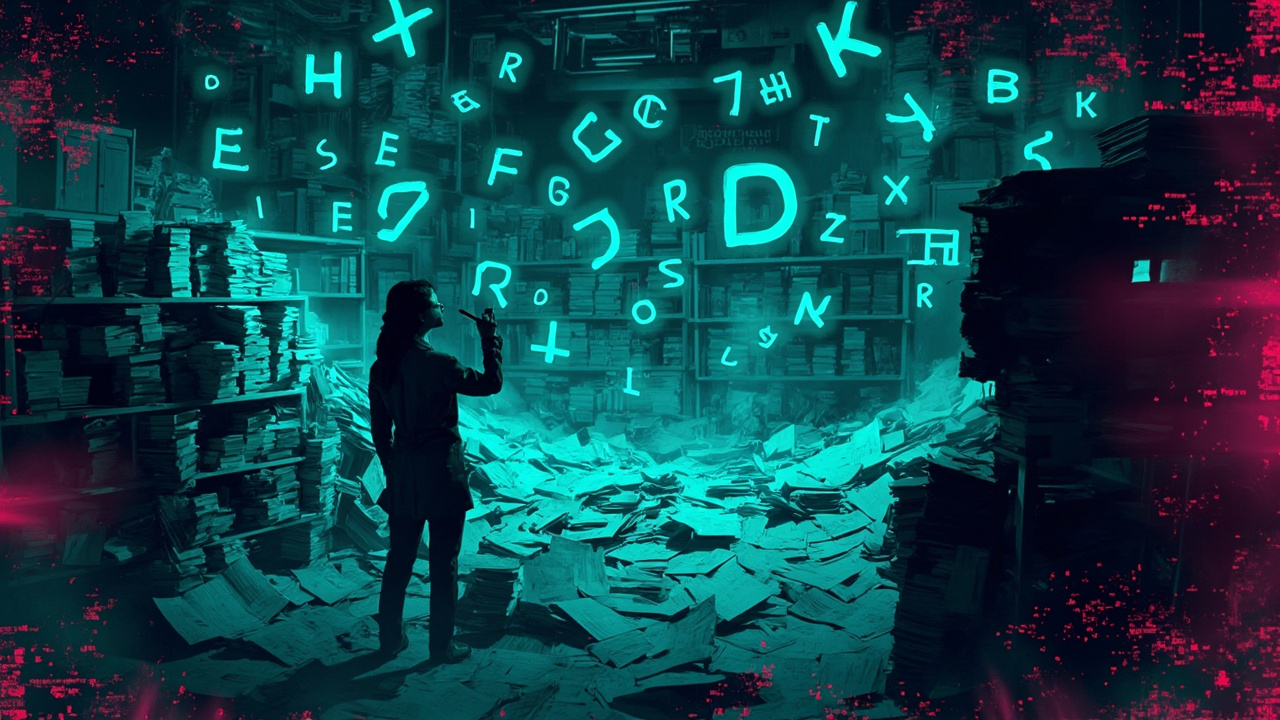
- A $1.99 alphabet coloring worksheet that is missing the letter F. An alphabet without an F became the investigation’s defining image.
- A $1.50 poster of U.S. presidents that illustrates Martin Van Buren’s “resilience” with an asteroid hurtling toward anti-slavery demonstrators.
TPT is not a fringe site. Its parent company, IXL Learning, said in 2023 that the platform is used by 85% of pre-K-12 educators in the United States. Materials that make it through vetting — or skip vetting entirely — can end up printed and handed to students.
A Marketplace Built on Trust, Now Under Strain
The platform has always had critics who doubted the quality of its wares, but it earned loyalty through its core promise: this material was made by a fellow teacher, someone who had stood in front of a classroom and knew what works. Generative AI breaks that promise quietly. A storefront can now be stocked with thousands of pages of plausible-looking worksheets in an afternoon, and the AI is, as Northern Arizona University professor Catharyn Shelton put it, “so good at making things sound really good. Even if the actual content or ideas aren’t really there.”
Teachers report noticing the proliferation for roughly the past year. Elisa Greb, an eighth-grade English teacher outside Pittsburgh, has learned to spot the tells: bulleted lists with bolded headings, generic phrasing, oddly confident errors. Her objection is blunt: “What really bothers me on something like TPT, where people are monetizing, is that they’re asking for your money for something that they didn’t actually create.”
The structural pressure that makes TPT vulnerable is familiar to every educator. Jeff Carpenter, an education professor at Elon University, notes that teachers are expected to produce large amounts of material on tight timelines — sometimes over the summer, unpaid. Exhausted buyers default to highly-rated resources and print them “without really looking at it.” A flood of slop poisons that shortcut for everyone.
The Cottage Industry Making It Worse
Chalkbeat also identified a secondary economy actively accelerating the problem: YouTube creators coaching would-be TPT shop owners on how to use AI to “multiply our efforts” and stock stores at scale. Many coaches do tell followers to edit and check quality — advice that is clearly not always followed. Chalkbeat even spotted AI-suggested titles engineered to rank in search, AI price recommendations, and, in some listings, outright AI disclosures.
When reporters contacted vendors, the responses were defensive. Jade Désautels, the creator behind The Garden of Art (the store selling the Black inventors posters), said she uses “a variety of digital tools as part of my creative process” and reviews resources before publishing. Achraf Zenmrouni, whose $4.28 musical-instruments posters included an African drum captioned “add a performer playing it in a lively village setting” — with no performer or village in the image — said he adjusted the graphics after Chalkbeat’s inquiry. One buyer review of that set: “poorly made” and “it was very obvious that AI was used.”
In perhaps the investigation’s sharpest flourish, a Chalkbeat reporter asked ChatGPT to role-play as one of these creators. The model produced a near-identical response to the human vendors: “I do use AI-assisted tools as one part of my creative process,” followed by an assurance that it reviews content before publication.
The Platform’s Response
Paul Mishkin, CEO of IXL Learning, TPT’s parent company, told Chalkbeat that the company uses “algorithmic tools to identify and demote stores associated with low-quality, AI-generated content,” and claims these measures are “already highly effective, such that AI-generated products account for a minuscule fraction of a percent of TPT’s sales.”
Teachers on the ground dispute that picture. The gap between “minuscule fraction of a percent” and what educators say they see while shopping suggests either different measurement baselines — sales versus listing volume — or detection tools that lag the flood. It is a pattern familiar from every platform that has met generative AI: moderation implemented after the inventory arrives, not before.
Why It Matters Beyond the Classroom
The TPT story is a clean case study in how AI slop propagates through trusted intermediaries. The content did not arrive by hacking the platform; it arrived through its front door, riding the marketplace’s own trust signals — ratings, reviews, search ranking — exactly as designed. Three forces converged:
- Generation cost collapsed to near zero, so volume beats quality as a strategy.
- The buyer is time-starved and trust-defaulting, so superficial polish converts.
- The platform’s brand is built on human authenticity, which AI can now imitate in form while hollowing out in substance.
Chalkbeat’s deeper point is uncomfortable for policymakers: TPT’s two decades of success is itself evidence that many U.S. school districts still fail to arm educators with high-quality instructional materials. AI slop does not create that gap — it pours into it. Until districts treat curriculum as infrastructure rather than an individual teacher’s side quest, marketplaces like TPT will remain the pressure valve, and pressure valves attract slop.
For educators, the practical guidance from the reporting is clear: preview everything, treat five-star ratings as a starting point rather than a filter, watch for the formatting tells, and remember that a seller’s “AI-assisted” disclosure may be buried in the listing. For everyone else, TPT is simply the latest map of where the AI content wars are heading — anywhere trust is sold by the page.
Sources
- [1] https://www.chalkbeat.org/2026/08/03/ai-slop-on-teachers-curriculum-marketplace/
- [2] https://www.nbcnews.com/video/teachers-pay-teachers-hit-by-a-wave-of-a-i-content-with-mistakes-268569157707
- [3] https://cbnewsletters.chalkbeat.org/p/an-alphabet-without-an-f-ai-slop-seeps-into-teachers-pay-teachers-curriculum-marketplace