Five US Agencies Warn: Hackers Are Using AI-Generated Scripts to Attack Water Plant Controllers
NSA, CISA, FBI, DOE and EPA issued a rare joint advisory warning of an 'active threat' — attackers using AI-generated exploit scripts disguised as monitoring tools to target Siemens S7 PLCs running American water and industrial systems.
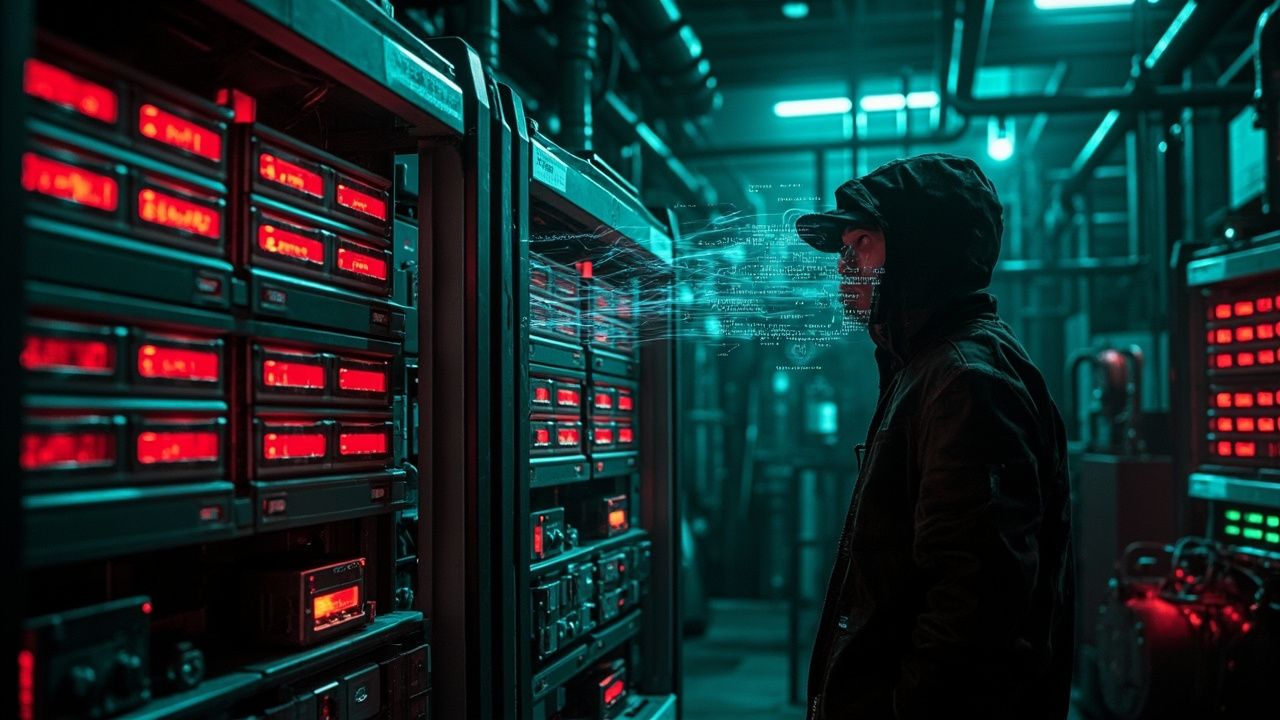
On August 19, 2026, five US federal agencies — the National Security Agency (NSA), the Cybersecurity and Infrastructure Security Agency (CISA), the FBI, the Department of Energy, and the Environmental Protection Agency (EPA) — published a joint cybersecurity advisory describing what they explicitly called an “active threat,” not a theoretical one: unidentified hackers are using AI-generated exploit scripts to attack Siemens S7 series programmable logic controllers (PLCs), the industrial workhorses that monitor and control water treatment plants, pumping stations, power systems, and factories across the United States.
The advisory, designated AA26-231A, is notable for two reasons. First, its breadth — five agencies spanning cybersecurity, intelligence, law enforcement, energy, and environmental protection rarely coordinate on a single threat bulletin. Second, and more significantly, it appears to be the first time CISA has stated in a cybersecurity advisory that malicious actors are actively using AI-generated scripts to target operational technology (OT) systems. Michael Garcia, a former top CISA official now at Monument Policy Advocacy, said as much: “It is the first alert I have seen where CISA is saying in a CSA that a malicious actor is using AI scripts to target OT systems.”
What the attackers are actually doing
The campaign targets the entire modern Siemens S7 lineup: S7-200, S7-300, S7-400, S7-1200, and S7-1500 controllers — including the F-series safety controllers designed to guard against equipment damage and physical harm. The affected sectors read like a list of everything a society cannot afford to lose: water and wastewater, energy, critical manufacturing, chemicals, food and agriculture, and commercial facilities.
The attack chain described in the advisory is disturbingly efficient:
- Reconnaissance at scale. The actors use internet scanning platforms such as Censys and ZoomEye to identify internet-exposed Siemens PLCs running outdated software, protected by insecure credentials, or lacking effective authentication altogether.
- AI-accelerated weaponization. They then use AI to rapidly generate and refine exploit scripts built on publicly available technical information, known vulnerabilities, and open-source industrial automation libraries — notably
snap7.dllandpython-snap7, legitimate tools that thousands of automation engineers use daily. The resulting Python-based tools speak the native S7comm protocol (TCP port 102), allowing attackers to read and write PLC memory, configuration data, and ladder logic programs. - Camouflage. The malicious scripts are disguised as legitimate industrial monitoring software — precisely the kind of tool a plant operator would expect to see talking to a controller, and therefore unlikely to raise alarms.
The advisory’s language about AI is blunt: “Using AI to generate exploitation scripts represents an evolution in threat actor capabilities, dramatically reducing the technical expertise and time required to develop working ICS exploitation scripts and malicious tools.” It adds that AI “enables adversaries to rapidly leverage additional attack vectors and adapt to defensive measures.”
Perhaps the most troubling detail is behavioral. The agencies observed attackers performing data block read operations to map industrial environments and understand process configurations before executing write operations. That sequencing suggests deliberate pre-positioning for future disruptive attacks — reconnaissance for something bigger, not opportunistic vandalism.
Context: a summer of water system attacks
The advisory does not exist in a vacuum. Since late July 2026, the FBI has been tracking incidents at water and wastewater utilities in at least seven states, with some reports suggesting the true scope is far wider. More than 30 community water systems were hit in a coordinated attack on July 26–27, including roughly 30 water plants in Minnesota alone. The New York Times reported in early August that evidence of the hacking campaign continued to widen. Attribution remains unconfirmed, but Reuters reported the warning came “amid fears Iran is breaching water plants,” and NPR has framed the attacks as a potential new front in the ongoing US–Iran conflict. Notably, Wednesday’s advisory does not name any country.
Siemens, for its part, pushed back gently on the framing. In a statement, the company said it was “aware” of the alert and “coordinating closely with CISA,” but emphasized that the advisory “does not describe new vulnerabilities within the S7 Series programmable logic controllers. Instead, this reflects threat actors employing new techniques to exploit potential misconfigurations.” In other words: the controllers aren’t newly broken — the attackers are newly capable.
Why this matters
The expertise barrier just collapsed. A decade ago, attacking industrial control systems required Stuxnet-tier resources: nation-state budgets, zero-day research, and engineers who understood both exploit development and industrial processes. AI-generated scripts built on open-source libraries compress that skill set into something accessible to far more actors. The advisory’s core warning is that the democratization of ICS attack capability has arrived.
The water sector is the soft underbelly. The United States has roughly 50,000 community water systems, most of them small, underfunded, and staffed by people whose job is water treatment, not cybersecurity. An internet-exposed PLC with a default password is exactly the kind of asset this campaign hunts.
The attack pattern isn’t brand-specific. Brian Proctor, CEO of OT security firm Frenos, flagged an easily missed implication: “Siemens S7 is the subject here, but the exposure pattern is not brand specific. An adversary who has mapped your data blocks understands your process. They know what normal looks like, which means they know what an operator would fail to notice.” The same playbook — scan, map, weaponize with AI, disguise as monitoring — works against any exposed controller.
What defenders should do now
Interestingly, for an advisory about AI-fueled attacks, the recommended defenses are almost entirely traditional — a point Garcia highlighted. The agencies urge industrial organizations to:
- Inventory all Siemens S7 assets immediately, verify firmware versions, and identify controllers accessible from untrusted networks
- Patch PLC firmware and engineering software (tested in development environments first)
- Block S7comm TCP port 102 at perimeter firewalls and ensure no PLC is reachable from the internet
- Segment OT networks from corporate systems via a properly designed DMZ, with unidirectional gateways where appropriate
- Monitor for unusual S7comm traffic, unauthorized PUT/GET commands, data block writes outside maintenance windows, sequential port-102 scanning, and — tellingly — Python processes importing
snap7.dll - Harden access: PLC password protection, restricted engineering workstation access, multi-factor authentication for remote connections, application whitelisting, and review of ladder-logic changes
The absence of any AI-versus-AI silver bullet in the mitigations list is itself the message: when the attack surface is a misconfigured controller with a public IP address, the fix is not a better model — it is fundamentals, executed consistently, across fifty thousand utilities that have struggled to afford them. The AI revolution in cybercrime has arrived; the defense, at least for now, remains stubbornly analog.
Sources are listed in the article metadata. Advisory AA26-231A is available from CISA’s official advisory page.
Sources
- [1] https://www.cisa.gov/news-events/cybersecurity-advisories/aa26-231a
- [2] https://cyberscoop.com/hackers-use-ai-target-siemens-plcs-critical-infrastructure/
- [3] https://gbhackers.com/cisa-nsa-and-fbi-warn-hackers/
- [4] https://www.reuters.com/world/us-warns-siemens-devices-can-be-hacked-amid-fears-iran-is-breaching-water-plants-2026-08-19/
- [5] https://techcrunch.com/2026/08/20/us-says-hackers-are-targeting-vulnerable-water-systems-with-the-help-of-ai/
- [6] https://www.fbi.gov/investigate/cyber/alerts/2026/malicious-cyber-actors-targeting-water-and-wastewater-sector-internet--facing-programmable-logic-controllers-causing-operational-disruptions
- [7] https://securityaffairs.com/197566/ics-scada/nsa-cisa-fbi-doe-and-epa-warn-of-active-ai-assisted-attacks-on-siemens-s7-plcs.html
- [8] https://www.cybersecuritydive.com/news/what-we-know-so-far-about-the-hacking-campaign-against-us-water-systems/828374/
- [9] https://www.npr.org/2026/08/12/nx-s1-5927437/cyberattack-water-iran-war
- [10] https://cybernews.com/security/fbi-cisa-warning-siemens-plc-us-water-cyberattacks-iran/