Nevada Greenlights 8,000 Robotaxis: Tesla, Uber, and Waymo All Win Commercial Permits for Las Vegas
The Nevada Transportation Authority unanimously approved commercial robotaxi permits for Tesla (up to 5,000 vehicles), Uber (1,000), and Waymo (1,000) in Clark County — setting the stage for Las Vegas to become the world's most contested robotaxi market.
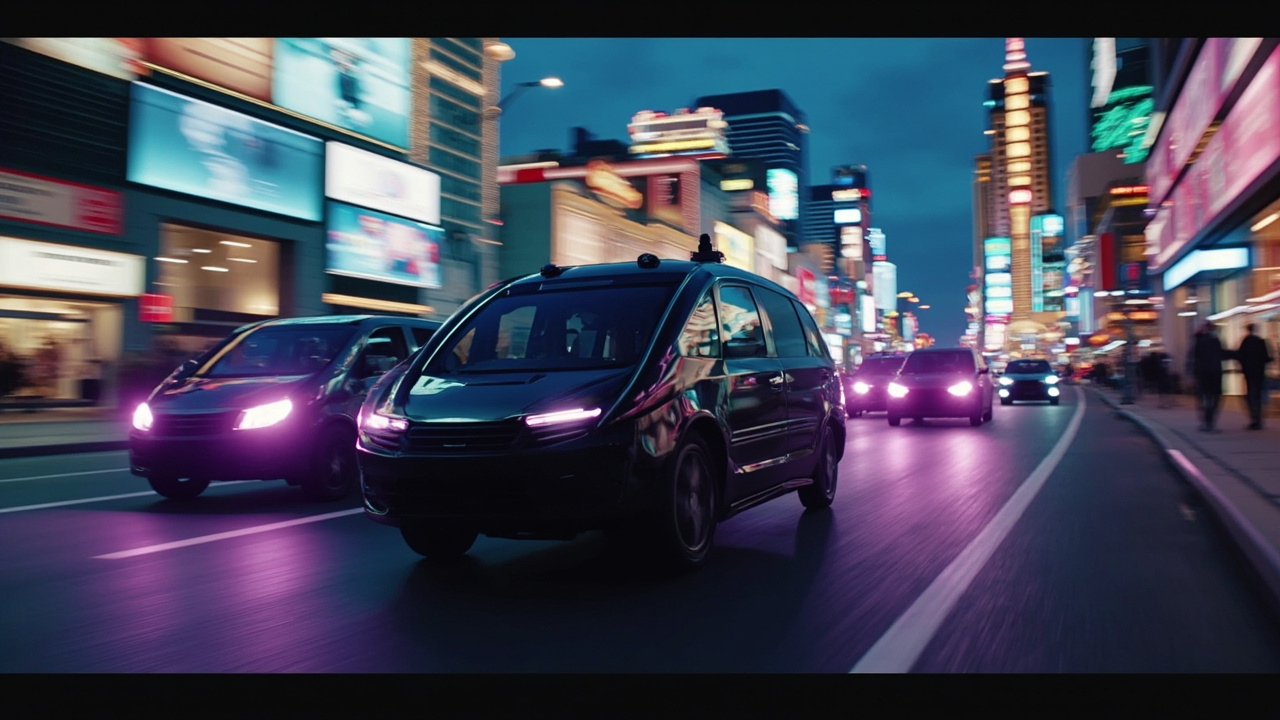
Nevada just handed the autonomous vehicle industry its biggest regulatory win of the year. On Thursday, August 20, 2026, the Nevada Transportation Authority (NTA) unanimously approved three permits that will allow Tesla, Uber, and Waymo to operate commercial robotaxi services in Clark County — the home of Las Vegas. Taken together, the permits authorize the deployment of up to 8,000 robotaxis across the county over the next 12 months, transforming a city famous for human-driven excess into the single most contested robotaxi battleground on the planet.
The scale of the approval is remarkable. Tesla’s permit allows up to 5,000 robotaxis. Waymo was cleared for up to 1,000 autonomous vehicles over the next year. Uber was also approved for 1,000 robotaxis, which it will operate not with its own vehicles but through partnerships with Hyundai subsidiary Motional and Amazon-backed Zoox — the latter already holding its own autonomous vehicle network company (AVNC) permit covering 100 robotaxis. Three companies, three fundamentally different strategies, one 8,000-square-mile desert county as the proving ground.
The numbers are ceilings, not commitments
Anyone expecting 8,000 driverless cars to flood the Strip next month should temper their enthusiasm. Company testimony at the hearing made clear the permit totals are upper bounds, not deployment plans.
“The 5,000 has always been a ceiling for us,” said Eric Early, Tesla’s Cybercab chief engineer, during the meeting. “I don’t think we’ll be in a position by this time next year to deploy 5,000 vehicles, and it’s not [because of] the technology. … I think we would be extremely happy and satisfied if we could get ourselves up to 2,500, maybe a bit higher than that in the next year.”
That is a strikingly candid admission from an automaker famous for aggressive timelines. Tesla’s constraint, per Early, is not autonomy software or vehicle capability — it is manufacturing, fleet operations, and the sheer logistics of standing up a driverless network at scale. Even so, 2,500 robotaxis in a single county would represent one of the largest autonomous fleets anywhere in the world.
The permit also marks a dramatic escalation from Tesla’s earlier Nevada experience. Just last week, regulators capped Tesla’s initial Vegas fleet at 10 vehicles — limited to 45 mph and barred from the airport — a bruising comedown from its 5,000-vehicle application. Thursday’s unanimous commercial approval changes the frame entirely: the ceiling Tesla asked for has been granted, and expansion now depends on Tesla’s own execution rather than regulatory patience.
Three strategies converge on one city
What makes Las Vegas unique is not just the number of robotaxis approved, but the diversity of approaches competing head-to-head.
Tesla is betting on camera-based autonomy at consumer-vehicle cost, aiming to saturate the market with volume. Waymo, the Alphabet subsidiary with the longest track record and the largest existing commercial footprint, brings lidar-heavy purpose-built hardware and a reputation for safety data. Uber, which owns no autonomous technology of its own after selling its self-driving unit years ago, is assembling a partner network — Motional’s vehicles and Zoox’s purpose-built robotaxi — to keep its ride-hailing marketplace relevant in a driverless future.
Uber has tried to position itself as the reasonable middle ground. During the NTA meeting, the company pitched a hybrid approach in which ride-hailing networks blend human drivers with robotaxis, arguing this lets cities integrate autonomous capacity gradually to meet peak demand rather than flooding the market all at once. Uber has even lobbied for rules that would require robotaxis to operate on networks that also employ human drivers — a stance that puts it directly at odds with Waymo and conveniently hedges against Uber’s own autonomous ambitions falling short of Tesla’s or Waymo’s.
Opposition: too far, too fast
Not everyone in the room was celebrating. Representatives from the Livery Operators Association and local taxi companies opposed all three permits, arguing Nevada is moving too far, too fast.
“These applications raise two grave concerns,” said Kimberly Maxson-Rushton, a lawyer representing the Livery Operators Association, at the hearing. “One deals with the oversaturation of the commercial transportation industry as a whole in Nevada. And the second one deals with the overcrowding of the roadways, and specifically the Golden Triangle.”
The “Golden Triangle” — the area between Harry Reid International Airport and Las Vegas Boulevard — is where most autonomous vehicle testing has occurred to date, and it is already the most congested corridor in the county. Motional has also been testing downtown and in the Town Square shopping district.
The workforce stakes are equally contentious. Optimists argue a robotaxi fleet of this size creates an entirely new category of jobs — technicians to maintain the vehicles, operators to charge them, crews to clean them between rides. Pessimists point out that Clark County’s taxi, limo, and gig economy employs tens of thousands of drivers, and that an 8,000-vehicle autonomous fleet directly displaces a large share of that labor. Both things can be true simultaneously; the question is the net effect, and nobody honestly knows yet.
Why Las Vegas, and why now
Las Vegas has spent years quietly building toward this moment. The city offers a compact, high-density tourist corridor with enormous and predictable ride demand, favorable weather, wide grid streets, and a state government that has courted autonomous vehicle companies since well before robotaxis were commercially viable. Nevada was among the first states to legalize autonomous testing back in 2011, and the NTA’s AVNC permit framework is now among the most mature commercial robotaxi regimes in the country.
The timing also reflects industry momentum. Waymo opened its purpose-built Ojai robotaxi to all riders in multiple cities just last week and has confirmed Las Vegas as an expansion market. Zoox has been testing its toaster-shaped purpose-built vehicle in the city for over a year. Motional paused and then relaunched its Vegas operations with renewed Uber backing. And Tesla, having launched supervised robotaxi service in Austin, has made no secret that Las Vegas is its next major battleground — the company has reportedly already spent $3.1 million on a Las Vegas facility complete with Superchargers to support the fleet.
What happens next
The permits take the regulatory question off the table; the operational question now dominates. Over the next twelve months, expect phased rollouts: initial deployments in the tens of vehicles, geofenced to the Golden Triangle and the Strip corridor, expanding outward as companies demonstrate safety records to the NTA. Airport access — the single most lucrative robotaxi territory in any city — remains a separate negotiation and was explicitly excluded from Tesla’s earlier limited permit.
For the industry, Nevada’s decision matters beyond one state. It is the largest simultaneous commercial authorization ever granted to three competing robotaxi operators in a single market, and it effectively reframes the autonomous vehicle race from a permitting story into an execution story. The companies no longer need permission to build big in Las Vegas. They just need to build.
For riders, the near-term impact may be modest — a few thousand driverless cars in a county of 2.3 million people, competing with a deeply entrenched taxi and rideshare ecosystem. But as a preview of how American cities absorb autonomous fleets at scale — the labor politics, the infrastructure, the market competition — what happens in Vegas over the next year will not stay in Vegas.