Nevada Greenlights 8,000 Robotaxis: Tesla, Waymo, and Uber Get the Largest US Autonomous Deployment Ever Approved
The Nevada Transportation Authority unanimously approved permits for up to 8,000 commercial robotaxis in Clark County — Tesla alone gets 5,000 — making Las Vegas the biggest autonomous vehicle battleground in America.
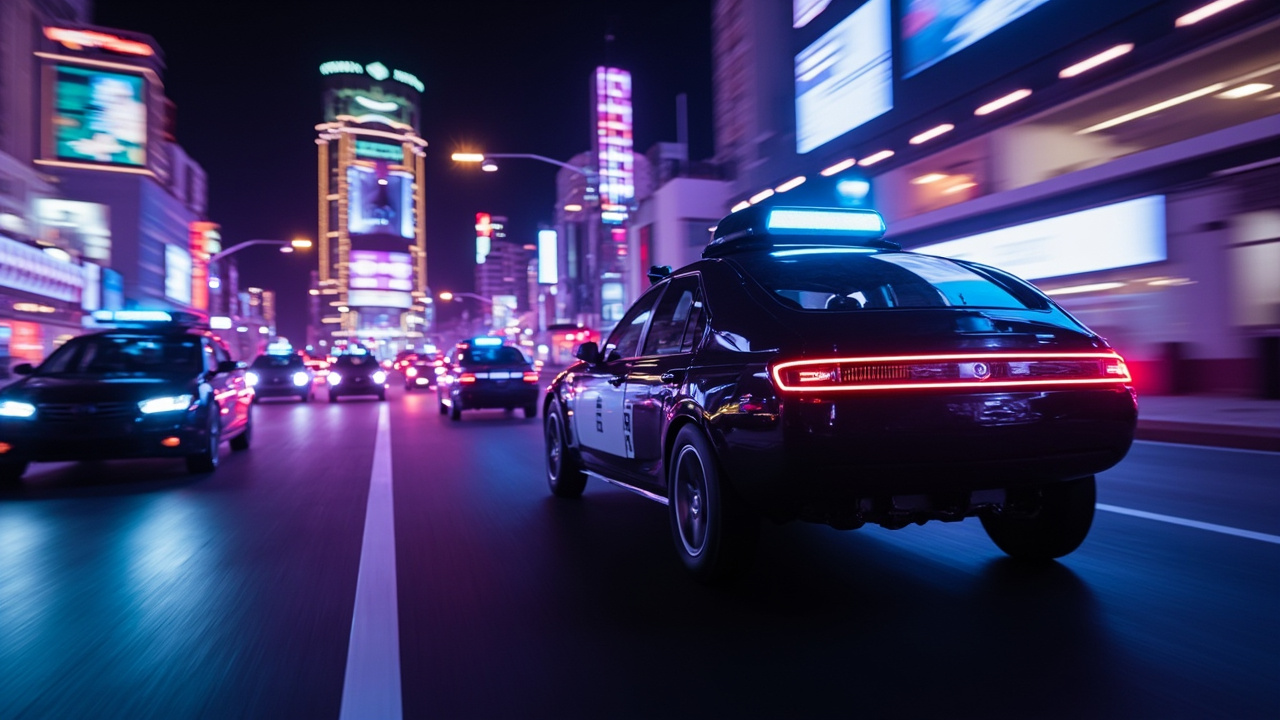
The largest single commercial robotaxi authorization in United States history just landed — and it landed in Las Vegas. On Thursday, August 20, 2026, the Nevada Transportation Authority (NTA) voted unanimously to approve three Autonomous Vehicle Network Company permits covering Tesla, Waymo, and Aviari, the Uber-affiliated applicant that will deploy vehicles through its partners Motional and Zoox. Together the permits allow up to 8,000 driverless vehicles to operate across Clark County over the next twelve months, instantly turning the Las Vegas valley into the densest autonomous-vehicle market on the continent.
What was approved
The breakdown of the fleet ceiling matters more than the headline number. Tesla received authorization for up to 5,000 autonomous vehicles — by far the largest single allocation. Waymo was cleared for 1,000 vehicles, and Aviari, operating on behalf of Uber’s network through partnerships with Hyundai’s Motional subsidiary and Amazon-backed Zoox, received another 1,000. Zoox separately already holds an autonomous vehicle network company permit allowing 100 robotaxis, which it has been using for its existing Las Vegas operations.
The permits cover Clark County in its entirety, including the corridors around Harry Reid International Airport — though with one significant carve-out: companies cannot actually service the airport until they obtain separate authorization from the Clark County Department of Aviation. The airport exception is not a footnote. The ride between the airport and the Las Vegas Strip is one of the highest-volume, highest-margin taxi trips in the United States, and access to it is the prize every operator is circling.
The conditions attached are conventional for a regime of this maturity: vehicle inspections and documentation, required insurance, rates submitted to the NTA before any public service begins, customer-facing apps submitted for review, compliance with accessibility and nondiscrimination rules, mandatory crash and incident reporting, operation strictly within the scope of granted authority, and a 24-hour emergency contact for first responders. One deadline adds urgency — all three companies must begin operations within 120 days of approval, and they cannot carry a single paying passenger until every requirement is met.
The ceiling is not the fleet
Here is the part both boosters and doomsayers should read carefully: nobody expects 8,000 robotaxis on Las Vegas streets next year. Even the companies themselves said so, under oath in effect, at the hearing.
“The 5,000 has always been a ceiling for us,” said Eric Early, Tesla’s Cybercab chief engineer, during the meeting. “I don’t think we’ll be in a position by this time next year to deploy 5,000 vehicles, and it’s not [because of] the technology… I think we would be extremely happy and satisfied if we could get ourselves up to 2,500, maybe a bit higher than that in the next year.”
That is a strikingly candid public downgrading of expectations from the company whose CEO has spent years promising a million robotaxis. Tesla’s own engineering leadership now considers 2,500 vehicles in Clark County within a year an outcome worth being “extremely happy and satisfied” about. German outlet heise reached the same conclusion in its coverage, noting that an actual fleet of 8,000 is unlikely in the near term.
But even at half the authorized totals, the math is remarkable. If Tesla fields 2,500 and Waymo and Uber each field several hundred, Las Vegas would still host more commercial robotaxis than any city in America — more than San Francisco, Phoenix, or Austin — within a single year, from a standing start.
Why Las Vegas
The choice of Clark County is strategic to the point of inevitability. Las Vegas offers a near-perfect robotaxi environment: a geographically concentrated service area, wide arterial roads laid out on a grid, forgiving weather with no snow and minimal rain, tens of millions of annual visitors who arrive without cars and need point-to-point transport, and a state regulatory framework that has courted autonomous vehicle companies for over a decade. Nevada was, in 2011, the first state in the nation to authorize autonomous vehicle testing.
The Golden Triangle — the area between Harry Reid International Airport and Las Vegas Boulevard — is where most autonomous testing has already occurred, and it is where the coming fight will be most visible. Motional has also been testing downtown and in the Town Square shopping district. Within a year, four brands — Tesla, Waymo, Zoox, and Motional-via-Uber — could be competing for the same rider on the same Strip corner.
Labor pushes back
Not everyone in the room was celebrating. Representatives from the Livery Operators Association and local taxi companies opposed the permits, arguing Nevada regulators are moving too far, too fast.
“These applications raise two grave concerns,” said Kimberly Maxson-Rushton, a lawyer representing the Livery Operators Association, at the hearing. “One deals with the oversaturation of the commercial transportation industry as a whole in Nevada. And the second one deals with the overcrowding of the roadways, and specifically the Golden Triangle.”
The labor question is the one regulators have no good answer for. Nevada’s taxi and ride-hail workforce — numbering in the tens of thousands when taxi drivers, Uber and Lyft drivers, limo chauffeurs, and shuttle operators are counted — faces the most concentrated exposure to autonomous displacement of any metro area in the country. The companies counter that a new job category is being created: fleets of thousands of robotaxis need people to maintain, charge, inspect, and clean them around the clock. Both things can be true simultaneously. The historical pattern — new technical jobs requiring different skills, fewer driving jobs requiring no retraining — suggests the transition will be uneven and painful for a workforce that skews toward immigrants and workers without college degrees.
Uber, meanwhile, is playing a curious double game. The company pitched itself to the NTA as the Goldilocks option, advocating a hybrid model in which robotaxis must operate on ride-hailing networks that also employ human drivers, with fleets scaled gradually to meet peak demand rather than flooding the market at once. It is a position that puts Uber at odds with Waymo and Tesla — and one that conveniently hedges against Uber’s own autonomous ambitions falling behind. If you cannot beat the robotaxi operators, make regulation require that they ride on your network.
The national picture
The Nevada decision lands amid the fastest period of robotaxi expansion in US history. Waymo now serves Phoenix, San Francisco, Los Angeles, Austin, and Atlanta. Tesla is operating in Austin and the Bay Area. Zoox is scaling in Las Vegas and San Francisco. What makes Clark County different is not any single technology — it is the scale ceiling and the competitive density. No other jurisdiction has authorized four competing operators with a combined ceiling this large in one market.
There is also a signaling effect for other states. Nevada’s framework — permit ceilings, mandatory operation deadlines, airport carve-outs, first-responder contacts — is becoming a template that other state transportation authorities are watching closely. The NTA structured these permits to force actual deployment (the 120-day clock) rather than letting companies warehouse permissions indefinitely, an approach that addresses one of the chronic criticisms of AV regulation: approvals that expire unused.
What happens next
Watch three things over the next four months. First, whether the Clark County Department of Aviation grants curb access at Harry Reid — whoever gets airport trips first gains an immediate revenue and visibility advantage. Second, whether Tesla’s actual deployment rate matches Eric Early’s tempered 2,500-vehicle projection, or whether production realities land somewhere lower. Third, whether the labor opposition materializes into legislative action when Nevada’s legislature next convenes, or remains confined to hearing-room testimony.
Las Vegas has always been a city built on the promise that the future arrives there first — and pays for the privilege. Starting this fall, that future will arrive without anyone behind the wheel. How many wheels, exactly, is now the only open question.
Sources
- [1] https://techcrunch.com/2026/08/20/tesla-uber-and-waymo-all-get-the-ok-to-operate-thousands-of-robotaxis-in-nevada/
- [2] https://www.ktnv.com/news/nta-autonomous-vehicle-applications-approved-for-tesla-waymo-and-aviari
- [3] https://uk.pcmag.com/cars-auto/166844/nevada-approves-over-7000-robotaxis-from-tesla-uber-waymo
- [4] https://www.fox5vegas.com/2026/08/21/nevada-approves-tesla-waymo-aviari-driverless-rides/
- [5] https://www.investors.com/news/tesla-waymo-uber-robotaxi-las-vegas-self-driving-cars-tech-stocks/
- [6] https://www.heise.de/en/news/Las-Vegas-Approval-for-up-to-8000-autonomous-taxis-11421391.html