The Fitting Room Goes Neural: Zalando, Zara, and ASOS Bet AI Can Fix Fashion's Billion-Dollar Returns Problem
Bloomberg tested the new wave of AI virtual fitting rooms and found real progress and real limits: Zalando's measurement-driven avatars cut returns up to 40% in pilots, Zara's generative try-on delights but takes two minutes per look — and adoption remains a tiny fraction of shoppers.
Online fashion has a dirty secret: a huge share of what it sells comes right back. Between 20% and 40% of apparel bought online is returned, roughly half of it because the fit was wrong — and the industry has essentially no idea how to stop it. This week, Bloomberg published a hands-on look at the tech that retailers now hope will finally crack the problem: AI-powered virtual fitting rooms, rolling out this year at Zalando, Zara’s parent Inditex, and ASOS. The verdict is more interesting than the usual “AI transforms retail” narrative, because it captures the moment a consumer AI category crosses from demo to infrastructure — unevenly, and with real trade-offs.
The problem is bigger than most people think
Apparel is the most-returned category in e-commerce by a wide margin. Benchmarks for 2026 put clothing return rates between 20% and 40%, against an overall online return rate near 19%. One oft-cited comparison: clothing bought online is returned at around 22%, versus 6.2% for the same items bought in a store. Half of online shoppers now routinely buy multiple sizes of the same garment expecting to return most of them — a practice the industry has named “bracketing,” as if labeling the failure turned it into a feature.
The economics are brutal. U.S. consumers returned hundreds of billions of dollars of merchandise in recent years, and every returned garment eats shipping costs in both directions, restocking labor, and often ends up liquidated or destroyed rather than resold. A 2025 academic study estimated fashion returns cost the UK industry £7 billion in a single year while generating 750,000 tonnes of CO2 from discarded apparel. For a low-margin online retailer, returns are frequently the difference between profit and loss on an order.
Three companies, three philosophies
What makes the current moment notable is that the big players have converged on the problem from genuinely different technical directions.
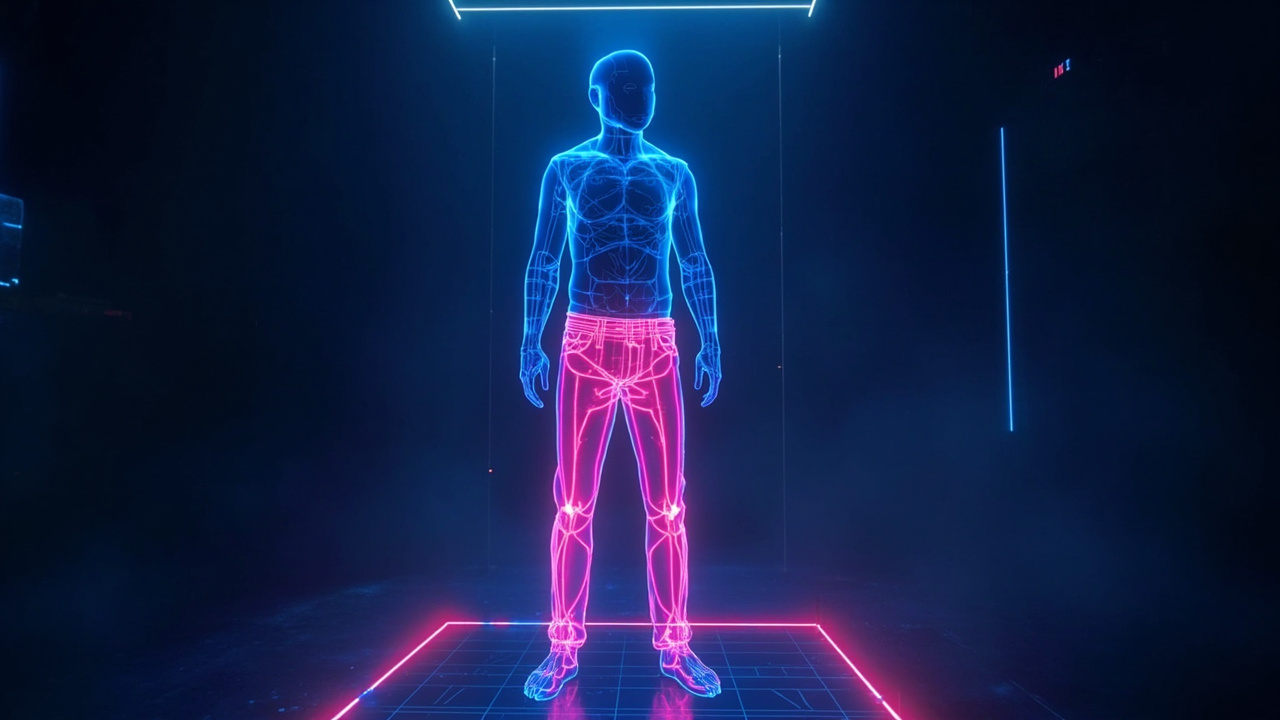
Zalando — measurement and simulation. The German platform, with around 50 million customers, takes the most engineering-driven approach. Customers supply body measurements, and the system builds a 3D avatar of their body, then simulates how a specific garment sits on it — complete with a color-coded heatmap showing where it fits tight and where it’s loose. It deliberately avoids putting the customer’s face on the avatar, sidestepping the self-perception distortions that come from staring at a digital version of yourself. Zalando says pilots since 2023 showed return-rate reductions of up to 40% in the jeans category, and it is now moving from pilots toward a full rollout across its customer base, alongside a size-recommendation system trained on millions of purchase-and-return records.
Zara / Inditex — generative imagery. Zara’s approach, launched in Spain in January 2026 and highlighted by Inditex as a flagship AI initiative, flips the philosophy: instead of simulating physics, it uses generative AI to show shoppers how outfits would look on an avatar that resembles them. In Bloomberg’s testing, it was the more engaging and visually appealing experience — but each generated look took about two minutes to load, users were limited to five looks per day, and it tells you how an outfit looks, not how it fits.
ASOS — recommendation-first. ASOS has leaned on fit-assistant tooling that nudges shoppers toward the right size based on purchase and return data, reporting improvements in satisfaction and fewer size-related returns. It is the least glamorous approach, and notably it is the one that doesn’t require you to hand over a body scan.
The contrast matters because it maps onto a fault line running through the whole generative AI stack in 2026: photorealistic generation is cheap and everywhere, but ground truth — knowing whether a specific size-32 jean actually fits your specific waist — still requires measurement data that image models simply do not have.
The gap between pilot and platform
Here is the number that should temper every “AI solves returns” headline: Zalando’s 2022 pilot had roughly 30,000 participants, and by late 2024 cumulative usage of its virtual fitting room was around 80,000 customers — a small fraction of its 50 million. If a 40% return reduction held universally, you would expect deployment to move faster. Meanwhile, Zalando quietly shortened its return window from 100 days to 30 — the carrot and the stick at the same time.
Independent testing this year found the same pattern across the field. A comparative review of 21 virtual try-on providers scored nearly all of them 1 out of 5 on actual fit prediction: Google’s diffusion-based try-on produces gorgeous images but has no concept of your measurements; Snapchat-style AR overlays can’t simulate how fabric drapes; only the unglamorous size-recommendation engines, which show no picture at all, consistently deliver double-digit return reductions. The tools with the best visuals tell you nothing about fit, and the tools that know fit show you nothing.
There are harder findings too. An Iowa State study of 8,000+ customers found virtual fitting rooms increased purchases among low-BMI shoppers but decreased sales and self-esteem among high-BMI shoppers — a stronger effect than in physical fitting rooms — in a market where over 60% of American women wear plus-size clothing. And the biometric data these tools ingest (body scans, facial geometry) has already generated more than 15 class-action lawsuits under Illinois’ BIPA law, with settlements and denied dismissal motions piling up since 2021.
Why it’s still a big deal
Strip away the hype and the direction of travel is clear. Zalando is explicitly working to combine its measurement-precise approach with Zara’s more inspirational generative presentation — which is a reasonable summary of where consumer AI is heading overall: generation for engagement, measurement for trust. The pieces are converging from both ends. Physics-based garment simulation of the kind fashion designers use (CLO3D, Browzwear) is being accelerated by neural networks that approximate fabric drape hundreds of times faster than traditional solvers. Body-measurement extraction from photos is commoditizing. And open-source try-on models now run on consumer GPUs.
The fitting room problem will probably not be solved by a prettier picture. It will be solved — if it is — by better measurement on both sides of the transaction: your body’s actual dimensions, the garment’s actual dimensions, and a simulation honest enough to tell you where fabric touches skin and where it doesn’t. That is a data problem more than a generative one, which is why the retailers who own returns data (Zalando, ASOS, Inditex) are structurally better positioned than the pure-play AI try-on startups.
For now, the next time an AI avatar shows you how great those jeans look, remember the question the image cannot answer: will the waistband actually fit? The retailers spending real money on this in 2026 know that’s the only question that matters — and the ones with the best answer will quietly take the margin from everyone else.
Sources
- [1] https://www.bloomberg.com/news/articles/2026-08-21/zalando-zara-use-ai-virtual-try-ons-to-tackle-clothing-returns
- [2] https://www.techmeme.com/260822/p10
- [3] https://www.businessreport.com/article/can-ai-finally-solve-the-costly-problem-of-online-clothing-returns
- [4] https://corporate.zalando.com/en/technology/how-zalando-uses-technology-help-customers-find-right-size
- [5] https://corporate.zalando.com/en/fashion/rewriting-rules-fit-europe-3-key-takeaways-cphfw-aw26
- [6] https://clad.you/blog/posts/virtual-tryon-comparison/
- [7] https://corporate.zalando.com/en/technology/zalando-enhances-its-virtual-fitting-room-enabling-customers-create-3d-avatar-their-body