AI Data Centers Just Hit Their Political 'Oh S--t' Moment
A leaked GOP campaign memo, a 71% opposition figure from Gallup, and a presidential pep talk all landed within one week — the AI infrastructure boom has collided with electoral politics, and the industry is panicking.
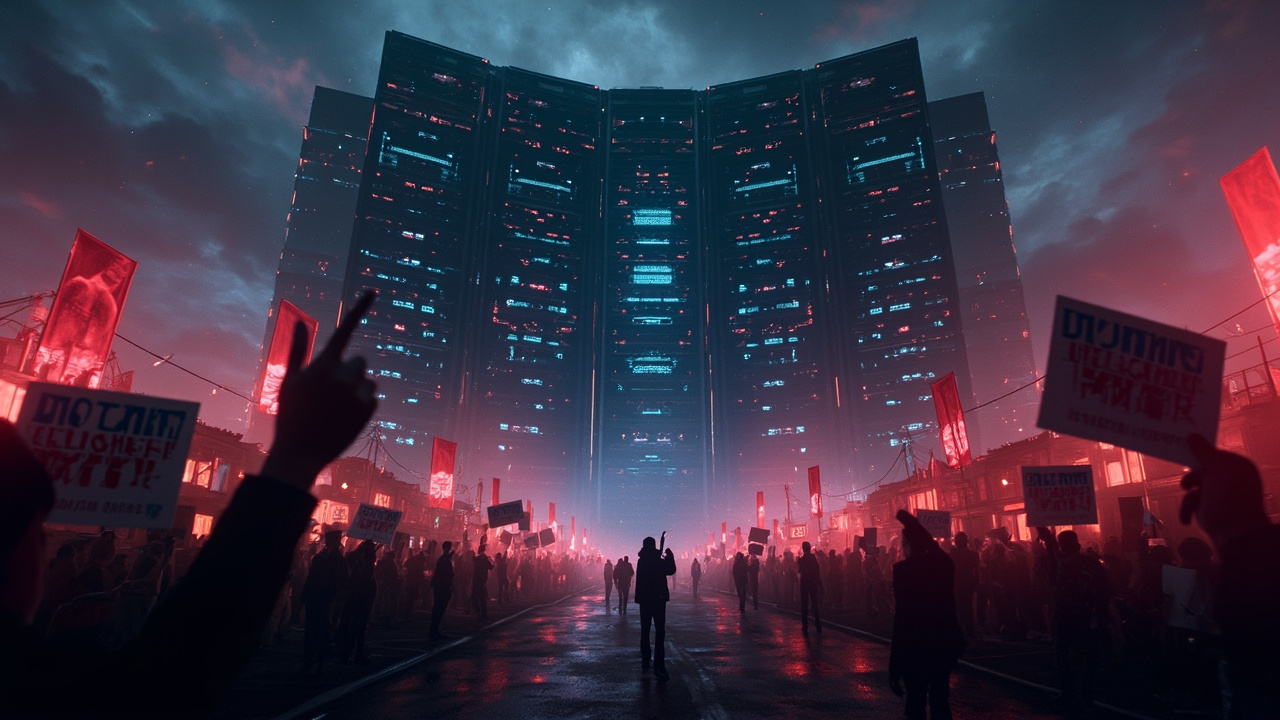
The race to build artificial intelligence infrastructure in the United States has run into something no amount of capital expenditure can easily fix: voters. In a remarkable week of political news, the Senate Republicans’ campaign arm privately warned AI companies that public hostility toward data centers is damaging the party’s electoral prospects, President Donald Trump publicly scolded communities that oppose the facilities, and Politico declared that the industry is having an “oh s—t” moment — its own description of the panic spreading through tech boardrooms as the 2026 midterms approach.
The collision has been building for months. What changed in late August is that it is now impossible to ignore from either direction.
The memo that started it
The proximate catalyst was a confidential memo from the National Republican Senatorial Committee, first reported by Axios on August 19. In it, the GOP’s Senate campaign arm told top AI companies that “toxic” public views of U.S. data centers are hurting the party’s candidates — and singled out the Ohio Senate race as the canary in the coal mine. The memo’s argument, as described in subsequent reporting, was blunt: a loss by appointed Senator Jon Husted, who has championed Ohio’s data center buildout, would cause long-lasting damage to the AI industry’s ability to keep winning approvals for facilities nationwide.
That a campaign committee would deliver such a warning directly to the industry is extraordinary. It effectively inverts the usual lobbying dynamic: instead of companies pressuring politicians for favorable treatment, the politicians are pressuring companies to fix a political problem the industry’s own expansion created.
Ohio has become the emblematic battleground. Data centers have emerged as a defining issue in the state’s Senate special election, where residents have organized against the power demands, water use, and land consumption of hyperscale campuses. The phenomenon is not confined to one state — Grist has tracked contested data center projects across the country, finding bipartisan local activism to be one of the few effective counterweights to the buildout.
The polling is brutal
Underneath the political maneuvering sits genuinely lopsided public opinion. A Gallup survey conducted in the spring found that 71% of Americans oppose the construction of an AI data center in their local area — including 48% who are strongly opposed. Only a small fraction actively want one nearby.
What makes the number politically potent is its distribution. Opposition is strongest among Democrats, with 75% somewhat or strongly against local buildouts, but a clear majority of Republicans — 63% — feel the same way. In an era when almost nothing polls at 70% across party lines, hostility to data centers is one of the rare issues that does.
There is a nuance worth noting: opposition to nearby construction does not automatically translate into support for bans. Only 34% of Democrats and 43% of Republicans told pollsters they wanted such facilities prohibited outright. Voters, in other words, are happy to have AI infrastructure exist — somewhere else. That “not in my backyard” framing is precisely what makes the issue so treacherous for candidates, who must simultaneously court an industry pledging billions in investment and constituents who do not want to live next to it.
The concerns driving the sentiment are concrete rather than abstract: rising electricity bills as utilities re-route power toward hyperscale campuses, water consumption in drought-prone regions, farmland and habitat converted to windowless industrial buildings, and a general sense that Big Tech’s promises of local jobs rarely match the delivered reality — data centers employ relatively few people once construction ends.
Trump’s bet on the machines
President Trump has responded by going all in. In remarks last week and again in comments reported August 24, he said communities opposing data centers are making “a mistake,” argued that “the smart ones” want them, and touted “tremendous tax revenue coming into the towns and cities.” He has variously described the facilities as job creators and even “liquid gold,” and at one point attributed the pushback partly to foreign propaganda — while conceding the industry could use “a little public relations help.”
The president’s positioning puts him at odds with his own party’s Senate campaign apparatus, which is quietly telling candidates to keep their distance. It also creates an uncomfortable dynamic for Republican incumbents in affected districts, who must choose between loyalty to a popular president and the sentiment of voters organizing against local projects. Democrats face their own version of the trap: the loudest opposition comes from their base, but the party’s national brand leans heavily on tech-industry support and on AI competitiveness against China — the argument the industry deploys whenever regulation threatens.
Why the industry is panicking
Politico’s August 24 piece captured the mood inside tech with a phrase borrowed from industry insiders themselves: data centers are having an “oh s—t” moment. The intensifying late-summer backlash, the outlet reported, is inspiring panic in some corners of the sector amid fears that the political environment could turn decisively against the buildout.
The timing could hardly be worse for the industry’s economics. Hundreds of billions of dollars in committed capital — from hyperscalers, from the multibillion-dollar joint ventures known as “neoclouds,” and increasingly from foreign investors — is predicated on a smooth, multi-year construction pipeline of sites, substations, and turbine-scale power procurement. That pipeline assumes local and state approvals keep flowing. If data centers become the kind of issue that decides Senate races, those approvals become campaign promises to deny.
There are already signs of friction beyond the ballot box. Local moratoria on new data center approvals have spread from Virginia’s Loudoun County — the original hyperscale heartland — to towns across the Midwest. Utility regulators in several states have begun pushing back on cost-sharing arrangements that would have spread infrastructure expenses across all ratepayers. And governors who once competed for projects are suddenly asking harder questions about who pays for the grid.
What comes next
Three things will determine whether this moment is a passing headache or a structural constraint on AI’s physical expansion.
First, the midterms themselves. If candidates who campaign against data centers win in November — particularly in Ohio — the memo’s warning will look prescient, and the industry should expect a wave of copycat campaigns in 2027 and 2028. If pro-buildout candidates survive, the backlash may recede to the local level, where it is already doing real damage.
Second, whether the industry can change its material terms rather than its messaging. The pattern of complaints — power bills, water, land, thin job creation — suggests concessions like local electricity rate protections, community benefit agreements, and genuinely local hiring could defuse some opposition. Public relations alone, as even the president hinted, will not.
Third, whether the China competitiveness argument retains its potency. National security has been the industry’s trump card at the federal level, and it remains effective in Washington. But Gallup’s numbers suggest it has not yet penetrated to the town-hall level, where the abstraction of geopolitical advantage loses to the reality of a 200-megawatt campus next door.
What is certain is that the era in which AI infrastructure was merely an industrial story — measured in gigawatts, square feet, and capital raised — is over. It is now a political story too, with polls, memos, and campaigns attached. The companies building the physical substrate of AI assumed their hardest constraints would be chips, power, and capital. As of this August, the hardest constraint may be the American voter.
Sources
- [1] https://www.politico.com/news/2026/08/24/data-centers-oh-s-t-moment-01046465
- [2] https://www.forbes.com/sites/siladityaray/2026/08/24/trump-defends-ai-data-centers-says-opposing-them-is-a-mistake-and-smart-ones-want-them/
- [3] https://www.axios.com/2026/08/19/gop-data-center-memo-ai-election
- [4] https://news.gallup.com/poll/709772/americans-oppose-data-centers-area.aspx
- [5] https://grist.org/politics/data-center-ai-bipartisan-backlash/
- [6] https://www.wired.com/story/how-data-centers-broke-american-politics/
- [7] https://www.yahoo.com/news/politics/articles/data-centers-emerge-key-issue-210858080.html
- [8] https://www.aol.com/articles/rising-data-center-backlash-shakes-210000000.html