India's Airbound Raises $37M to Make Drone Delivery Cheaper Than Trucks
Bengaluru-based Airbound raised a $37M Series A led by Greenoaks to build tail-sitter drones that weigh less than their cargo — and a 10,000-flights-a-day network in Andhra Pradesh.
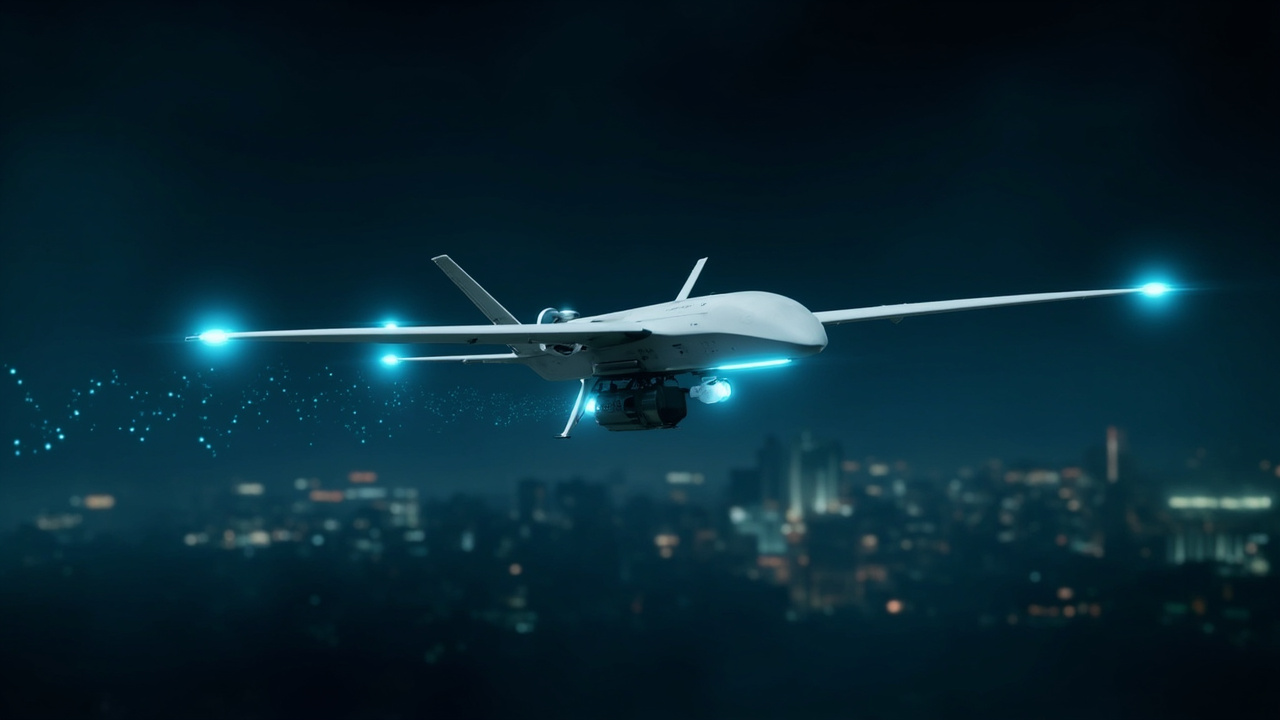
Three-year-old Indian startup Airbound has raised $37 million in a Series A round led by Greenoaks, with participation from DoorDash, Lachy Groom, Lightspeed, and Humba Ventures. The Bengaluru-based company is building autonomous drones with a singular, almost heretical goal: making it as cheap to move goods through the air as it is to truck them down a road.
The round comes less than a year after Airbound’s $8.65 million seed round, bringing the startup’s total funding to nearly $50 million. For a company that remains broadly pre-revenue with more than 150 employees, that pace of capital accumulation signals just how much conviction investors have in the thesis — and how patient they’re willing to be.
The physics problem with flying cargo
The core insight behind Airbound starts with an uncomfortable truth about aviation. Conventional aircraft burn most of their energy lifting their own weight rather than the payload. A purpose-built aircraft carrying a single passenger or roughly 100 kg of cargo typically weighs around 400 kg once fuel is counted. That means the majority of every flight’s cost goes to moving the machine, not the goods.
Airbound’s answer is to invert that ratio: build drones that weigh less than the cargo they carry. The company describes its approach as “physics-first design,” combining advances in autonomy and materials science to attack the cost structure of aerial transport at its root.
The current drone, called TRT, weighs about 3.3 pounds (1.5 kg) and carries around 2.2 pounds (1 kg) of payload. The next version, currently under development, is expected to weigh about 6.6 pounds (3 kg) while carrying up to 11 pounds (5 kg) — payload exceeding airframe weight.
The aircraft uses a distinctive rocket-like tail-sitter design: it takes off and lands vertically in an upright position, then transitions to more efficient horizontal wing-borne flight for the cruise portion of the journey. Founder and CEO Naman Pushp says the company intends to keep vertical takeoff and landing (VTOL) capability even as it develops larger aircraft, to avoid any dependence on runways.
“We want to build towards a world where everything has cost parity with trucking,” Pushp told TechCrunch.
Proof in healthcare: 13,000 autonomous flights
Airbound is not just flying prototypes in a field. The company has completed more than 13,000 autonomous flights across the southern Indian cities of Bengaluru and Guntur, including more than 1,000 flights with Indian hospital network Narayana Health.
The healthcare use case illustrates why drones can beat roads even before full cost parity. On the Narayana route, a single active drone transports diagnostic samples about 2.5 miles in roughly seven minutes. The same samples moved by two-wheeler take three to five hours once you factor in waiting for enough samples to accumulate before a road run is worth making. For time-sensitive medical logistics, that’s not an incremental improvement — it’s a different mode of existence.
The partnership is now expanding to Narayana’s new Banashankari hospital in Bengaluru, which was deliberately designed without an on-site diagnostic lab or blood bank. Instead, the hospital will rely on Airbound’s drones to connect it to centralized facilities — architecture choices that only make sense if aerial logistics is treated as dependable infrastructure.
The Andhra Pradesh bet: 10,000 flights a day
The larger ambition behind the funding is a drone delivery network connecting three cities in the state of Andhra Pradesh. Airbound has signed an agreement with the state government targeting an eventual 10,000 flights per day for retail, e-commerce, and healthcare deliveries.
That scale of operation would require between 250 and 1,000 aircraft depending on route lengths, though Pushp expects the number to be closer to 250. Notably, the agreement involves no government contract and no subsidy — the state government is instead working with Airbound on the regulatory framework needed to enable the network, with revenue expected to come from companies using the service for deliveries.
The Boeing role, not the airline
India’s drone logistics space is already crowded: Skye Air Mobility and TSAW Drones are building aerial delivery businesses, and Garuda Aerospace has explored delivery use cases. But Pushp positions Airbound differently — less as a delivery operator and more as the aircraft maker that other logistics networks will eventually standardize on.
“That’s the Boeing role — the aircraft airlines everywhere rely on, not the airline itself,” he said.
To that end, Airbound designs and manufactures its aircraft in-house at a 43,000-square-foot facility in Bengaluru, keeping airframe and other core systems under its own roof. Pushp declined to disclose production capacity or units built so far, but insists manufacturing will not be the bottleneck as the company scales.
The real bottleneck: regulation
The gating factor, Pushp acknowledges, is regulation — specifically securing approvals for beyond visual line of sight (BVLOS) operations, the certification that allows drones to fly past the direct view of an operator and that is critical to running any delivery network at scale. Those constraints have so far limited Airbound’s ability to convert its flight record into meaningful commercial revenue.
That helps explain the startup’s unusual posture toward monetization. “The goal is to be a giant in a few decades, not to make revenue as soon as we can,” Pushp said.
Greenoaks partner Neil Shah framed the investment thesis in similarly sweeping terms: “Trucks are cheap and slow, planes are fast and expensive, and nothing has broken the trade-off in more than a century. Airbound does. When one autonomous aircraft can move a single package with the cost efficiency of a fully loaded 20-ton truck, fast delivery and cheap delivery are no longer in tension, and roads stop being the default.”
Pushp’s own vision goes further still: “We believe in a world where all movement happens in the air. Not some of it. Not most of it. All of it. A world where flying is cheaper than taking the bus, where moving a single package costs less than moving 20 tons by truck, and where we look at cars the way we look at horses today.”
What to watch
Airbound’s raise lands amid a broader drone delivery boom — Amazon is expanding Prime Air toward nearly 500 U.S. cities and towns by the end of 2026. What distinguishes the Indian startup is its willingness to redesign the aircraft itself rather than optimize operations around conventional designs, and its decision to grow in a market where regulatory frameworks are being negotiated alongside deployments rather than after them.
The milestones that will matter: BVLOS approvals in India, the first revenue-generating routes under the Andhra Pradesh agreement, and whether the next-generation 11-pound-payload drone actually achieves the payload-over-airframe weight ratio the company’s economics depend on. If the physics holds, the $37 million may look like a bargain. If it doesn’t, Airbound will have learned an expensive lesson about why transport aircraft have looked the same for a century.