Nvidia Pays Poolside $6 Billion for Its 'Model Factory' — and Takes 109 Engineers With It
Nvidia is paying $6B to license Poolside's Model Factory, investing $1B more at a $12B valuation, and hiring 109 engineers to supercharge its open-weight Nemotron project — Washington's answer to DeepSeek and Qwen.
Nvidia has struck one of the strangest — and largest — deals of the AI boom: a $6 billion non-exclusive license for AI model-development software from Poolside, a foundation-model startup founded by former GitHub CTO Jason Warner. On top of the license fee, Nvidia is investing $1 billion in Poolside at a $12 billion pre-money valuation, and extending offers to 109 Poolside employees who built the company’s open-source model, Laguna. The three co-founders, including Warner and Eiso Kant, stay behind to keep running an independent Poolside.
The structure, first reported by The Information and Eric Newcomer and confirmed across multiple outlets this week, is deliberately neither an acquisition nor an acquihire. Poolside told investors in a letter that the deal preserves its independence while solving its most existential problem: on its own, the startup could not get access to enough Nvidia hardware to keep competing in open-source model development.
What Nvidia is actually buying
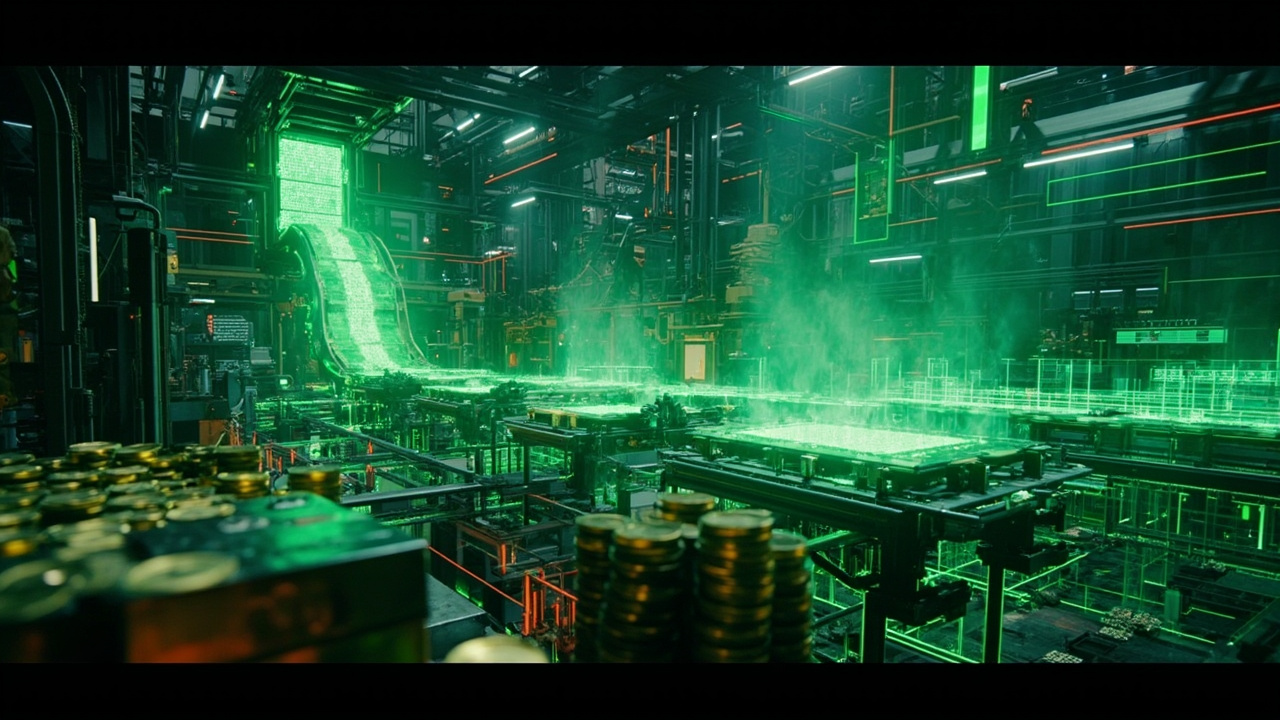
At the center of the deal is what Poolside calls its Model Factory — the platform the startup used to build its open-weight Laguna model. Rather than buying the company, Nvidia is licensing the software that turns giant training runs into repeatable industrial process, and hiring the people who operate it. The 109 transferring employees are expected to work on Nvidia’s own open-weight Nemotron model family.
The strategic logic is blunt. As The Wall Street Journal framed it, Nvidia is spending $6 billion to build “a powerful U.S. alternative to Chinese AI” — an American open-weight flagship that can stand against DeepSeek, Alibaba’s Qwen, and Moonshot’s Kimi, which currently dominate the downloadable-weights leaderboard. For all of Nvidia’s dominance in AI hardware, its software story has been comparatively thin: Nemotron models are respected for inference efficiency but have not matched the absolute capability of the best Chinese open-weight families. Poolside’s Model Factory plus a hundred-plus veteran training engineers is a direct attempt to close that gap.
The licensing playbook
The Poolside deal is not a one-off. It extends a pattern Nvidia has refined over the past year:
- Groq (December 2025): Nvidia took a non-exclusive license to Groq’s inference technology and hired Groq’s founder Jonathan Ross, its president, and key engineers, while Groq continued operating independently. This week’s news that the “Groq 3 LPX” inference accelerator entered full production as part of the Vera Rubin platform shows where that IP ended up.
- Enfabrica (September 2025): Over $900 million to license networking technology that lets more than 100,000 GPUs act as a single computer, plus the CEO and other staff.
- Kumo AI (June 2026): ~$400 million acquisition of a predictive-AI software startup.
- SchedMD (December 2025): Acquisition of the team behind Slurm, the open-source HPC workload manager.
The pattern is consistent: when Nvidia wants capability fast, it buys a license plus talent, not a company. That structure keeps regulators at arm’s length, preserves the target as a nominally independent supplier, and gets Nvidia exactly what it actually needs — IP that improves its platform and engineers who improve its stack. The $6 billion price tag for Poolside dwarfs all the previous deals combined, which tells you how Nvidia weighs the value of model-building capability in 2026.
Why Poolside said yes
Poolside’s trajectory explains the decision. Founded in early 2023 by Jason Warner (ex-GitHub CTO) and Eiso Kant, the company raised a $500 million Series B led by Bain Capital Ventures in October 2024 at a roughly $3 billion valuation, with eBay and Nvidia among the investors. By October 2025 it was reportedly seeking $2 billion at a $12 billion valuation, with over $1 billion already committed.
But building frontier open-weight models is a capital-incineration sport where the ante keeps rising. The investor letter’s admission is remarkable: Poolside could not obtain enough Nvidia hardware to stay in the game alone. When your bottleneck is GPUs and the company that makes them offers you $7 billion to license your software, take the investment, and keep your independence — that is not a distress sale, but it is an acknowledgment that the open-weight frontier has become a game for compute oligarchs.
For the co-founders, the math works: Poolside gets a $12 billion mark (4x its 2024 valuation), a billion dollars of fresh capital, and a strategic partner whose chips it desperately needs. Nvidia gets the Model Factory and the team. Everyone publicly calls it a partnership.
What it means for the open-weight race
The deal is the clearest signal yet that the open-weight battle is now a national-strategic contest, not a hobby for cloud vendors. The strongest downloadable models of 2026 — DeepSeek, Qwen, Kimi — are Chinese. American labs either keep weights closed (OpenAI, Anthropic, Google) or have seen their open efforts eclipsed (Meta’s Llama). Nvidia, sitting on the largest war chest and the entire industry’s compute supply, has decided that a strong US open-weight ecosystem is strategically necessary — likely because open models drive demand for inference hardware, and Nvidia wants the default open stack to be tuned for its GPUs.
Expect three consequences:
- Nemotron gets serious. With Poolside’s Model Factory and a hundred-plus experienced training engineers, Nvidia’s next-generation open models should climb the capability leaderboard, not just the efficiency charts.
- The “license plus talent” template spreads. Expect more mega-licensing deals structured to dodge merger scrutiny while transferring IP and people. Watch for it between chipmakers and model labs.
- Consolidation pressure on mid-tier labs. If Poolside — with $626M raised and strong founders — couldn’t secure enough compute to compete independently, the message to every other sub-frontier lab is brutal: partner with a hyperscaler or chipmaker, or become a feature.
The bottom line
Nvidia just paid more for a software license than most AI startups will ever raise in their lifetimes — and it isn’t even exclusive. That’s the tell. Nvidia doesn’t need exclusivity on Poolside’s Model Factory; it needs the institutional knowledge of how to run world-class training pipelines, embedded in its own stack, feeding its own open-weight ambitions. The $6 billion is a bet that owning the best open-weight model lineage is worth as much as any chip generation — because in a world where DeepSeek and Qwen set the open standard, whoever owns the American answer owns a chokepoint of the AI economy.
The next checkpoint arrives Wednesday, when Nvidia reports Q2 FY27 earnings with consensus near $92 billion in revenue. Don’t expect Poolside details on the call — but if management hints at where Nemotron goes next, you’ll know exactly which factory is building it.
Sources
- [1] https://www.pymnts.com/news/artificial-intelligence/2026/nvidia-pays-6-billion-to-license-poolside-ai-model-development-software/
- [2] https://www.wsj.com/tech/ai/nvidia-is-spending-6-billion-to-build-a-powerful-u-s-alternative-to-chinese-ai-c51c38cc
- [3] https://qz.com/nvidia-poolside-6-billion-license-ai-model-082426
- [4] https://www.newcomer.co/p/sources-poolside-strikes-6-billion
- [5] https://www.forbes.com/sites/jonmarkman/2026/08/24/nvidia-pays-poolside-6b-to-license-its-model-factory-and-109-workers/
- [6] https://finance.yahoo.com/technology/ai/articles/nvidia-pays-6-billion-license-115520933.html