India's $8 Billion AI Bet: AM Intelligence Orders 9,000 NVIDIA Vera Rubin Systems
Hyderabad-based AM Intelligence, backed by Greenko's founders, has placed a binding order for ~9,000 NVIDIA Rubin GPUs as Vera Rubin NVL72 systems — the first tranche of an $8B+, 1GW compute plan that could make India a major AI factory hub.
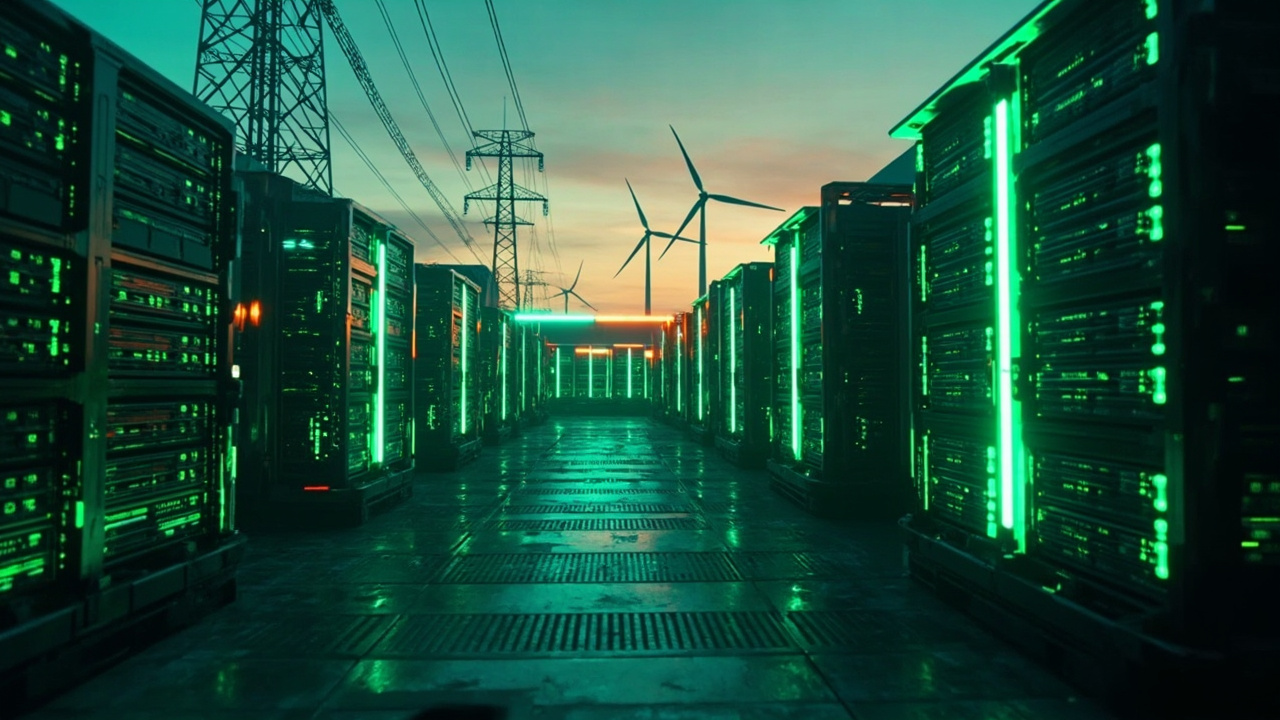
India has just made one of its loudest statements yet in the global AI infrastructure race. AM Intelligence (AMI), a Hyderabad-based AI infrastructure company backed by the founders of renewable energy giant Greenko Group, has placed a binding order for roughly 9,000 NVIDIA Rubin GPUs — deployed as rack-scale Vera Rubin NVL72 systems — to anchor its first “AI factory” in Hyderabad. The deal, reported by Bloomberg on August 25 and confirmed across Indian business media, positions AMI to become one of the first operators in Asia to bring NVIDIA’s next-generation platform online at scale.
The deal in numbers
The order is the opening move of a much larger plan: more than $8 billion in capital expenditure to build out 1 gigawatt of computing capacity, with an initial 200 MW tranche slated to reach market in the near term. The first servers are scheduled for delivery in the first quarter of 2027, with the initial deployment lighting up a 30 MW facility in Hyderabad, according to the Economic Times and Times of India. ToI reports the factory will launch at 30 MW and targets roughly 450 exaFLOPS of compute as AMI scales — a figure consistent with the ~125 NVL72 racks that 9,000 Rubin GPUs imply.
The ambition doesn’t stop at one campus. AMI’s stated goal is Compute-as-a-Service capacity across India, the United States, Finland, and Malaysia, sold at what the company describes as globally competitive prices.
Who is AM Intelligence?
AMI is part of the AM Group, founded by the promoters of Greenko Group PLC, one of India’s largest renewable energy producers. That parentage is not incidental — it is the core of the company’s pitch. In an era where frontier AI economics are increasingly a function of electricity prices, AMI claims a structural edge: access to low-cost, renewable power that its competitors must buy on the open market.
“In global token economics, energy prices play a huge part,” Mahesh Kolli, founder and president of Greenko Group, told Bloomberg in a video interview. “We’re one of the lowest-cost AI computation infrastructure players globally.”
This is the group’s second swing at the AI data center opportunity. In February 2026, Mint reported that AM Group was investing $25 billion in a 1 GW, renewable-powered AI compute hub in Uttar Pradesh — a project pitched as a challenge to global tech giants. The Hyderabad order suggests the strategy has moved from slideware to signed purchase agreements. The buildout is to be funded with a mix of debt and equity.
Why Vera Rubin matters
NVIDIA’s Vera Rubin platform — the successor to Blackwell — is the compute substrate the entire industry is queuing for. Supplies of high-end NVIDIA clusters remain severely constrained, with demand from hyperscalers like Microsoft, Google, and Amazon producing multiyear backlogs. Japan, notably, is planning to buy Rubin chips to train a homegrown foundational model for robotics, with its first dedicated data center not expected online until June 2028.
Against that backdrop, a binding allocation of 9,000 GPUs for delivery within roughly two quarters is a meaningful signal. AMI says the Hyderabad facility is designed to run trillion-parameter AI models and next-generation agentic AI applications — the long-horizon, tool-using workloads that are driving inference demand far harder than anyone projected a year ago. Times of India calls it one of Asia’s first Vera Rubin GPU clusters.
Demand is already there
Perhaps the most striking detail in the Bloomberg report: AMI’s initial capacity has already been sold. Kolli said a US customer has purchased the first tranche, declining to name the buyer due to a non-disclosure agreement. Customers, he said, are “hunting desperately” for capacity.
The broader customer roster includes major cloud-service providers, AI labs, and — notably — organizations building homegrown Indian AI models, aligning neatly with the Indian government’s push for sovereign AI capability.
Kolli also addressed the obvious objection to serving US workloads from South India: latency. Thanks to undersea cable capacity, he said, US companies can use Indian compute with round-trip latency of about 300 milliseconds — tolerable for a large fraction of training and batch inference work, even if not for every real-time application.
Analysis: energy meets tokens
The AMI story crystallizes a shift that has been building for two years: AI infrastructure is becoming an energy business. The most constrained inputs are no longer just GPUs and HBM — they are megawatts, land, transformers, and cooling water. Companies that control cheap generation increasingly see AI factories as the highest-value use of that power, and renewables developers from Texas to Scandinavia are making the same calculus Greenko’s founders have.
There are real risks. An $8 billion bet on a single hardware generation, in a market where NVIDIA’s cadence now runs roughly annually, exposes AMI to depreciation risk if Rubin supersedes faster than expected — or if competing inference silicon (custom ASICs, LPX-class accelerators) erodes NVIDIA pricing. Selling capacity forward to a single unnamed US customer cushions utilization risk but concentrates counterparty risk. And “300 milliseconds is fine” is true for training runs and batch work, not for the latency-sensitive agentic tier that many believe will dominate inference demand.
But the direction is hard to argue with. Compute demand continues to outrun every forecast, sovereign AI budgets are expanding from Washington to Tokyo to New Delhi, and India offers a rare combination of cheap renewables, engineering talent, and policy tailwinds. If AMI executes, Hyderabad becomes a genuine node in global AI infrastructure — and the deal stands as one of the largest single GPU orders ever placed by an Indian company.
For NVIDIA, the order is more evidence that Vera Rubin demand extends far beyond the usual hyperscaler suspects — and that the next phase of the AI buildout will be financed and powered from unexpected places.
Sources
- [1] https://www.taipeitimes.com/News/biz/archives/2026/08/26/2003863126
- [2] https://m.economictimes.com/tech/technology/greekos-am-intelligence-orders-9000-nvidia-vera-rubin-gpus-for-hyderabad-ai-factory/articleshow/133497787.cms
- [3] https://www.business-standard.com/technology/tech-news/ami-orders-9-000-nvidia-rubin-gpus-plans-8-bn-capex-for-200-mw-capacity-126082501159_1.html
- [4] https://timesofindia.indiatimes.com/city/hyderabad/am-intelligence-to-deploy-one-of-asias-1st-nvidia-vera-rubin-gpu-clusters-at-hyderabad-ai-factory/articleshow/133517338.cms
- [5] https://www.moneycontrol.com/technology/greenko-backed-ami-orders-9-000-nvidia-rubin-gpus-for-hyderabad-ai-factory-plans-8-billion-compute-push-article-14015185.html
- [6] https://www.livemint.com/ai/am-group-25-billion-renewable-powered-artificial-intelligence-ai-data-centre-11771241379223.html