Gatik Raises $200M Series D to Scale Driverless Middle-Mile Freight
Autonomous trucking startup Gatik closed a $200M Series D led by Qatar Investment Authority, backed by $600M in contracted revenue and a fresh multi-year PepsiCo deployment.
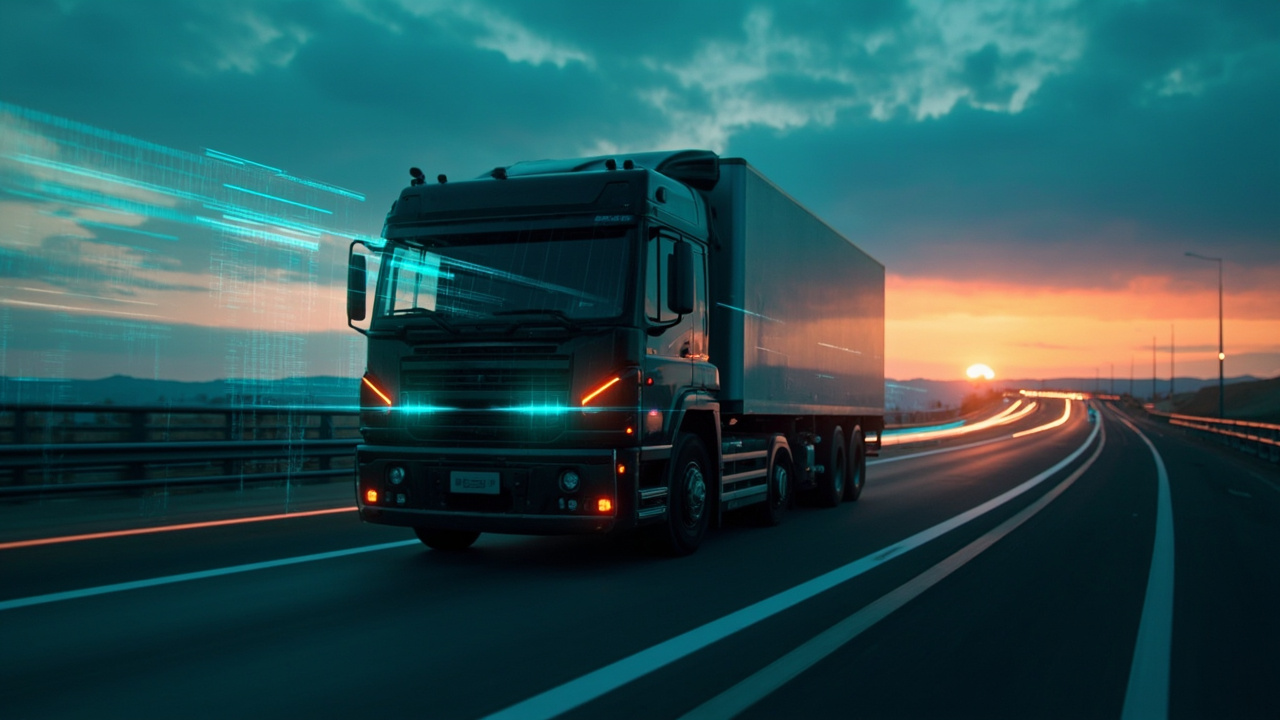
Autonomous freight startup Gatik has closed a $200 million Series D round, its largest financing to date, putting fresh capital behind one of the few self-driving business models that is already generating meaningful contracted revenue rather than venture-funded promises.
The round was led by the Qatar Investment Authority (QIA) and co-led by Koch Disruptive Technologies, with the announcement landing on Tuesday, August 25, 2026 — roughly two months after Gatik struck a multi-year agreement with PepsiCo to deploy driverless trucks across its supply chain.
The number behind the number: $600M in contracted revenue
While a $200 million raise would normally be the headline, the more striking figure is what sits behind it. According to commentary circulating after the announcement, Gatik has roughly $600 million in contracted revenue already locked in from its commercial deployments. That is an unusually concrete revenue base for an autonomy company, at a moment when much of the AV industry is still burning cash on supervised pilots and promised robotaxi futures.
Gatik’s business is deliberately unglamorous. The company focuses on the middle mile — the short, repetitive routes between distribution centers, warehouses, and retail stores — using Level 4 autonomous box trucks (Class 3–7) that operate with no safety driver on board. By constraining the problem to fixed, repeated routes on predictable road segments, Gatik traded the general-purpose robotaxi dream for a business that could reach commercial operation years earlier.
Where the trucks already run
Gatik’s driverless trucks are commercially deployed across Texas, Arizona, Arkansas, and Ontario, Canada. Its customer roster reads like a middle-mile who’s-who:
- Walmart — Gatik’s flagship partner since 2018; the pair achieved fully driverless operation on a Bentonville, Arkansas route back in December 2020, an industry first for the middle mile.
- Tyson Foods — a partnership dating to 2023 that put autonomous trucks on Northwest Arkansas routes hauling chicken, sausage, and other goods between Tyson facilities.
- PepsiCo — the newest major win: a multi-year agreement announced in June 2026 that expands driverless deliveries across PepsiCo’s distribution network, and the deal widely credited with setting up this financing.
The company says the new capital will fund expansion in the regions where its trucks already operate while courting new enterprise business — a signal that Gatik believes the demand pipeline, not the technology, is now the constraint.
Why the middle mile won the autonomy race
Gatik’s trajectory validates a thesis that was contrarian five years ago: the fastest path to profitable autonomy is boring routes, not city streets full of pedestrians. Middle-mile freight offers:
- Route repetition. The same distribution-center-to-store run, thousands of times, means the operational design domain stays narrow and the safety case stays tractable.
- Structured environments. Highway segments, industrial parks, and fixed dock schedules eliminate much of the long-tail chaos that has stalled robotaxi deployments in dense urban cores.
- A desperate labor economics problem. Short-haul trucking suffers chronic driver shortages and high turnover; fleet operators have a direct, quantifiable incentive to automate it.
That economics-first framing explains why sovereign wealth funds and industrial strategists — rather than pure software investors — are now anchoring the company’s cap table. QIA’s lead position reflects a broader pattern of Gulf-state investors seeking hard-asset-adjacent AI exposure, while Koch Disruptive Technologies brings logistics and industrial DNA aligned with freight operations.
The competitive and capital context
The raise also lands at a moment of sharp bifurcation in the AV sector. Robotaxi players like Waymo continue expanding city by city, but the freight side of the industry has consolidated around a handful of survivors. Gatik’s rivals include Kodiak Robotics (long-haul highway freight), Aurora Innovation (driverless trucking on Texas interstate corridors), and Waabi (generative-AI-trained trucking, itself a $200M fundraiser in an earlier cycle), while TuSimple’s retreat and various shutdowns thinned the field.
What differentiates Gatik in the eyes of its backers is that its revenue is contracted, not projected. In a funding environment where AI infrastructure deals dominate headlines with ten-figure sums, a $200M round backed by $600M of signed customer commitments is a reminder that applied autonomy can be a cash-flow story, not just a capex one.
No valuation was disclosed in the announcement, but the round structure — late-stage, sovereign-led, revenue-backed — positions Gatik as a plausible IPO candidate if it keeps converting pilots into multi-year enterprise contracts.
What to watch
Three signals will determine whether this round becomes a stepping stone or a ceiling:
- PepsiCo deployment cadence. The June agreement’s actual truck counts and route counts will show whether enterprise middle-mile deals scale linearly with capital.
- Geographic expansion. Watch for new states beyond Texas, Arizona, and Arkansas — each new operational design domain is a regulatory and engineering milestone.
- The Ontario, Canada foothold. Cross-border freight autonomy remains rare; if Gatik deepens its Canadian operations, it gains a differentiator none of its US-centric rivals can match quickly.
For an industry that spent a decade over-promising, Gatik’s Series D is a data point in favor of the patient, narrow, revenue-first approach: pick the routes you can actually automate, sign the customers who need them, and let the capital follow the contracts.
Sources are listed in the article metadata.
Sources
- [1] https://techcrunch.com/2026/08/25/self-driving-truck-startup-gatik-raises-200m-following-pepsico-deal/
- [2] https://www.freightwaves.com/news/gatik-driverless-freight-series-d
- [3] https://www.unite.ai/gatik-raises-200m-series-d-to-scale-autonomous-freight-operations/
- [4] https://www.finsmes.com/2026/08/gatik-raises-200m-in-series-d-funding.html
- [5] https://gatik.ai/