NVIDIA Announces Jetson Orin Nano 2: 78 TOPS Robotics Computer for Entry-Level Physical AI
NVIDIA's new Jetson Orin Nano 2 doubles edge inference performance in the same form factor while cutting power 40%, putting frontier-class generative AI into robots and drones.
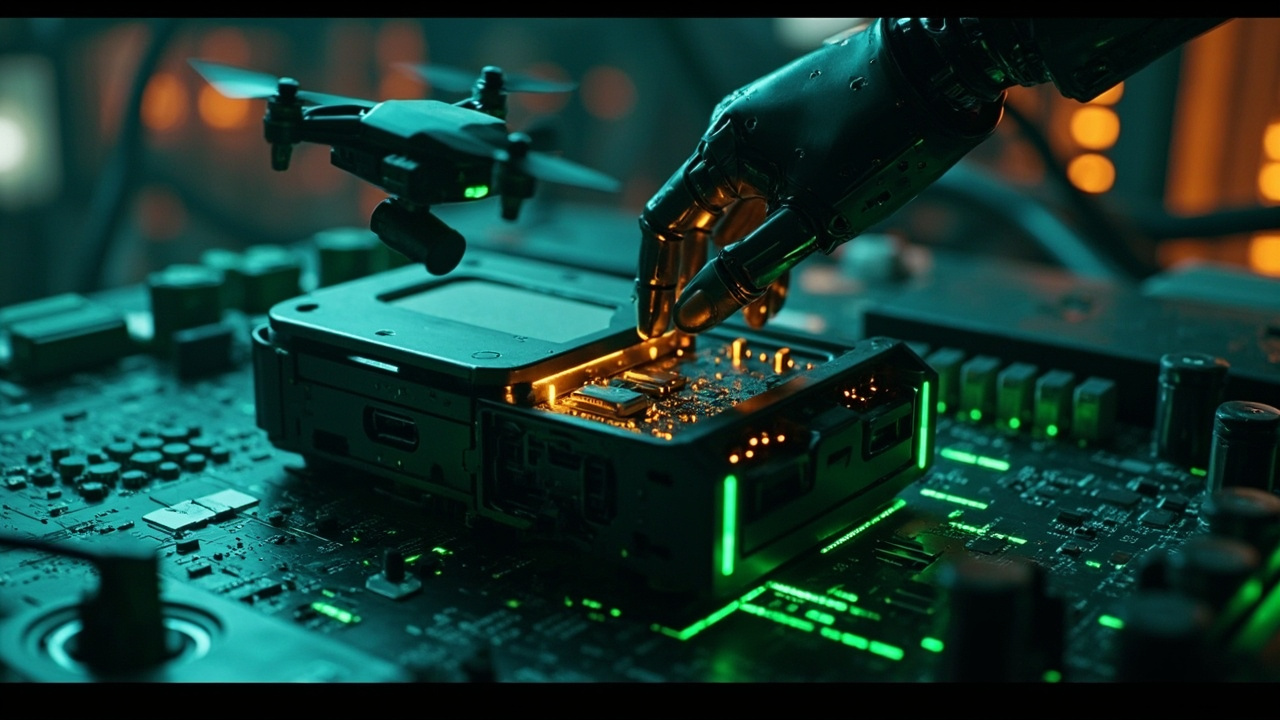
NVIDIA has announced the Jetson Orin Nano 2, a new robotics computer designed to redefine entry-level edge AI. Unveiled on August 25, 2026, the module puts what NVIDIA calls “frontier-class generative AI performance” into the hands of millions of developers building robots, delivery and inspection drones, and vision AI systems — the building blocks of what the company now describes as physical AI.
The launch comes at a moment when the economics of AI inference have shifted dramatically. As AI models grow smaller and more efficient, more edge devices can become autonomous systems that understand context, interpret language and images, and act in real time. The bottleneck is no longer model quality — it is compact, energy-efficient compute that fits inside a machine that must run for hours on a battery.
What Jetson Orin Nano 2 Delivers
The headline specifications are straightforward:
- 78 trillion operations per second (TOPS) of AI compute
- 8GB of memory
- 8-core Arm CPU
- 2x the inference performance of the previous-generation Jetson Orin Nano Super, in the same compact form factor
- 40% less power consumption at equal performance when running in 15-watt mode
That last point deserves emphasis. Doubling throughput while halving nothing would be ordinary silicon iteration. Doubling throughput and cutting power draw by 40% at the same performance point is what makes battery-powered autonomy viable. A delivery drone or a home robot lives and dies by its energy budget — every watt saved on inference is a watt available for motors, sensors, or flight time.
NVIDIA attributes the gains to improved Tensor Cores and higher memory bandwidth. For developers, the practical consequence is that models which previously required a larger, pricier module can now run on the entry-level tier, and models that already fit run faster or at lower clock speeds.
Why Now: Small Frontier Models Changed the Math
“Today’s small and medium frontier models have reached the accuracy of last year’s largest frontier models, unlocking real-time intelligence for edge devices,” said Deepu Talla, vice president of robotics and edge AI at NVIDIA. “The Jetson Orin Nano 2 computer puts that breakthrough within reach of millions of developers, delivering the performance and energy efficiency needed for real-time reasoning at the edge.”
That framing is the strategic core of the announcement. The past two years of distillation and quantization research have compressed capabilities that once demanded datacenter GPUs into models of a few billion parameters. The Jetson platform is NVIDIA’s bet that the next wave of AI value comes from deploying those models inside physical machines — not in the cloud, where latency and connectivity constrain what a fast-moving robot can do.
The software story reinforces the hardware one. Jetson Orin Nano 2 runs NVIDIA’s open software stack alongside Jetson agent skills, supporting memory-efficient edge inference of large language models and vision language models. NVIDIA specifically calls out compatibility with open models including NVIDIA Cosmos and NVIDIA Nemotron, Gemma 4, and Qwen 3 — a deliberately open-weight-friendly posture that lets developers avoid vendor lock-in on the model layer even as they standardize on NVIDIA silicon.
Who Is Building on It
NVIDIA says more than 3 million developers have built on its robotics stack, and the first wave of Jetson Orin Nano 2 adopters spans factory automation, construction equipment, and consumer robotics:
- Cognex, the machine-vision specialist, and Doosan Bobcat, the construction equipment maker, are among the first to adopt and explore the platform for industrial applications.
- Matic Robots is adopting Jetson Orin Nano 2 for its home cleaning robots, targeting conversational AI, gesture detection, precision mapping with semantic understanding, and autonomous cleaning in dynamic environments. “Home robots need to understand people, map spaces precisely, understand the layout of objects and spaces, and clean autonomously in dynamic and constantly changing environments,” said Navneet Dalal, cofounder and CEO of Matic Robotics. “With Jetson Orin Nano 2, Matic can run state-of-the-art AI models at the edge in a compact home robotics platform built for real-time perception, interaction and navigation.”
- Wing, Alphabet’s drone delivery subsidiary, currently flies Jetson Orin Nano Super in its delivery fleet and plans to evaluate the new module. “Drone delivery depends on AI that can enable fast, reliable understanding of the real world,” said Dinuka Abeywardena, head of perception at Wing. “Wing is exploring Jetson Orin Nano 2 to give us a path to more responsive, energy-efficient drones that can help make deliveries quicker and more dependable for customers.”
Beyond the marquee names, a long hardware ecosystem — AAEON, ADLINK, Advantech, Aetina, Antmicro, Aptiv, Auvidea, AVerMedia, Connect Tech, RidgeRun, Seeed Studio, and roughly a dozen others — is building carrier boards, hardware systems, customized AI software, and reference solutions to help customers reach market faster.
Analysis: The Edge Land Grab Intensifies
Three things make this launch significant beyond the spec sheet.
First, it prices physical AI into the mainstream. The entry-level Jetson tier has always been NVIDIA’s volume play — the $249 developer kit of the previous generation put credible AI compute on a maker’s desk. A 2x performance jump at this tier means school projects, startups, and industrial pilots all get access to inference capability that was flagship-only two years ago.
Second, it signals where NVIDIA sees growth outside the datacenter. With hyperscaler GPU clusters commanding headlines, the robotics and edge market is the quieter land grab. Every Jetson module sold seeds demand for NVIDIA’s full stack — CUDA toolchains, pretrained models, simulation — and locks developers into an ecosystem years before their robots ship at scale.
Third, the 1H 2027 availability window is the catch. The module and developer kit are “expected to be available in the first half of 2027” — a notably long runway from announcement to shipment. Competitors are not standing still: Qualcomm, and a wave of RISC-V accelerator startups, are all chasing the same autonomous-machine opportunity. NVIDIA is announcing early to freeze design wins now, betting its software moat carries developers through the wait.
For developers and robotics teams, Jetson Orin Nano 2 is less a product announcement than a planning signal: the compute floor for physical AI is rising, and the assumptions behind today’s edge architectures should be revisited before the hardware lands.
Sources
- [1] https://nvidianews.nvidia.com/news/nvidia-announces-jetson-orin-nano-2-robotics-computer-to-redefine-entry-level-edge-ai
- [2] https://www.artificialintelligence-news.com/news/nvidia-jetson-orin-nano-2-physical-ai-to-drones-and-robots/
- [3] https://www.hpcwire.com/off-the-wire/nvidia-unveils-jetson-orin-nano-2-for-robotics-and-edge-ai/
- [4] https://connecttech.com/announces-support-new-nvidia-jetson-orin-nano-2-robotics-computer/