Nobody Knows Who Built Ox Alpha: The Anonymous Model Beating GPT-5.6 at Coding
A frontier-class stealth model called Ox Alpha appeared free on OpenRouter on August 20 with a 1M-token context window, video input, and an 80% DeepSWE score that tops Claude Fable 5 and GPT-5.6 Sol — and its creator is staying anonymous.
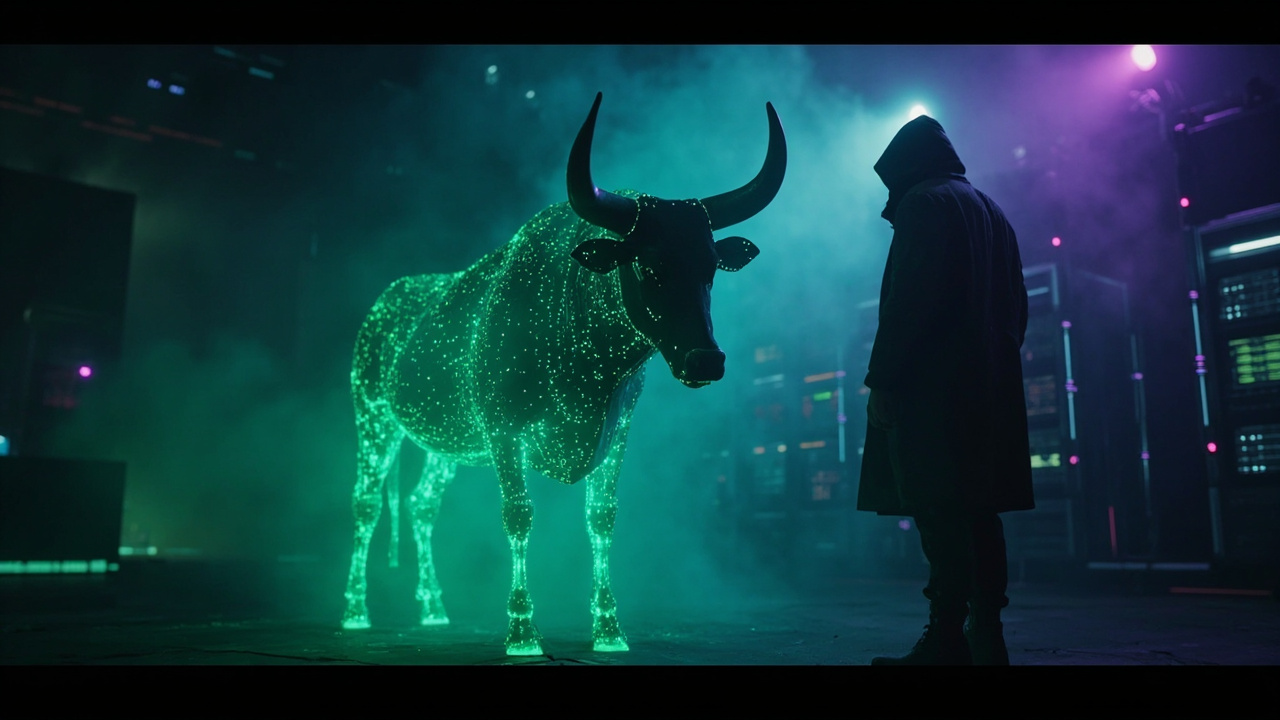
On August 20, 2026, a model called Ox Alpha quietly appeared on OpenRouter under a provider listed only as “stealth.” No company name. No announcement post. No paper. What it did ship with, according to OpenRouter’s listing, is a 1,048,576-token context window, native video input alongside text and images, zero data retention, and free access with generous usage limits for roughly one week. Within four days, it was the single most-discussed model in the developer community — because early evaluations show it beating the best coding models money can buy, and nobody will say who made it.
What Ox Alpha actually is
Strip away the mystery and the confirmed facts are straightforward:
- Anonymous provider. The developer is listed only as “stealth” on OpenRouter and OpenCode. OpenRouter itself, which runs the routing infrastructure, says it does not disclose the identities of stealth providers.
- Positioned as a coding and agentic reasoning model. OpenRouter’s description bills it as a “reasoning tool for coding” with long-horizon agentic capabilities and visual context understanding.
- 1M-token context window. 1,048,576 tokens exactly — the same ceiling as frontier models like Gemini-class offerings, and far beyond the 200K-400K typical of current coding assistants.
- Multimodal input. Text, images, and video go in; text comes out.
- Free for about a week. OpenCode, which coordinated the release, said the model would be available free with generous limits for roughly seven days before the experiment ends.
- Zero data retention. Prompts are not stored by the routing layer, a posture aimed at enterprise and security-conscious users.
The headline number driving the frenzy: an early DeepSWE score of roughly 80% on real-world software engineering tasks, against approximately 65% for Claude Fable 5 and 52% for GPT-5.6 Sol in the same early runs. If those numbers hold up under independent verification, an anonymous model just took the coding crown.
A familiar pattern: the stealth drop
If this sounds like déjà vu, it should. Anonymous frontier models appearing for free on OpenRouter have become a recurring genre over the past six months, and Ox Alpha is reportedly the fifth anonymous model with suspected Chinese lab origins to land on the platform’s free tier in that window.
The precedent everyone remembers is gpt2-chatbot — the 2024 mystery model that turned out to be OpenAI testing GPT-4o under a pseudonym. The playbook has since been adopted by others: launch under a codename, let the community benchmark it for free, watch the hype build, and either reveal the maker at the peak of attention or never reveal it at all.
This time the speculation has a distinct direction. Coverage from Business Insider to Korea’s Chosun Daily notes that observers immediately suspected a Chinese lab, with theories ranging from Z.ai’s GLM series to an unreleased Alibaba Qwen checkpoint. A widely-shared Towards AI analysis argues that the behavioral “fingerprinting” tests the community uses to unmask anonymous models are essentially worthless, and that only cheap arithmetic probing of tokenization quirks can reveal a model’s true lineage — a claim that itself remains unverified.
The caveats are real
The community’s excitement is tempered by genuine skepticism, and honest coverage requires stating it plainly:
- The DeepSWE number is an early, partial run. The original score came from just 10 questions, not the full benchmark suite. Reddit’s r/singularity thread filled with users reporting that Ox Alpha “sucks at coding and keeps repeating the same” mistakes in longer agentic sessions.
- Free access is a limited window. The model is free for about a week, after which it either disappears or converts to paid access. Nobody has committed to open weights.
- No independent verification exists yet. All public scores trace back to the same early evaluation runs. Artificial Analysis and other neutral leaderboards had not published Ox Alpha results as of this writing.
- Anonymous means unauditable. A model with no disclosed creator cannot be meaningfully assessed for training data provenance, safety posture, or organizational accountability.
Why this matters beyond the parlor game
The guessing game is fun, but the structural story is more interesting. Three shifts are visible in how frontier models reach the public:
Stealth releases are now a marketing channel. A named release from a known lab gets covered once. An anonymous release generates a week of speculation, dozens of YouTube explainers, and forensic community analysis — free distribution that no press budget could buy. Ox Alpha has been the subject of intensive coverage from Quartz, Business Insider, Chosun Daily, and countless creators precisely because nobody knows who to credit or blame.
The free week is a crowd-sourced eval farm. By offering generous free limits, the anonymous provider turned every curious developer into a QA tester. Long-horizon agentic coding, multimodal input handling, and million-token retrieval are exactly the capabilities that are hardest to benchmark in a lab and easiest to stress-test in the wild. The community found the failure modes (repetition loops in long sessions) within days.
Anonymous frontier compute raises real questions. If Ox Alpha is indeed a Chinese lab’s unreleased checkpoint, it represents frontier-class training compute being deployed for a week-long public experiment with no accountability attached. If it is a Western lab’s A/B test, it shows how casually flagship-adjacent models are now floated anonymously. Either way, the era in which model identity was public infrastructure is fading.
What happens next
Three outcomes are plausible. The provider steps forward within the week, converting speculation into a marketing triumph. The model simply vanishes when the free window closes, leaving the DeepSWE number as an unverified legend. Or the weights get released openly, instantly becoming the most-scrutinized artifact in local-AI circles — the community that just spent August dissecting Qwen3.8’s open-weight drop would descend on it with relish.
For developers, the practical advice is simple: use the free window to test the model on your own workloads, treat all published benchmark numbers as provisional, and do not build anything on an anonymous endpoint that may disappear next week. The most valuable thing Ox Alpha has produced so far is not a benchmark score — it is a live demonstration that in 2026, model quality can arrive on the internet with no name attached, and the market will still find it within 48 hours.
The canary in this coal mine isn’t singing. It’s coding, at 80% on DeepSWE, for free, anonymously — and the entire industry is watching to see who walks in to claim it.
Sources
- [1] https://qz.com/mystery-ai-model-ox-alpha-openrouter-free-082426
- [2] https://www.businessinsider.com/ox-alpha-ai-model-mystery-2026-8
- [3] https://www.chosun.com/english/industry-en/2026/08/23/IYYP7RRCZBBODANI5DYWXRBTJU/
- [4] https://daily.dev/posts/who-s-behind-the-new-stealth-model-ox-alpha--gb79q86w4
- [5] https://openrouter.ai/compare/stealth/ox-alpha
- [6] https://coursiv.io/blog/ox-alpha-stealth-model
- [7] https://www.reddit.com/r/singularity/comments/1vu87p5/a_stealth_model_called_oxalpha_has_been_released/
- [8] https://hyper.ai/en/stories/be28f1428bf35df8501cff039929dda1
- [9] https://pub.towardsai.net/i-know-what-ox-alpha-is-and-here-is-the-proof-37721cdfc23a
- [10] https://local-ai-zone.github.io/blog/ox-alpha-stealth-model-comprehensive-analysis.html