Anthropic Signs $45 Billion Compute Deal with Nscale — 460MW of Nvidia Vera Rubin Power for the Claude Era
Anthropic has agreed to pay UK neocloud Nscale roughly $45 billion over six years to lease about 460 megawatts of Nvidia Vera Rubin capacity at its Monarch campus in West Virginia — one of the largest AI infrastructure deals ever, signed weeks before its IPO roadshow.
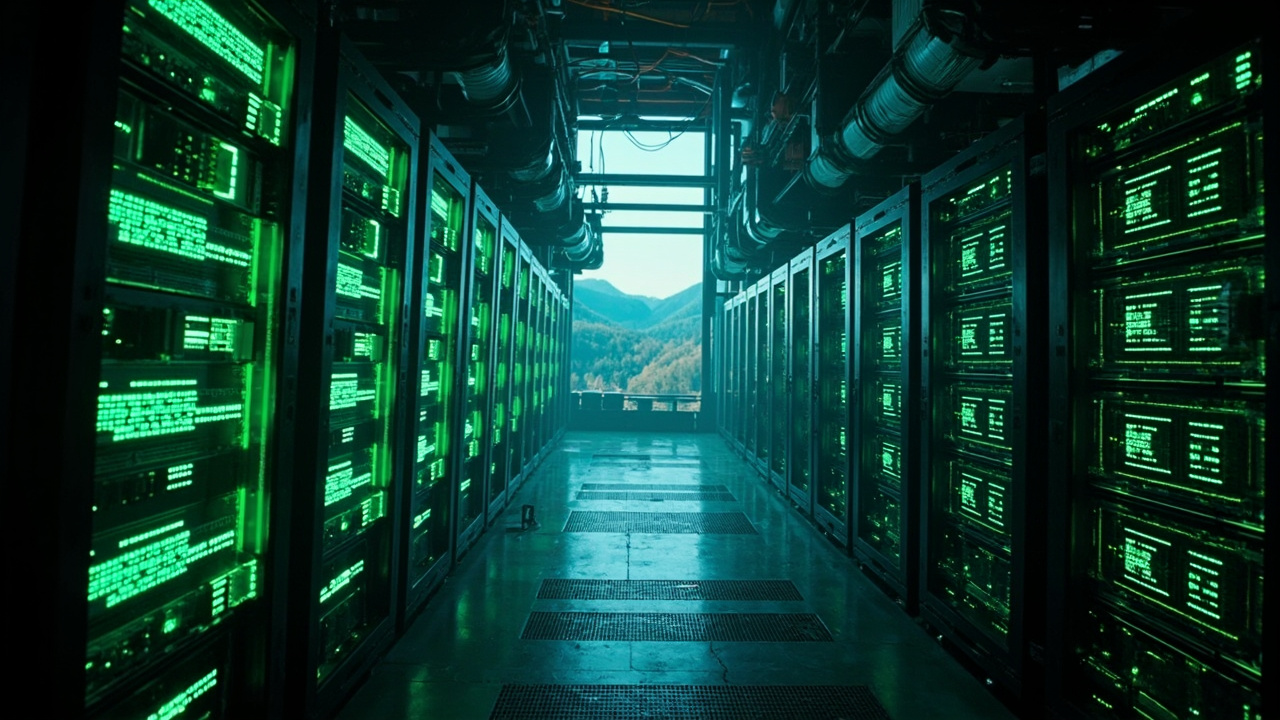
Anthropic has agreed to pay roughly $45 billion over six years to rent AI computing power from Nscale, the UK-based “neocloud” provider, according to reports first published by Bloomberg News on August 26 and subsequently confirmed by CNBC and the Financial Times. It is one of the largest AI infrastructure agreements ever signed — and it lands at a delicate moment for the San Francisco lab, which confidentially filed its IPO prospectus with the SEC in June and is currently pitching Wall Street on a growth story that depends almost entirely on how much compute it can lock down.
What the deal actually covers
The terms, as reported, are straightforward in shape but staggering in scale:
- ~$45 billion in total payments over a six-year lease
- ~460 megawatts of dedicated capacity — enough electricity to power roughly 345,000 US homes at any given moment
- Capacity drawn from Nscale’s flagship Monarch Compute Campus in West Virginia, a development with more than $20 billion in planned capital investment behind it
- Powered by Nvidia’s next-generation Vera Rubin chip systems, which are expected to begin coming online in late 2027
Anthropic declined to comment on the transaction, which was first reported by Bloomberg and later confirmed by CNBC. The FT framed it as a bet by a UK startup barely two years old landing the kind of tenant contract that used to belong exclusively to hyperscalers.
Why Anthropic is buying this hard
The deal is less a luxury than a survival purchase. Earlier this year, Anthropic acknowledged that surging demand for its Claude models — and especially for its AI coding product, Claude Code — had placed “inevitable strain” on its infrastructure, causing performance delays and reliability issues during peak hours. For a company whose enterprise credibility rests on Claude being the model you can actually run your business on, brownouts are existential branding damage.
The Nscale agreement is the latest entry in an extraordinary infrastructure buying spree:
- AMD: an agreement to buy tens of billions of dollars in AI servers, backed by up to $5 billion in equity investment from the chipmaker itself
- SpaceX: a reported commitment of $1.25 billion per month through May 2029 for compute capacity at the Colossus and Colossus II data center clusters
- Google and Broadcom: expanded strategic supply agreements, deepening relationships that predate the current capex wave
- Separately, Anthropic has announced plans to invest $50 billion in building advanced data centers of its own
The financial context makes the urgency legible. Anthropic currently carries a market valuation of about $965 billion, with an annual revenue run rate of roughly $47 billion — and, according to reports of its IPO materials, it projects revenue of $190–200 billion by 2028. That is close to a 4x revenue jump in two years. Nothing about that trajectory is possible without power, land, and silicon secured years in advance.
The Nscale story is the wilder story
If Anthropic’s side of the deal is aggressive, Nscale’s side is nearly implausible. The company was founded only in 2024, yet has already secured more than $2 billion in funding, reached a valuation of approximately $14.6 billion as of April 2026, acquired AI-workload software maker Anyscale, and — critically — counts Nvidia among its backers. It has also cut deals with Microsoft, including a letter of intent signed in March to provide the tech giant up to 1.35 gigawatts of capacity from the same West Virginia campus family that will now serve Anthropic.
Nscale is reportedly seeking a $3 billion IPO of its own, with plans to grow data center capacity from 831 megawatts today to roughly 11 gigawatts — anchored by the Monarch campus in West Virginia, which is planned at up to 8 gigawatts with a first 2-gigawatt phase targeted for 2027. A two-year-old company signing a $45 billion, six-year tenant contract is either the fastest company formation story in infrastructure history or a measure of how distorted the market has become. It is probably both.
The Vera Rubin bet
Every detail of this deal routes through Nvidia. The capacity Anthropic is renting will run on Vera Rubin — Nvidia’s follow-on to the Blackwell and Rubin generations of data center silicon, with systems expected to ramp from late 2027. That timing matters: Anthropic is effectively pre-ordering compute capacity on chips that will not ship at scale for more than a year, on a campus that is still under construction, from a landlord that did not exist when GPT-4 launched.
This is the “compute futures” market that the AI industry has quietly built. Labs commit tens of billions today for capacity delivered in 2027–2033, financed by projected revenues in 2028–2030, against models that do not exist yet. The circle is held together by Nvidia, which supplies the chips, backs many of the neoclouds selling the capacity, and increasingly shapes who gets priority allocation. Critics of this circularity — Nvidia-backed suppliers selling to labs whose valuations depend on Nvidia silicon — have warned about concentration risk for over a year. Deals like this one are why.
What to watch
Three open questions will determine whether this was genius or excess:
- Delivery risk. Nscale must actually build 460 megawatts of Vera Rubin capacity in West Virginia on schedule. Data center construction is bounded by power interconnects, transformers, and turbines — all currently in global shortage. First-phase Monarch is targeted for 2027; slips are routine at this scale.
- The revenue side. Anthropic’s $45 billion outflow is justified only if the run toward $200 billion in annual revenue materializes. If enterprise AI demand flattens, these fixed six-year commitments become the era’s most expensive stranded assets.
- The IPO narrative. Anthropic will walk into its roadshow with a locked compute pipeline into the 2030s — a genuine moat against smaller rivals — and simultaneously one of the largest recurring expense obligations ever shouldered by a pre-IPO company. How investors price that trade-off will say a lot about how the AI capital cycle ends.
For now, the signal is unambiguous: the league-table phase of the AI boom is no longer about who has the best model. It is about who controls the electrons. Anthropic just bought itself 460 megawatts of certainty — and handed a two-year-old British startup the largest contract in its short, spectacular life.
Sources
- [1] https://techcrunch.com/2026/08/26/anthropic-continues-compute-gobbling-streak-in-45-billion-deal-with-nscale/
- [2] https://www.reuters.com/technology/anthropic-pay-nscale-45-billion-rent-ai-computing-power-bloomberg-news-reports-2026-08-26/
- [3] https://techstrong.ai/articles/anthropic-signs-45-billion-cloud-deal-with-nscale-ahead-of-planned-ipo-reports/
- [4] https://www.ft.com/content/0ec76ba3-5f7f-4085-88fb-acf21954bc85
- [5] https://news.bloomberglaw.com/ip-law/anthropic-to-pay-nscale-45-billion-for-ai-computing-power