Lidl's Owner Bets €5.6 Billion on European AI Infrastructure
Schwarz Group will invest up to €5.6 billion by 2033 in a 240MW data centre near Rostock, expanding Schwarz Digits as Europe's 'digitally sovereign' answer to US cloud giants.
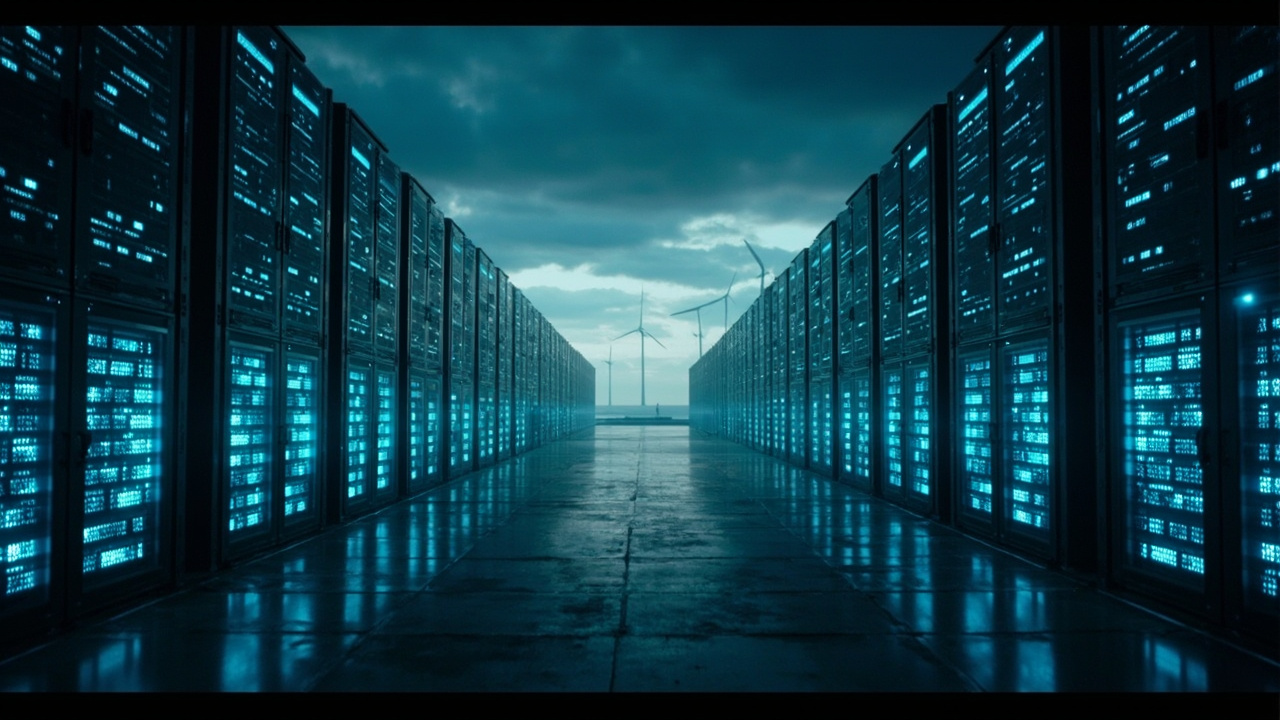
The company behind Europe’s biggest discount grocery chain is quietly becoming one of the continent’s most aggressive AI infrastructure investors. On August 27, 2026, Reuters reported that Schwarz Group — the unlisted German retail giant that owns Lidl and Kaufland — plans to invest up to €5.6 billion by 2033 in a new data centre in northern Germany, with a planned capacity of 240 megawatts.
What Was Announced
The new facility will be built in the northern German state of Mecklenburg-Western Pomerania, near the port city of Rostock, according to Reuters and an earlier FAZ report. The €5.6 billion commitment runs through 2033 and is explicitly aimed at expanding cloud and AI capabilities in Germany and Europe — not just serving the group’s own retail operations, but selling capacity to external customers.
The vehicle for the push is Schwarz Digits, the group’s IT and digital services division established in 2023. The division covers cloud computing, cybersecurity, artificial intelligence, and communications, and has been explicitly positioning itself as a “digitally sovereign” alternative to US hyperscalers — a pitch that lands increasingly well with German enterprises and public-sector buyers wary of depending on American cloud providers.
Not Schwarz’s First Gigawatt-Scale Bet
The Rostock project is the second pillar of a much larger infrastructure strategy. In November 2025, Schwarz Digits broke ground on an €11 billion data centre campus on the site of the former Lübbenau power plant south of Berlin, in the state of Brandenburg. That facility — connected load of around 200 MW, expandable to 240 MW of GPU-ready capacity — is designed to house up to 100,000 GPUs for AI model training, with the first three modules scheduled for completion by the end of 2027.
Add the two projects together and the group has now committed roughly €16–17 billion to German data centre construction, a figure that would have seemed implausible from a grocery company five years ago. The group generates more than €185 billion in annual revenue and over €10 billion in annual investment capacity, giving it the balance sheet to fund multi-year capital projects without external financing — a structural advantage over venture-backed neoclouds.
Why a Supermarket Chain?
The strategy is less strange than it looks. Schwarz Group is Germany’s largest private employer and one of Europe’s largest retail groups, with deep in-house demand for compute: demand forecasting, logistics optimization, price modeling, and increasingly AI-assisted operations across thousands of stores. Building its own infrastructure converts an operating cost into a sellable asset.
There’s also a timing argument. Europe’s AI infrastructure gap versus the US and China has become a explicit policy concern, with EU funding programs for “AI gigafactories” and member states courting hyperscale investment. Deutsche Telekom and Schwarz Group were reported in late 2025 to be in talks to jointly apply for EU-funded large data centre projects. A northern-German location like Rostock offers relatively cheap land, strong connectivity to Nordic power markets, and proximity to wind generation along the Baltic coast — a meaningful advantage as energy availability becomes the binding constraint on AI buildouts.
The Sovereignty Angle
The most strategically interesting part of the announcement is the positioning. Through Schwarz Digits, the group markets itself as Europe’s homegrown, GDPR-native alternative to AWS, Azure, and Google Cloud. For German banks, insurers, healthcare providers, and government agencies facing increasing regulatory and geopolitical pressure over where their data lives, a German-owned hyperscale option has genuine appeal — even if its technical capabilities still trail the US leaders.
That pitch also aligns with EU industrial policy. Brussels has made “digital sovereignty” a stated goal, and gigafactory-style funding schemes are designed to pull exactly this kind of private capital into European AI infrastructure. Schwarz’s ability to self-fund makes it one of the few European players that can move at buildout speeds approaching US hyperscalers.
What to Watch
- Execution risk. €5.6 billion through 2033 is a long-dated commitment. Energy prices, grid connection timelines, and GPU supply will determine actual pace.
- Customer traction. The Rostock economics only work if Schwarz Digits wins external enterprise workloads, not just internal Lidl/Kaufland demand.
- EU gigafactory outcomes. If Schwarz Digits secures EU-backed projects (potentially with Deutsche Telekom), its effective capacity footprint could grow well beyond the announced figures.
- Competitive response. US hyperscalers continue to announce European expansions; OVHcloud, IONOS, and other European providers face a much better-funded domestic competitor.
Why It Matters
The AI buildout is usually framed as a US–China race, with Europe as a spectator. Schwarz Group’s €5.6 billion Rostock commitment — on top of €11 billion in Lübbenau — is evidence that at least one European player with retail-scale cash flows intends to compete in physical AI infrastructure, not just buy tokens from American providers. Whether “digital sovereignty” translates into competitive AI capability is an open question. But the capital is real, the locations are secured, and the first modules are already under construction.
Sources
- [1] https://www.reuters.com/business/lidl-owner-invest-up-56-billion-by-2033-data-centre-northern-germany-2026-08-27/
- [2] https://www.reuters.com/business/lidl-owner-invest-billions-data-centre-northern-germany-faz-says-2026-08-26/
- [3] https://www.datacenterdynamics.com/en/news/lidl-owner-schwarz-breaks-ground-on-200mw-data-center-in-germany/
- [4] https://www.fdiintelligence.com/content/45ccdac3-0487-4da1-8ef6-70538fd71d5c
- [5] https://schwarz-digits.de/en/presse/archive/2026/new-high-tech-hub-for-europe