80 Actors Tell UK Prime Minister: Our Voices Are Ours — Save Our Voices Now Demands a Legal Right to Your Own Voice
Nicola Coughlan, Hugh Bonneville and Matt Lucas back Save Our Voices Now, a campaign demanding UK legislation that grants every citizen statutory ownership of their own voice as AI cloning goes mainstream.
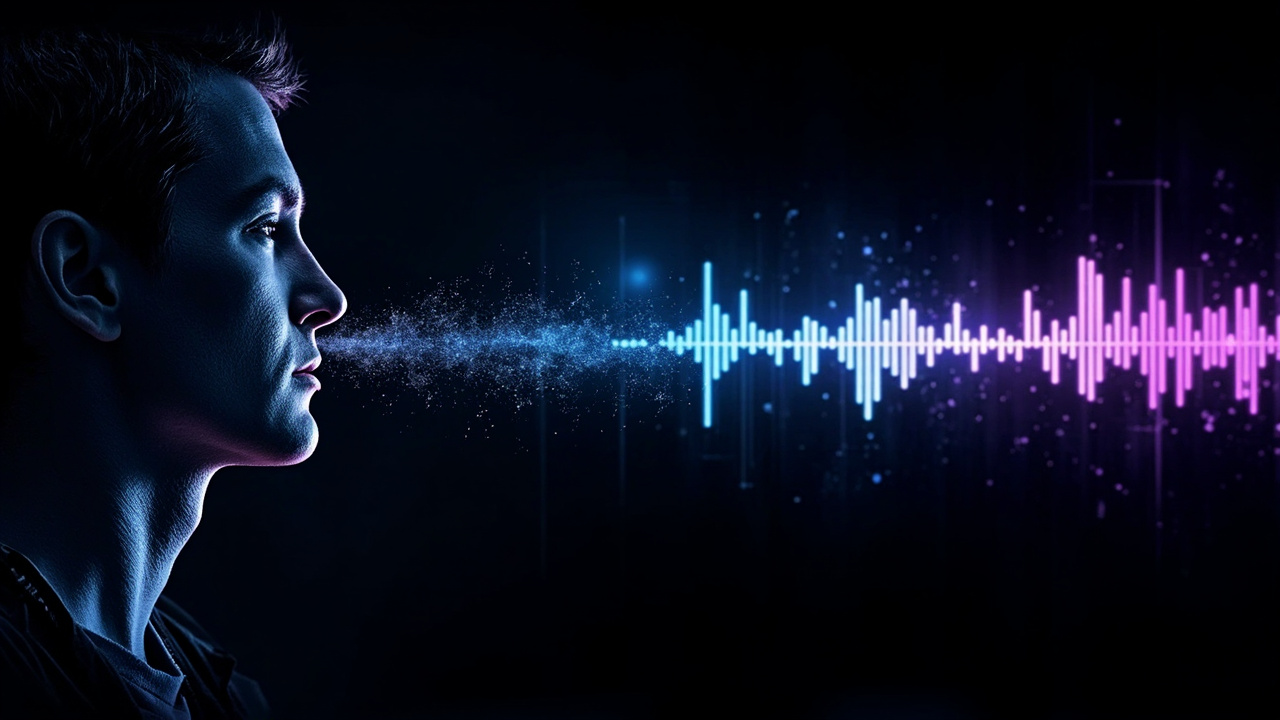
A new campaign backed by some of Britain’s best-known actors launched on August 28, 2026, with a simple, radical demand: every person in the UK should legally own their own voice. Save Our Voices Now, supported by around 80 performers including Nicola Coughlan, Hugh Bonneville, Matt Lucas, Luke Evans, Siobhán McSweeney and Pearl Mackie, has sent an open letter to Prime Minister Andy Burnham and filed a petition on Gov.uk asking for voice ownership to become a statutory right.
The target is AI voice cloning — technology that trains machine learning models on recordings of real people and can then make them say anything a prompt requests. What was once a laboratory demo is now a consumer commodity, and the performing arts industry says it is being pillaged in real time.
The campaign and its demands
The open letter calls for “clear, enforceable and legal” protection of voice rights, according to coverage of the campaign. The Gov.uk petition goes further, asking that everyone in Britain be granted ownership of their voice as part of their statutory rights — effectively treating the voice as a form of property that cannot be commercially replicated without consent.
Hugh Bonneville, star of Paddington and Downton Abbey, framed the issue as one of identity rather than commerce. “My voice is unique, it’s mine, it’s part of my identity. So is yours. That’s worth speaking up about,” he said — adding, with a pointed joke, “The quote was handwritten, not created by AI.”
Siobhán McSweeney, known for Derry Girls, said she is “deeply worried” that legislation, contracts, working practices and artists’ rights are not being protected as quickly as AI technology is progressing. “I believe there is a way to work alongside AI and to use it as a tool that benefits us rather than rendering us obsolete,” she said. “This is an existential problem and needs to be controlled legislatively as soon as possible. Our audiences want that human connection. Not AI.”
The campaign is not limited to screen actors. Signatories include Scottish singer Sandi Thom, who said her voice was “unique to me and was handed to me at birth,” and audiobook narrator Alice Sockett, who co-founded the campaign. Sockett described voice cloning as “an existential threat to our entire industry,” saying her voice is “out there in the public domain but completely unprotected” and that “we’re seeing voice theft increase every week.”
Three seconds to steal a voice
The technical reality behind the campaign is sobering. As the BBC notes, quick voice clones can be produced in minutes from just a few seconds of audio, while high-quality copies tend to require hours of recordings. For professional actors and narrators — people whose voices saturate the public internet — the raw material for a convincing clone is already freely available.
Campaign founder Peter Caulfield put it bluntly: “In just three seconds, with the right AI system, your voice can be cloned, stolen and reinterpreted without your knowledge. It’s a Black Mirror episode, except this isn’t fiction. It’s happening right now.”
The stakes extend well beyond performers’ livelihoods. Save Our Voices Now claims that 28% of UK adults report having been targeted by a voice-cloning scam — fraud schemes in which a cloned voice impersonates a family member, colleague or official to extract money or information. Caulfield accused the government of “allowing AI companies to steal and profit from artists’ voices without their consent” while also “allowing criminals to use AI to clone people’s identities and threaten everyone.”
A legal vacuum, and a Danish blueprint
The campaign’s core argument is that UK law has fallen behind the technology. In June, Dr Mathilde Pavis, an academic lawyer whose work on image and voice rights is widely cited in this debate, warned that UK legislation had become “unfit for purpose” in the age of AI. “The law comes close, but it doesn’t fully protect your voice, your face or your identity,” she said. Existing protections — passing off, copyright in recordings, data protection law — each cover a fragment of the problem, and none squarely prohibit the non-consensual cloning of a voice itself.
The campaigners point to Denmark as proof that stronger protection is legislatively feasible. Denmark’s 2026 legal reforms extend copyright-style protection to personal characteristics — faces, voices, bodies and other attributes — allowing citizens to demand the removal of unauthorised AI content and to seek compensation. Legal scholars writing on the reform describe Denmark as the first EU state to build a dedicated likeness-and-voice regime into national law. If a country of six million can do it, the implicit question goes, why can’t Britain?
The UK government’s response so far has been cautious. A spokesperson told the BBC that while “digital replicas can be a powerful tool, including for the creative industries,” there is also potential for harm. “We value and protect human creators, and that is why we have announced we will launch a consultation on how we address these harms, while protecting legitimate innovation,” the spokesperson said — a formulation that acknowledges the problem while committing, for now, only to a future consultation rather than legislation.
The other side of the technology
Any debate about banning or restricting voice cloning must also reckon with the technology’s genuinely life-changing uses. Yvonne Johnson, who lost her voice to motor neurone disease, told the BBC earlier this year that having her voice cloned by AI had “totally blown her mind” and brought her closer to her family, who had forgotten what she sounded like. Others have gone further still: Pam Cronrath, from Washington state in the US, used AI to create a holographic representation of her deceased husband that addressed mourners at his funeral.
These cases explain why campaigners are demanding consent-based ownership rights rather than an outright prohibition. A statutory voice right would not prevent a patient consenting to have her voice restored; it would prevent a company, a scammer or a studio from doing the same thing without permission. The distinction the actors are drawing is not between good and bad technology, but between licensed and stolen use.
Why it matters beyond Britain
The Save Our Voices Now campaign lands at a moment when governments worldwide are drafting the rulebook for synthetic media. The EU’s AI Act transparency obligations — requiring chatbots to disclose that they are AI and deepfakes to be clearly labelled — became enforceable earlier in August 2026. Denmark is extending property-like rights over voice and likeness. The UK now faces pressure to decide which model it follows: disclosure labels, ownership rights, or continued reliance on laws written before anyone could steal a voice from three seconds of audio.
For the AI industry, the outcome matters too. Voice is becoming a primary interface for agents, assistants, audiobooks, dubbing and entertainment. Whether companies must license voices — and from whom — will shape business models across the synthetic media sector. And for the roughly 28% of UK adults who report already being targeted by voice-cloning scams, the question is more basic: whether the law can catch up with a technology that has already outpaced it.
The performers’ message to the prime minister is ultimately a simple one. As Bonneville put it, a voice is “part of my identity. So is yours.” The campaign’s bet is that if enough people recognise their own voice in that sentence, statutory protection will stop sounding radical — and start sounding obvious.
Sources
- [1] https://www.bbc.com/news/articles/c4gv5gepxnyo
- [2] https://www.theguardian.com/technology/2026/aug/28/stars-back-campaign-against-ai-voice-cloning-nicola-coughlan-matt-lucas
- [3] https://www.hexham-courant.co.uk/news/national/26502755.hugh-bonneville-among-stars-backing-campaign-ai-voice-cloning/
- [4] https://uk.finance.yahoo.com/news/hugh-bonneville-among-stars-backing-050000038.html
- [5] https://verfassungsblog.de/copyrighting-voice-and-image/
- [6] https://globallawexperts.com/deepfake-law-denmark/