The DALL·E GPT Retires Today: OpenAI Closes the Book on Its Image-Generation Icon
On August 30, 2026, OpenAI retires the official DALL·E GPT from ChatGPT for good. Here's what actually disappears, why your old images are at risk, and how the GPT Image lineage replaced the model that started the generative-art boom.
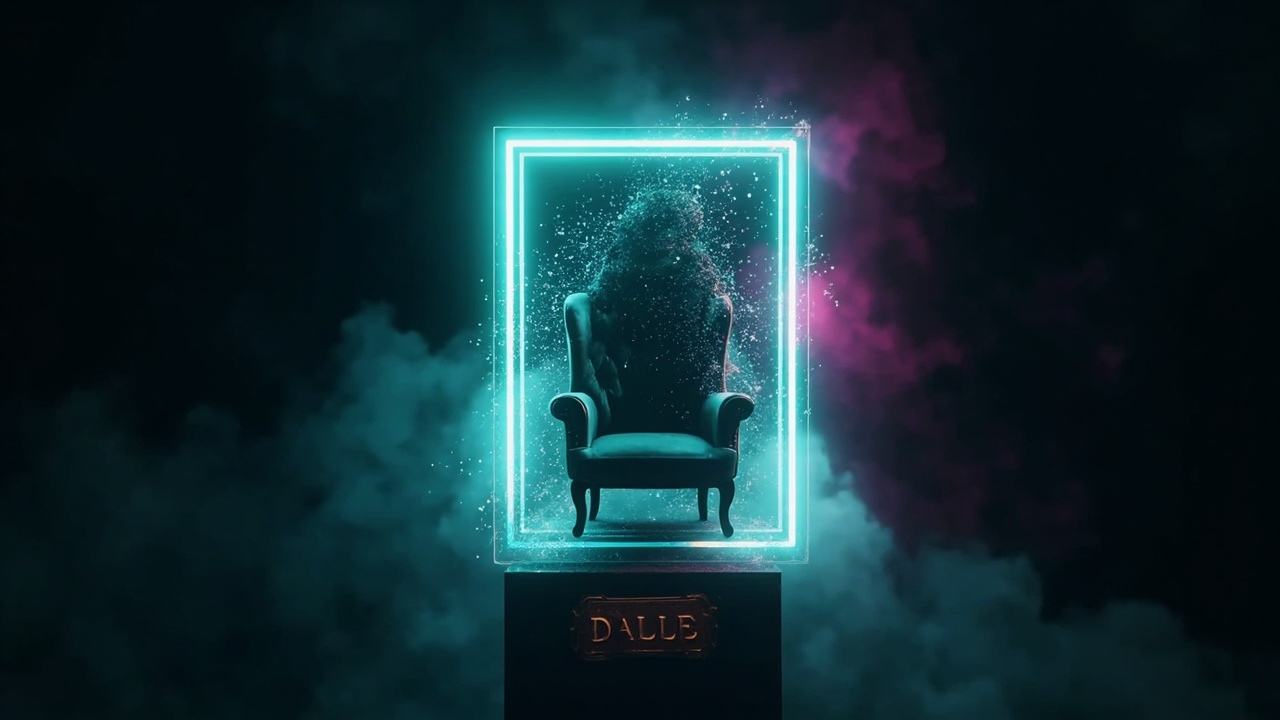
Five years after a quirky text-to-image experiment named after a Pixar movie and a surrealist painter introduced the world to generative art, OpenAI is switching off its most famous creative brand. Per the official ChatGPT release notes, on August 30, 2026, the company is retiring the DALL·E GPT inside ChatGPT — the pre-built assistant that for years was the front door to AI image generation for hundreds of millions of users.
If that sentence sounds scarier than the reality, that’s worth unpacking first. Image generation in ChatGPT is not going away. What disappears is the last dedicated “DALL·E” surface in the product — the custom GPT app users could open to invoke the model by name. Everything it did has long since been absorbed by ChatGPT Images, the native, in-chat image generation and editing stack built on OpenAI’s newer GPT Image models. The retirement is less a funeral for a capability and more the removal of a legacy brand shell that had already been hollowed out from the inside.
What actually happens on August 30
Three things, concretely:
The DALL·E GPT disappears from ChatGPT. The dedicated GPT stops being available, and with it goes the convenient bucket where its conversations and images lived. OpenAI flagged the date in its July 31 release notes and reiterated it through August, giving users roughly a month of warning.
Images made through it go with it. This is the part with real stakes. As multiple outlets including Tom’s Guide and Notebookcheck have emphasized, users who created images through the DALL·E GPT need to download anything they want to keep before the deadline. Once the GPT is retired, retrieving those images from its history becomes difficult to impossible — a quiet data-loss event for anyone who treated the tool as an archive of their creative work.
Nothing changes for mainstream image generation. Ask ChatGPT for an image today and you get ChatGPT Images, which since April 2026 means the ChatGPT Images 2.0 model — noticeably sharper rendering, far more reliable text inside images, multilingual prompt handling, and editing that understands the conversation around it. For most users, the DALL·E GPT had been a redundant side door for months.
A short history of the model that named the category
The retirement lands with a certain symbolic weight because DALL·E wasn’t just another model — it was the proof of concept for the entire generative-media era.
In January 2021, the original DALL·E showed that a transformer could map text to pixels well enough to draw “an armchair in the shape of an avocado.” It was a research demo, but it detonated the public imagination. DALL·E 2 arrived in April 2022 and turned the demo into a phenomenon — the images were photorealistic enough that “an AI painted this” became a dinner-party conversation, and the resulting controversies over art, labor, and deepfakes set the agenda we’re still arguing about today. When DALL·E 3 shipped inside ChatGPT in October 2023, image generation became a mainstream chat feature rather than a separate destination — arguably the first “viral” AI product moment of its kind.
The end came in stages, and faster than the brand’s fame. In March 2025, OpenAI replaced DALL·E 3 inside ChatGPT with GPT Image’s native generation — a model built directly into the multimodal conversation stack rather than bolted on as an external call. Developers got their notice on November 14, 2025: the DALL·E API snapshots would be removed on May 12, 2026. By December 2025, OpenAI had already quietly shifted remaining users onto GPT Image 1.5. April 21, 2026 brought ChatGPT Images 2.0, the current state of the art. From today, the DALL·E name simply stops meaning anything operational inside OpenAI’s consumer product.
The developer side: churn with a cadence problem
For developers, the retirement is a reminder that OpenAI’s image stack now moves at a pace that’s hard to track. The company’s deprecations page reads like a conveyor belt: DALL·E 2 and 3 API snapshots removed in May 2026, older GPT Image models notified on June 2, 2026 with removal set for December 1, 2026. Developers who migrated from DALL·E 3 to gpt-image-1-mini as recently as this spring now face a second migration inside six months.
That churn has costs — broken pipelines, emergency re-validations of output quality, pricing surprises — but it also reflects genuine progress. Each generation of GPT Image models has been materially better at the things DALL·E was worst at: legible typography, complex spatial compositions, consistent editing across turns, and following long, nuanced prompts. The Community forums carry plenty of nostalgia for DALL·E 3’s painterly aesthetic, but few argue the new models are weaker.
Why this matters beyond one brand
Strip away the sentiment, and the DALL·E GPT retirement tells a cleaner story about where consumer AI products are heading: everything becomes the chat window, and nothing gets to stay a separate app.
The DALL·E GPT was a transitional artifact — a dedicated tool from an era when AI capabilities needed their own doors. As models became natively multimodal, the doors became redundant. The same consolidation logic is playing out across the industry: video, voice, code execution, and web browsing are all folding into single conversational surfaces rather than living as separate products. The GPTs ecosystem itself, once positioned as an app store of custom assistants, is being quietly rationalized down to what users actually invoke.
There’s also a durable lesson in the data-loss angle. Cloud AI tools make it frictionless to create things and frictional to keep them. Millions of images made through the DALL·E GPT over three years will effectively evaporate this weekend because they lived inside a product surface rather than a user’s own storage. Power users have learned to export; the next hundred million users haven’t yet. Expect “where do my AI creations actually live?” to become a recurring question — and a product opportunity — as generation tools multiply.
What to do if you’re affected
- Download your images now. Open the DALL·E GPT’s conversation history in ChatGPT and save any images you care about locally. After August 30, assume they’re gone.
- Move your prompts, not just your files. If you have saved prompt recipes from the DALL·E GPT, copy them into regular chats — ChatGPT Images responds to the same style of prompting, usually better.
- Developers: check the deprecations page. If you’re still on DALL·E-era API snapshots or early
gpt-image-1models, the December 1, 2026 removal date is the next hard deadline.
The avocado armchair outlived its usefulness, but not its place in history. DALL·E made “text-to-image” a household phrase; GPT Image made it good enough that nobody says the phrase anymore. Today the name retires. The category it created is just getting started.
Sources
- [1] https://help.openai.com/en/articles/6825453-chatgpt-release-notes
- [2] https://www.tomsguide.com/ai/chatgpt/you-have-until-august-30-to-save-your-chatgpt-dall-e-images-heres-how-to-avoid-losing-them-forever
- [3] https://www.notebookcheck.net/DALL-E-leaves-ChatGPT-on-August-30-download-your-images-first.1360522.0.html
- [4] https://developers.openai.com/api/docs/deprecations
- [5] https://en.wikipedia.org/wiki/DALL-E
- [6] https://openai.com/index/introducing-chatgpt-images-2-0/