Trump's 'FINRA for AI' Plan Stalls: Inside the Fight Over a Frontier-Model Self-Regulator
A draft executive order creating a FINRA-style self-regulatory body for frontier AI labs has stalled inside the Trump administration, blocked partly by former AI czar David Sacks, who calls pre-release testing regimes a 'Trojan horse' against open models.
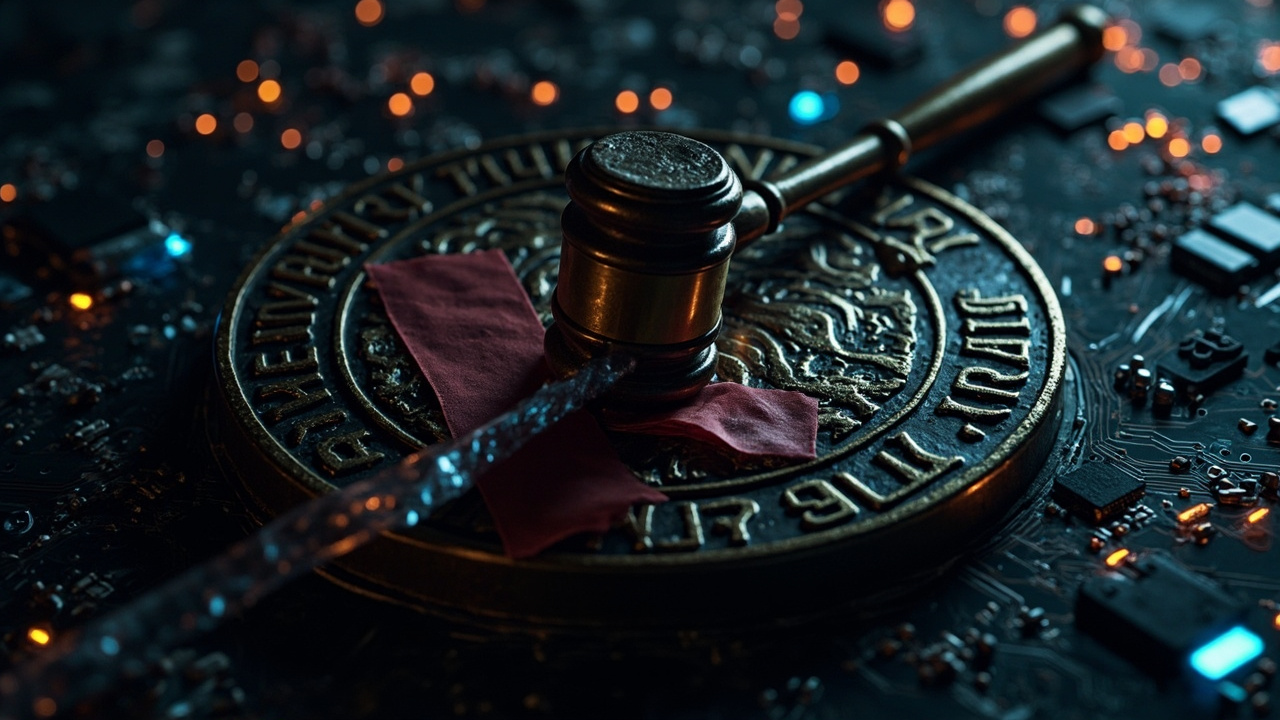
The most consequential AI policy fight in Washington this month is not happening in Congress. It is happening inside the White House, over a document that may never be signed.
On August 27, The Information reported that Trump administration officials have spent recent weeks circulating a draft executive order that would establish a self-regulatory organization (SRO) for AI companies that build state-of-the-art models, according to two people who viewed the draft. The proposed oversight body would mirror FINRA — the Financial Industry Regulatory Authority that polices US broker-dealers — and its centerpiece would be pre-release model testing. But progress on the order has stalled, the report says: before anything moves, the draft needs buy-in from President Trump himself and from other officials across the government.
The timing is striking. The scoop landed days after one of the loudest public advocacy campaigns against exactly this kind of arrangement — waged not by privacy groups or state attorneys general, but by the administration’s own former AI czar.
What the draft would do
The FINRA analogy is doing a lot of work in this proposal, and it is worth unpacking why. FINRA is a private, industry-funded nonprofit that Congress effectively made the gatekeeper of American securities brokerage: any firm dealing with the public must be a member, pass its licensing examinations, submit to its inspections, and accept its fines. The government’s Securities and Exchange Commission supervises FINRA, but day-to-day rulemaking, testing, and discipline happen inside the industry’s own organization.
Translate that to frontier AI, and you get the architecture the draft EO reportedly contemplates: the major labs form a standards-setting body; new state-of-the-art models go through its pre-release testing protocols; membership functions as a de facto seal of approval that enterprise customers and government agencies can rely on. Instead of a federal AI statute — which the United States still does not have — the industry would nominally police itself, with Washington watching from one level up.
Sacks’ counterattack
The obstacle, according to The Information and subsequent reporting, is internal opposition — most influentially from David Sacks, the former White House AI and crypto czar who remains one of the loudest voices in tech policy. Sacks has spent late August making a two-pronged case against an AI SRO, on podcasts and social media.
His first argument is about honesty. Responding to safety proposals championed by Anthropic chief executive Dario Amodei, Sacks argued that calling the arrangement “self-regulation” is a misnomer: “It’s not an SRO because it’s not self-regulating. It’s a regulatory organization, and the S part is a total” — he did not finish the sentence charitably. Once government recognizes a standards body and conditions market access on its approval, he contends, what began as voluntary becomes mandatory in practice. He has called the concept a “Trojan horse of a FINRA”: seductive to the biggest labs, because it enshrines them as the gatekeepers, and corrosive to everyone else.
His second argument is about open models. A pre-release testing regime is structurally compatible with closed, API-gated frontier models — the publisher controls every deployment and can recall or restrict a misbehaving system. Open-weight releases obey no such logic: once weights are downloadable, they are permanent. Sacks warns that compliance rules written for closed models would function as a de facto ban on open-source AI, a regulatory-capture playbook that just “won’t call it that.” On the same program, investor Chamath Palihapitiya added the capital-flight corollary: restrict open development in the US, and the investment and the talent go elsewhere.
The constitutional question
Law scholars have been circling the idea all summer, and their doubts run deeper than policy preferences. A Yale Journal on Regulation piece from mid-August asked flatly whether “a FINRA for AI” can survive constitutional scrutiny; the Washington Legal Foundation published a critique whose subtitle names the problem — the US Constitution. The core issue is nondelegation: a private standards body exercising what amounts to governmental gatekeeping power over an industry, with aggrieved companies having limited recourse through the courts. FINRA survives inside a tightly drawn securities statute; an AI SRO created by executive order, in the absence of any federal AI law, would be standing on far thinner legal ice.
A summer of voluntary frameworks
The stalled draft is the latest move in an already busy season. On June 2, Trump signed the executive order “Promoting Advanced Artificial Intelligence Innovation and Security,” which set up an AI cybersecurity clearinghouse led by the Treasury Department, classified benchmarking channels, and a voluntary scheme for pre-release government access to frontier models. By August 3, Politico reported the White House had finalized the associated voluntary oversight framework, hitting its deadline 60 days after signing. That order built on a December 2025 directive preempting state AI laws and centralizing oversight in Washington.
Critics on the left see the through-line: the Center for American Progress argued in early August that the administration has already assembled a “de facto licensing system for frontier AI models.” The stalled SRO draft would take that system from informal practice to institutional permanence — which is precisely why the fight over it is so fierce.
What stalling means
For now, nothing in the draft becomes law, and theadministration’s approach remains executive orders plus voluntary frameworks plus state-law preemption. But the episode reveals the real fault line in US AI governance in 2026 — not pro-regulation versus anti-regulation, but closed-frontier compliance regimes versus open-weight ecosystems, with the open-source camp now holding enough influence inside and around the administration to freeze its own government’s preferred design.
The industry, meanwhile, is not waiting. In the same week the SRO story broke, 117 companies and organizations — including OpenAI — signed a joint statement calling for collective action on AI-powered cyberattacks, sketching their own coordination norms for defending critical infrastructure. Whether Washington’s stalled SRO or the industry’s ad hoc coalitions end up defining American AI governance, the race to set the rules before Congress writes any is fully underway.
Sources
- [1] https://www.theinformation.com/articles/trump-administration-executive-order-new-ai-regulator-stalls
- [2] https://www.techmeme.com/260827/p39
- [3] https://finance.yahoo.com/technology/ai/articles/david-sacks-calls-ai-regulation-110037659.html
- [4] https://www.sahmcapital.com/news/content/david-sacks-calls-ai-regulation-a-trojan-horse-to-shut-down-open-models-while-chamath-palihapitiya-warns-us-investment-could-go-off-of-a-cliff-2026-08-24
- [5] https://www.yalejreg.com/nc/move-fast-and-delegate-things-can-a-finra-for-ai-survive-constitutional-scrutiny/
- [6] https://www.wlf.org/2026/08/06/wlf-legal-pulse/one-problem-with-a-finra-like-regulator-for-frontier-ai-the-u-s-constitution/
- [7] https://www.politico.com/news/2026/08/03/white-house-finalizes-voluntary-ai-oversight-framework-01022437
- [8] https://www.americanprogress.org/article/the-trump-administration-has-created-a-de-facto-licensing-system-for-frontier-ai-models/