Caterpillar Is Turning Decades of Mining Autonomy Into an Enterprise AI Playbook
Caterpillar CTO Jaime Mineart says the real challenge in AI isn't the models — it's the workflows. With 1.6M connected assets, 16 PB of machine data, a $100M retraining program, and power-generation sales up 72% on data-center demand, the 101-year-old heavy-equipment maker is industrializing AI deployment the way it once industrialized autonomous haulage.
Nearly every company trying to deploy artificial intelligence runs into the same wall: the model is the easy part. Getting the technology to actually live inside everyday operations — the workflows, the habits, the institutional knowledge, the people — is where deployments go to die. Industrial heavyweight Caterpillar has spent three decades solving a physical-world version of exactly that problem, and it is now systematically converting that experience into an enterprise AI strategy.
In an interview with TechCrunch published August 30, 2026, Caterpillar CTO Jaime Mineart laid out the throughline: “The hard part about autonomy and about physical AI is incorporating that technology into the customer jobsite and into the workflows.” It is a sentence that could have been said by any chief information officer at any company struggling with AI adoption. The difference is that Caterpillar has been doing it, at industrial scale, since the 1990s.
From autonomous haul trucks to the jobsite
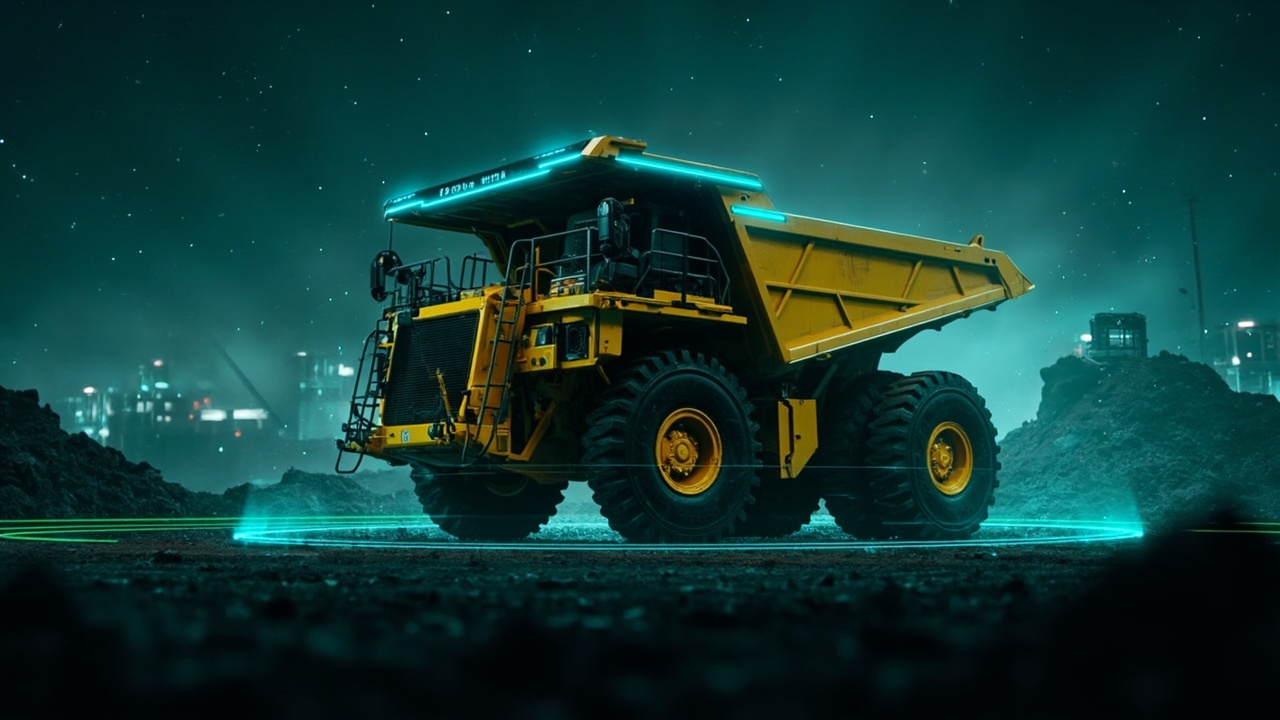
Caterpillar’s autonomy program began in mining, where labor shortages and hazardous conditions make automation not a novelty but an economic necessity. Today the company sells automated haul trucks, autonomous drilling systems, underground loaders, autonomous dozers, and remote-controlled construction equipment, alongside the software that binds them together: command centers, fleet management, and remote terrain intelligence. Its autonomous fleet has moved billions of tons of material across some of the harshest operating environments on earth.
“Now we’re in this super exciting time where we can take all of that learning from mining and bring it into much more dynamic environments, jobsites, quarries, and construction sites,” Mineart told TechCrunch on the sidelines of the Ai4 conference in Las Vegas.
The key word is dynamic. A mine is a semi-controlled environment: routes repeat, traffic is schedulable, and the terrain changes slowly. A construction site or quarry is not. Vehicles and people interleave unpredictably, tasks change daily, and the site itself is continuously rebuilt by the work. If mining autonomy was a solved-problem domain, construction autonomy is where the decades of accumulated lessons — sensor fusion, safety cases, operator training, incremental rollout — get stress-tested again.
The Cat AI Assistant: voice-driven maintenance at the machine
The most concrete product of this strategy is the Cat AI Assistant, first unveiled at CES 2026 and built in collaboration with Nvidia on its physical-AI platform, including Jetson Thor onboard compute. The assistant lets a field technician standing next to a machine use voice commands to pull up repair procedures, troubleshoot faults, and identify the parts needed before a repair begins — hands free, in the dirt, where a laptop is useless.
Mineart says the tool is now being used by customers, operators, and technicians in the field, and it draws directly on Caterpillar’s proprietary moat: data generated by its own installed base. The company counts roughly 1.6 million connected assets globally producing more than 16 petabytes of structured data. That corpus — machine telemetry, service histories, failure modes — is precisely the kind of high-quality, proprietary, domain-specific data that generic frontier models do not have and cannot easily synthesize.
Beyond the assistant, Caterpillar is applying AI across its operations: site-scanning software and manufacturing digital twins to analyze production lines, and AI agents for its own software organization. “We use AI agents to modernize legacy code, generate and test new software, and identify defects earlier,” Mineart said — a use case that puts the 101-year-old manufacturer in the same conversation as software companies reporting double-digit shares of AI-generated code.
Humans in the loop — and a $100 million retraining bet
What distinguishes Caterpillar’s framing from typical enterprise AI boosterism is its insistence on the human side of the equation. Deploying an autonomous machine, Mineart notes, is not the same as transforming a site to use it. Companies have to rethink how people work alongside the technology and how existing processes must change.
Caterpillar leans on experienced operators to help train its AI systems, converting institutional knowledge built over decades into training signal. And as machines become more autonomous, the operator’s role shifts: from controlling a single machine to supervising several machines from a remote command center. That is a career redefinition, not a feature rollout.
Which explains the company’s most striking number: Caterpillar plans to spend $100 million over the next five years training its 118,000 employees in AI, autonomy, and robotics. In an industry perennially short of skilled labor, the bet is that the constraint on AI adoption won’t be compute or models — it will be people who can work with both.
The AI boom is already paying the bills
Caterpillar is not just a beneficiary of AI as a tool; it is a direct beneficiary of AI as a customer. The generative-AI buildout needs enormous amounts of electricity, and data centers are buying generators and turbines as fast as manufacturers can supply them. Caterpillar’s Q2 revenue hit an all-time high of $20.5 billion, helped by data-center demand for power-generation equipment. The power-generation division’s sales spiked 72% year-over-year to $3.10 billion, and CEO Joe Creed told investors that “no one is slowing down” on cloud and AI infrastructure spending.
This creates a virtuous loop that few industrial companies can claim: AI infrastructure demand funds the company today, while AI and autonomy products transform its equipment business tomorrow, and the mining-autonomy playbook de-risks both.
Why this matters beyond heavy equipment
Caterpillar’s story is the enterprise AI story in miniature — with a seven-decade head start on the hard part. Every organization deploying agents is discovering that integration into workflows, not model quality, is the bottleneck. Caterpillar’s answer, honed over decades of autonomous haulage, is methodical: start in constrained environments, accumulate proprietary data, keep experienced humans in the loop as trainers and supervisors, and invest in workforce transformation at a scale commensurate with the technology shift.
For the AI industry, the significance is twofold. First, it is a reminder that the most durable AI moats may be proprietary industrial datasets — 16 petabytes of structured machine telemetry is not scrapeable. Second, with Nvidia building out its physical-AI stack (a business CEO Jensen Huang says is already at roughly $10 billion in annual run-rate revenue) and robotics firms racing toward general-purpose machines, the customers who actually know how to deploy autonomy in dirt, dust, and rain are suddenly among the most important partners in the ecosystem.
The companies that treat AI deployment as a workflow-transformation problem — not a procurement problem — are the ones that will compound the gains. Caterpillar, somewhat improbably, has become a reference implementation.
Sources
- [1] https://techcrunch.com/2026/08/30/caterpillar-ai-deployment-mining-automation/
- [2] https://finance.yahoo.com/technology/ai/articles/caterpillar-bringing-ai-deployment-learned-150000020.html
- [3] https://www.prnewswire.com/news-releases/caterpillar-unveils-ai-powered-future-and-invests-in-the-workforce-building-it-302655430.html
- [4] https://www.caterpillar.com/en/news/corporate-press-releases/h/ai-powered-future.html
- [5] https://techcrunch.com/2026/01/07/caterpillar-taps-nvidia-to-bring-ai-to-its-construction-equipment/