Robots in the Racks: Meta Is Testing Machines That Swap Cables, Reset Servers, and Reseat Hardware
Meta is running supervised robot trials at data centers in Iowa and Ohio — dual-armed cable swappers, a power-cycling arm, and part-reseating machines — in a push to automate technician work and hold down labor costs as AI infrastructure spending soars.
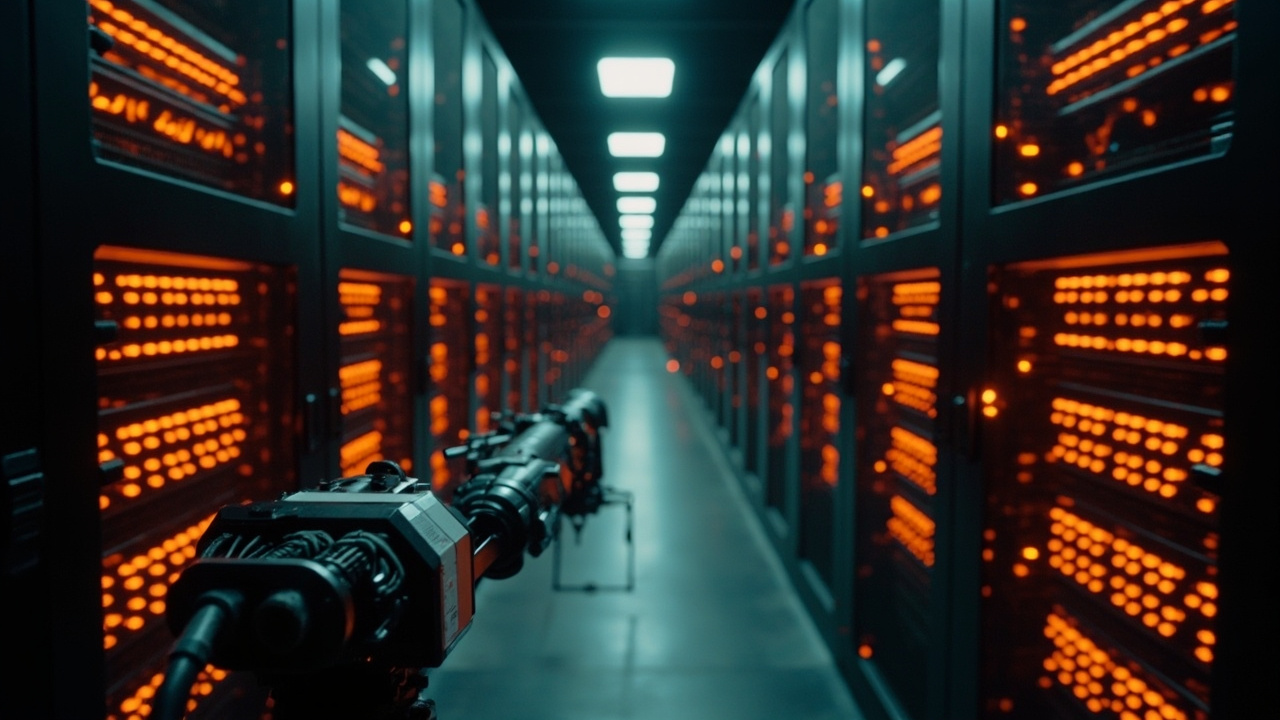
The buildings that power the AI boom have a labor problem, and Meta thinks robots may be part of the answer. According to a WIRED investigation published this week, based on interviews with several current and former Meta employees, the company is running a quiet but broad robotics program inside its data centers — testing machines that can plug in network cables, power-cycle servers, and reseat hardware components, tasks that have long required human hands.
The trials, scattered across facilities in Iowa and Ohio, mark a significant escalation in hyperscaler automation: moving robots beyond the bounded logistics work they already do — moving racks, scanning barcodes — toward the delicate, dexterous maintenance work that defines a technician’s day. The motivation is straightforward economics. As Meta’s AI infrastructure spending climbs into the tens of billions, every technician task that can be automated compounds into meaningful margin at hyperscale campuses. And with the US facing a projected shortfall of hundreds of thousands of data center workers, the company has two aligned incentives: cut costs, and solve a hiring bottleneck.
What Meta is actually testing
The program spans multiple hardware vendors and sites, according to workers familiar with the projects:
- Watney dual-armed cable robots (Altoona, Iowa). Since June 2025, Meta has run a pair of dual-armed robots from Watney Robotics on cabling work at one building in its Altoona campus — the company’s largest, opened in 2014, employing hundreds of workers. The machines can perform cable swaps under human supervision, but remain slower than technicians, and battery-recharging downtime adds friction. Watney is an interesting choice: the startup launched in 2023 with a laundry-folding demo before pivoting to data center work.
- Kinova Gen3 arm for power cycling. Meta is evaluating a Kinova Gen3 robotic arm for cutting and restoring power to servers on command — the classic “turn it off and on again” of data center operations.
- ABB reseating robots (Prometheus campus, New Albany, Ohio). At Meta’s newest campus, four-wheeled ABB robots equipped with scissor-lift-style risers and six-axis arms are being tested to reseat hardware components, with a roadmap toward additional tasks and reduced human oversight over time.
- A remote ‘finger’ device. At some facilities, Meta has deployed a simpler tool: a finger-like arm that physically presses the power button on a Mac Mini or similar hardware when triggered remotely by a human.
- Already-deployed logistics robots. Meta’s older tugger robots, which move heavy server racks, and an in-house barcode-reading inventory robot operate across multiple sites in Iowa and Virginia. The inventory bot also performs failure inspections — with limits.
The near-term ambition is automating “smart hands” work: cable changes, server resets, hardware checks. Longer term, Eric Xu, senior manager for robotics at Meta, said at a conference last year that the company’s goals include faster incident response, environmental monitoring, and preventive maintenance inside data centers.
Why now: cheaper hardware, smarter models
Two shifts have made these trials viable where earlier attempts failed. First, robot hardware has gotten substantially cheaper. Second — and more importantly — the vision-language models steering these machines are far more capable than in earlier trials, when robots sometimes literally crushed servers while attempting basic tasks. Modern VLMs give robots better spatial reasoning and instruction-following, making fine manipulation plausible for the first time.
There’s also a thermal argument. Paul Golding, who oversees physical intelligence at chipmaker Analog Devices, told WIRED that customers increasingly want humanoid-run data centers because robots tolerate conditions humans don’t: buildings could run hotter, darker, and cheaper. Cooling is one of the largest operating costs in a data center, and every degree of tolerance a machine worker adds instead of a human is direct savings.
The hard limits
The current trials are a long way from lights-out data centers. Workers described a catalog of limitations:
- The Watney cable robots are slower than humans and require constant supervision.
- Battery life forces recharging downtime that eats into productivity.
- The inventory robot’s camera detects grayscale, not color — it cannot distinguish green from red indicator lights, so some failure checks still need human eyes.
- Robots struggle with corners and floor cables, and a person must open doors and operate a remote to move machines between buildings.
- Most tellingly: Meta reportedly acknowledged its robots cannot handle some of the intensive cabling work required for NVIDIA’s GB300 systems, in part because today’s data center hardware was physically designed around human hands.
That last point is the structural challenge. Helen Oleynikova, CEO of Exclaim Robotics — which is building prototypes to replace broken parts and reset cables — said the sector remains stuck at the pilot stage. The deeper issue is that decades of server and rack design assumed human dexterity. Automation at scale may require redesigning the infrastructure itself around robot capabilities, not just bolting arms onto floors built for people.
Workers see it differently
Inside Altoona, the mood has soured. In group chats, staff write that they expect to be gone within a few years because of the robots. One worker estimated that a successful cable-swapping robot could replace up to 80 percent of some technicians’ workloads — a worker estimate, not a company forecast, but a striking number nonetheless.
Two workers said Meta is also building AI tooling that would let it hire lower-skilled, lower-paid technicians while centralizing higher-level roles in cheaper metros like Denver. “They no longer want people who can think independently, come up with creative solutions, or perform complex troubleshooting,” one told WIRED. “They want ‘smart hands’ — people who are just capable enough to follow AI instructions and not mess anything up.”
Meta disputes the displacement framing. Spokesperson Francis Brennan said the company is investing heavily in hiring and training, arguing the US faces a shortage — not a surplus — of skilled infrastructure workers. This year Meta launched a program to train thousands of workers annually in electrical, mechanical, and plumbing trades at no cost, with guaranteed jobs in Louisiana, Ohio, Indiana, and Texas for graduates.
There’s a political dimension too. Meta’s Altoona campus still has several years left on a property tax break worth tens of millions of dollars annually, justified in part by local employment. Altoona Mayor Dean O’Connor said he hadn’t thought much about robots displacing those jobs, but framed automation as inevitable: “We will deal with it as it comes.”
Meta isn’t alone
The trials fit an industry pattern. Microsoft and Google announced their own data center robotics investments last year, and Amazon has discussed using robots for parts recycling. Ashley Llorens, a managing director at Microsoft’s research accelerator, said pursuing robotics for tasks like replacing a faulty server rack is “absolutely something we’re looking into at Microsoft.” Meanwhile, startups like Watney and Exclaim Robotics are betting the pilots turn into contracts before a larger player — ABB, or a humanoid vendor with a chip partner — corners the segment.
The market is certainly headed one direction: analysts project the data center robotics market growing from roughly $13–16 billion in 2025–2026 to $60 billion+ by the early 2030s, a compound annual growth rate above 24 percent.
What to watch
The strategic split here is between automating movement and automating repair. Moving a rack or scanning inventory is a narrow problem; safely altering dense, live infrastructure on demand is another entirely. The credible signals of progress will be concrete: whether the Altoona cable pilots reduce supervision requirements and close the speed gap with humans; whether charging and navigation limits get engineered away; whether the Prometheus ABB machines graduate from reseating parts to broader tasks; and whether Meta begins redesigning rack and cable layouts around robotic rather than human anatomy.
For now, the robots remain supervised, slow, and occasionally stumped by a door handle. But the direction is unambiguous. The same AI boom that made these data centers necessary is now generating the vision models that may eventually staff them — and the technicians who keep today’s racks running are watching the pilots with understandable unease.
Sources
- [1] https://www.wired.com/story/inside-metas-experiments-with-data-center-robots/
- [2] https://www.aichatdaily.com/ai-careers/meta-tests-robots-swap-cables-reset-servers-data
- [3] https://superpowerdaily.com/posts/meta-tests-data-center-repair-robots-but-cable-bots-still-need-human-supervision
- [4] https://relvehq.com/blog/noise/meta-data-center-robots-trials
- [5] https://decrypt.co/376843/meta-tests-robots-data-center
- [6] https://www.cryptopolitan.com/meta-data-center-robots-worker-jobs/