Nvidia Wants to Run the World's Robots — and China Is Its Best Customer
A WSJ investigation finds Chinese robotics firms quietly became one of the biggest buyers of Nvidia's physical-AI stack — a business already at $10B a year that Jensen Huang expects to grow 10-fold within a decade.
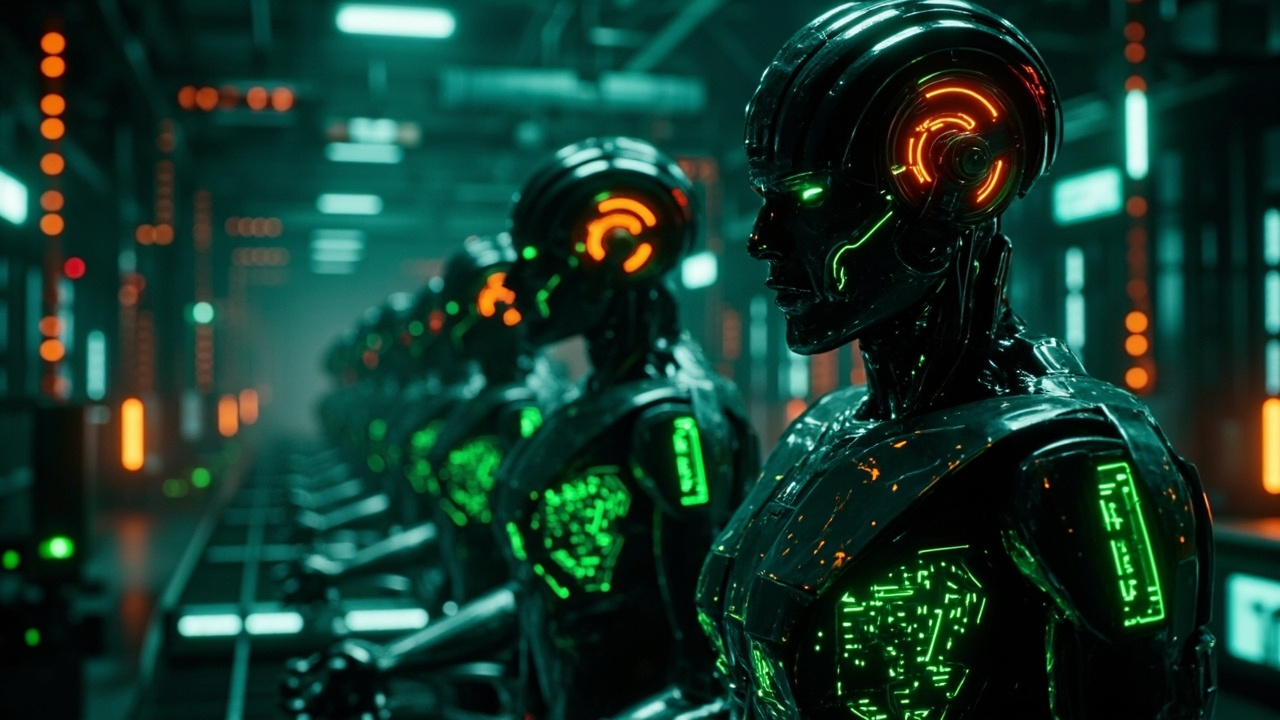
While Washington debates how hard to wall off American AI technology from China, one corner of the industry has been quietly running the other direction. According to a Wall Street Journal investigation published August 30, Chinese robotics companies have become some of the largest customers for Nvidia’s “physical AI” stack — the Jetson compute modules, Isaac simulation software, and Cosmos world models that give machines the ability to perceive, reason about, and move through the real world.
The numbers explain why Nvidia keeps leaning into this market even as export-control politics get hotter. CEO Jensen Huang says the physical AI business is already generating about $10 billion in annual run-rate revenue for the company — and he expects it to grow roughly ten-fold, to around $100 billion, within a decade. That is still small next to Nvidia’s data-center GPU empire, but it is arguably the fastest-compounding bet the company has beyond training chips. And as WSJ reporter Raffaele Huang documents, the near-term buyer base underwriting that push is disproportionately Chinese.
What “physical AI” actually means here
Nvidia’s robotics pitch is a full vertical stack, the same land-and-expand playbook that made CUDA unbeatable in deep learning:
- Jetson edge modules — from the Orin family up to the Thor platform aimed at humanoids — put GPU-class inference compute inside the robot itself.
- Isaac Sim and Isaac Lab provide the simulation environments where robot policies are trained, tested, and evaluated before they ever touch hardware.
- Cosmos world models generate synthetic video and physical predictions, used both to train robot brains and to let them anticipate what happens next in the real world.
- Isaac GR00T foundation models serve as the starting “brain” for humanoid and other embodied platforms.
Buying into any one layer creates gravitational pull toward the rest. A company that trains its manipulation policy in Isaac Sim and deploys on Jetson Thor ends up standardizing on Nvidia’s entire toolchain — the same developer-ecosystem lock-in that made Nvidia’s data-center business so durable, now ported to machines that walk.
The China twist
The uncomfortable detail in the WSJ reporting is that Chinese robot makers — the companies producing the vast majority of the world’s humanoid robots, and firms like Unitree that alone account for nearly a fifth of the global humanoid market — are building on American chips and software even as both governments push toward technological decoupling.
The entanglement runs both directions. Nvidia’s first publicly available humanoid robotics system, announced in June 2026, uses robots from Unitree. Chinese makers aligned on Nvidia’s Jetson AGX Thor as a de facto robot brain standard. Meanwhile Washington has been moving the opposite way: the FCC has imposed made-in-America robotics mandates that left US startups stranded without Chinese components, Congress has advanced bills to ban Chinese robotics from American infrastructure, and lawmakers are debating closing loopholes that let Chinese AI firms access advanced Nvidia compute overseas.
The result is a paradoxical supply chain: American robots depend on Chinese hardware, while Chinese robots increasingly depend on American AI software and silicon. Nvidia sits at the profitable intersection — for now.
Why the $10B number matters
Nvidia’s growth story is currently financed by hyperscale data centers, and investors’ chief worry is what happens when that capex cycle cools. Physical AI is the company’s most concrete answer about what comes next. A few angles stand out:
It’s a diversification hedge with real revenue. At $10 billion a year, physical AI is already bigger than many entire semiconductor companies, and Huang’s $100 billion decade target implies it could become a business the size of today’s Nvidia of just a few years ago.
It monetizes the model layer, not just FLOPs. Robot foundation models, simulation licenses, and edge hardware carry stickier margins than raw GPU rental. The robot business makes Nvidia a platform vendor, not just a parts supplier.
China is the near-term demand engine. With millions of industrial robots already installed in Chinese factories, state funding flowing into embodied AI, and a shrinking manufacturing workforce pushing automation urgency, China is the largest near-term market for exactly the stack Nvidia sells. The WSJ piece frames Chinese robot makers as the customer base underwriting Nvidia’s expansion beyond training GPUs — revenue that arrives while US and European physical-AI demand is still ramping.
The political risk is the obvious catch. Every element of the stack — from Thor modules to Cosmos model weights — is a potential target for future export controls. Nvidia’s China data-center chip business has already collapsed from roughly 95% market share to near zero under restrictions, a loss Huang has publicly called a failure of policy. If Washington decides robot brains are strategic technology, physical AI could face the same wall. And Beijing, for its part, keeps urging domestic firms to shun Nvidia silicon in favor of homegrown alternatives, precisely to avoid dependence on a stack that could be switched off.
Analysis: the clock is running on both sides
The deeper story in the WSJ reporting is timing. Nvidia wants to entrench its ecosystem in Chinese robotics deeply enough that switching costs protect it — the CUDA playbook. Chinese firms and policymakers want to replicate the stack domestically — domestic edge chips, domestic simulation platforms, domestic foundation models — before any cutoff arrives. Both sides are racing the same clock.
History counsels skepticism about how long the current equilibrium lasts. The data-center precedent shows how fast a $50 billion annual market can go to zero when policy turns. But robotics differs in one important respect: much of the physical-AI stack (Jetson-class edge modules, simulation software) is less capable of advancing frontier military AI than data-center GPUs, which gives regulators a weaker case for restriction — and gives Nvidia more room to argue that robot brains should stay sellable.
For now, the commercial logic is winning. The world’s biggest robot market runs substantially on Nvidia’s software, and Nvidia’s robotics growth story runs substantially on China. Whether that mutual dependence survives the next round of export-control debates in Washington may determine whether physical AI becomes Nvidia’s second trillion-dollar franchise — or its next geopolitical casualty.
Sources
Sources
- [1] https://www.wsj.com/tech/ai/nvidia-wants-to-run-the-worlds-robots-china-is-an-eager-customer-bdf46169
- [2] https://www.cnbc.com/2026/06/01/nvidia-unitree-humanoid-robotics-system-researchers.html
- [3] https://restofworld.org/2026/china-robot-ban-silicon-valley/
- [4] https://www.cnbc.com/2026/08/19/china-ai-nvidia-chips-us-export-controls.html