SpaceX Is Building Its Own Turbine-Blade Foundry to Escape AI Power's Hardest Bottleneck
The Information reveals SpaceX is laying groundwork for a 'Blades and Vanes Foundry' in Bastrop, Texas — a vertical-integration bet to route around the three foundries on Earth whose order books for hot-section turbine blades are full through 2030.
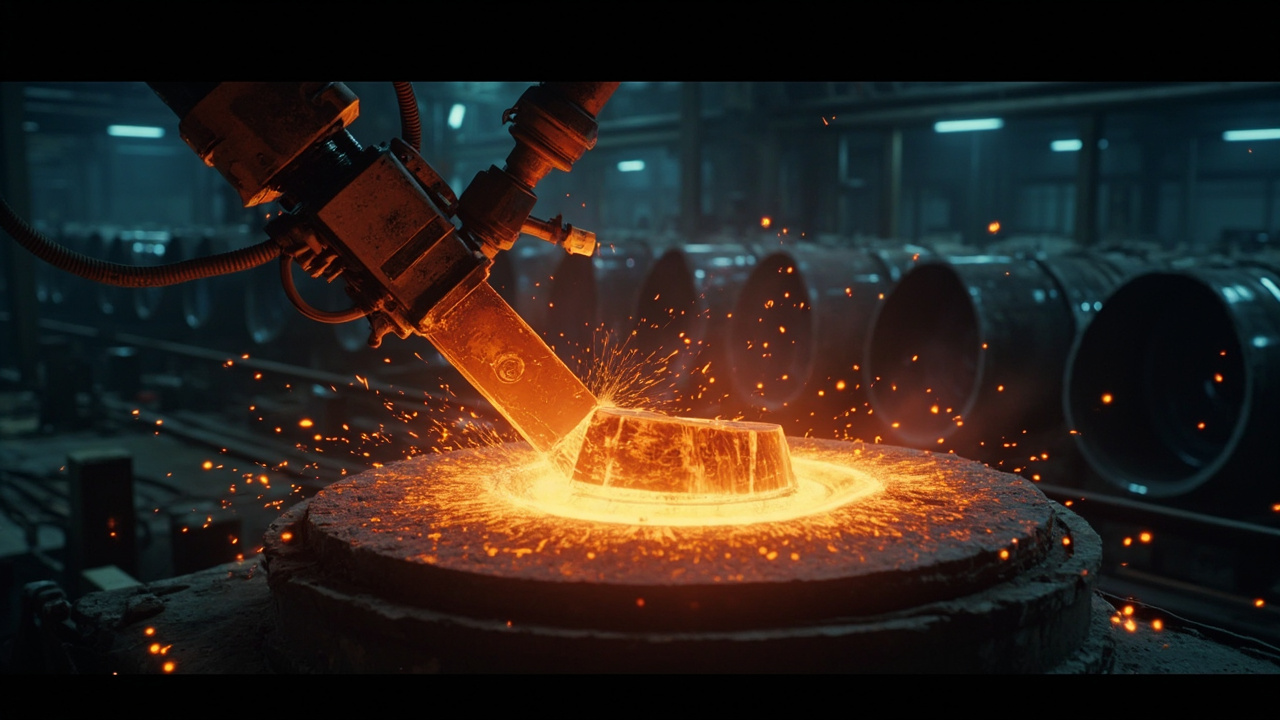
The race to build AI data centers has hit a bottleneck that no amount of capital can quickly fix: only three foundries in the world can cast the hot-section blades and wheels that large gas turbines require, and their order books are reportedly full through 2030. Elon Musk’s response, as The Information exclusively reported on August 29, is characteristically direct — SpaceX is laying the groundwork to cast those blades itself.
What the reporting actually shows
The clearest evidence sits on SpaceX’s own careers page. In April 2026 the company posted materials, automation and operations engineer roles at a “Blades and Vanes Foundry” at its Bastrop, Texas site, where it already operates facilities adjacent to the Giga Texas complex. One operations job description explicitly covers the “construction, buildout, and operational ramp-up of a new blades and vanes foundry,” while the senior materials engineer posting is scoped to producing “Ni-superalloy castings for power generation.”
Those two phrases do a lot of work. Nickel superalloy castings are the defining capability of the hot-section blade business — single-crystal and directionally solidified blades that survive gas temperatures above their own melting points thanks to internal cooling channels and thermal-barrier coatings. A job posting is not a product announcement, but the specificity of the language signals a serious industrial program, not a skunkworks study.
Morgan Stanley reached a similar conclusion in an August 16 research note, arguing the Bastrop play is vertical integration aimed at two destinations at once: gas turbines for AI data centers, and turbopumps for the Starship Raptor engine, which face the same class of superalloy casting constraints.
Why the bottleneck matters
Gas turbines became the default bridge power source for AI buildouts because grid interconnection queues in the United States now stretch for years, while a turbine farm can be stood up in months. xAI’s Colossus campus in Memphis runs on exactly this model — Data Center Dynamics counts 69 turbines currently operating at the site, with the unpermitted units not fully removed until July 2027 under an agreement with local regulators.
But the industry that builds those turbines is extraordinarily concentrated. Hot-section blade casting is dominated by a handful of specialist suppliers tied to GE Vernova, Siemens Energy and Mitsubishi Power, and capacity expands at the pace of metallurgical qualification, not venture funding. Musk himself framed the problem on a February podcast, saying SpaceX and Tesla might need to manufacture turbine blades and impellers in-house to keep enough power flowing. The three-foundry choke point he described now has a direct institutional answer: build a fourth.
The vertical integration logic
For SpaceX the synergy is real rather than rhetorical. Raptor’s oxygen and fuel turbopumps already demand high-throughput precision casting — SpaceX has been ramping Raptor production toward multiple engines per day, giving it accumulated expertise in the exact manufacturing discipline the blade business requires. A shared foundry amortizes that capability across two demand streams: rocket engines that need to scale, and power turbines that the market cannot supply fast enough.
There is also a regulatory dimension. The EPA moved this month to end federal notice requirements on data-center air permits, keeping the permitting environment fluid, while xAI’s Memphis experience — unpermitted turbines, community backlash, a negotiated removal schedule — demonstrated how fragile turbine-based power can be when it depends on external suppliers and external goodwill. Owning the blade supply chain reduces one degree of that fragility.
What remains unknown
The reporting is candid about the limits of what is known. Neither The Information’s article nor the Morgan Stanley note provides a groundbreaking date, an annual output target, or a customer list beyond SpaceX’s own internal buyers. Casting qualification cycles for power-generation blades typically run 12 to 24 months even for experienced manufacturers, so meaningful output before 2028 would be aggressive. Hot-section blade foundries are also capital-intensive in a way that resists Musk-style speed runs: directionally solidified and single-crystal casting requires ceramic core manufacturing, vacuum investment casting furnaces, and extensive post-cast inspection that cannot easily be iterated like software.
The strategic signal, however, is unambiguous. When the binding constraint on AI expansion shifts from chips to power, and the binding constraint on power shifts from generation capacity to turbine component supply, the companies that win will be those willing to crawl further down the stack than anyone thought rational. SpaceX building a superalloy foundry in central Texas is the AI infrastructure story in miniature: the frontier of compute is no longer just a chip problem — it is an industrial base problem, and Musk intends to own his.
For the broader industry, the question the Bastrop foundry poses is whether vertical integration at this depth is a competitive necessity or a Musk-specific eccentricity. GE Vernova and Siemens Energy are ramping their own capacity as fast as qualification allows. If the three incumbent foundries catch up to demand by 2028, SpaceX will own a specialized plant serving one captive customer. If they do not, the second-movers will be bidding for turbine blades in a market where Musk no longer needs to bid at all.
Sources
- [1] https://www.theinformation.com/newsletters/ai-infrastructure/exclusive-spacex-lays-groundwork-turbine-blade-factory-solve-data-center-power-crunch
- [2] https://aiweekly.co/alerts/spacex-lays-groundwork-for-bastrop-gas-turbine-blade-foundry
- [3] https://www.datacenterdynamics.com/en/news/musk-confirms-fourth-spacexai-data-center-in-memphis-company-starts-removing-illegal-gas-turbines/
- [4] https://www.bbx.com/article/548471