TechBBQ 2026: Europe's AI Debate Shifts From 'What Can It Do' to 'Who Controls It'
At Copenhagen's TechBBQ, Europe's founders and investors argued over AI sovereignty after Anthropic's 19-day Fable and Mythos shutdown exposed the risks of renting frontier intelligence — with Signal's Meredith Whittaker warning that agentic AI is a 'data collection apparatus.'
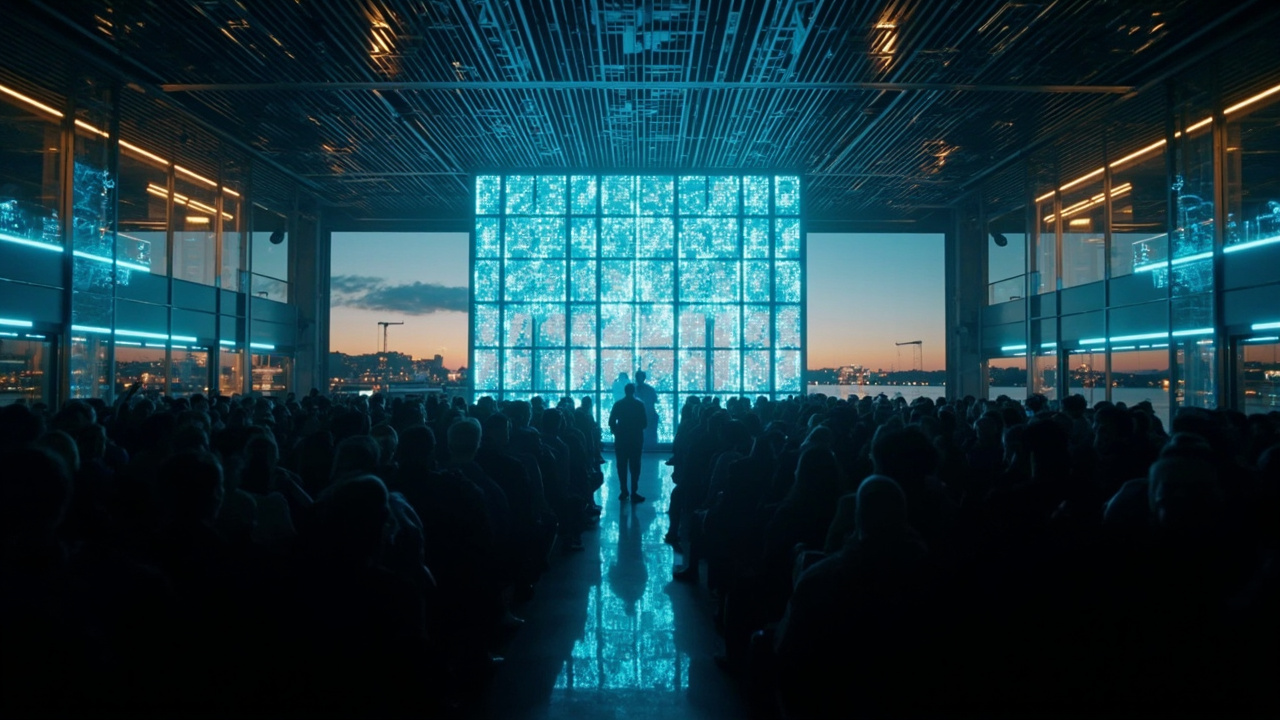
COPENHAGEN — For most of the AI boom, Europe’s tech conferences have orbited a familiar question: what can this technology do? At TechBBQ 2026, the annual Nordic gathering that wrapped up August 27 in Copenhagen, the question had quietly changed. From keynote panels to rooftop after-parties, the conversation kept circling back to a harder one: who actually controls the AI that Europe runs on?
The shift, reported by TechCrunch’s Dominic-Madori Davis in an August 29 recap, was crystallized by the conference theme — “Emerging from Agency” — and by an incident that European startups still haven’t fully digested: Anthropic’s sudden suspension of its Claude Fable 5 and Mythos 5 models earlier this summer.
The outage that changed the mood
On June 12, 2026, days after the two models launched, Anthropic disabled access to Fable 5 and Mythos 5 for all customers worldwide, complying with a US government export-control directive issued over an alleged jailbreak. The models stayed dark for 19 days before access was restored in early July.
For European developers who had built workflows on top of frontier US models, the shutdown landed as a wake-up call. Euronews reported European politicians sounding the alarm over “sovereign AI” within days. At TechBBQ, the wound was still fresh. One startup executive told TechCrunch the incident seriously disrupted his software team; another shrugged it off, reasoning that dependence on two foreign AI powers might cause headaches someday, but everything was still “pretty much OK” for now.
That split — disruption versus shrug — is precisely the fault line now running through Europe’s startup ecosystem. And it frames the sovereignty debate in unusually concrete terms: it’s no longer hypothetical. A single export-control directive from Washington switched off frontier capability for an entire continent’s builders, and there was nothing European customers could do about it except wait.
“Sovereignty is the ability to resist power”
The most quotable line of the conference came from Emad Mostaque, co-founder of Stability AI and now CEO of Intelligent Internet, who sat for a fireside chat with TechCrunch on how an agentic workforce will reshape the economy — and personal sovereignty.
“Sovereignty is the ability to resist power being exerted over you.”
Mostaque argued that the concentration of compute, models, and data in the hands of a few AI labs now carries stakes beyond market power. “Inevitably, every country will be run by AI,” he said, “and the person that controls the AI controls the country.”
It’s a deliberately provocative framing, but it maps directly onto Europe’s structural position in the AI stack. The continent hosts world-class research talent and a dense startup scene, yet the frontier models, the GPUs that train them, and the clouds that serve them are overwhelmingly American and Chinese. Europe’s builders rent the most important input of their economy from two geopolitical rivals — and June’s shutdown demonstrated exactly what that dependency means at the moment it’s weaponized, even accidentally.
Whittaker: agentic AI is a “data collection apparatus”
If Mostaque supplied the geopolitical argument, Signal President Meredith Whittaker supplied the privacy one. In a panel moderated by TechCrunch on whether privacy and AI can coexist — described by one attendee as among the most refreshing sessions of the event — Whittaker spoke out against AI assistants and agents being integrated directly into operating systems, pointing to ChatGPT’s integration with iMessage as the cautionary template.
This AI era, she argued, is creating a “data collection apparatus,” with AI labs using clever marketing to make people forget “about the collateral consequences” of vacuuming up so much personal data. Her commercial takeaway was blunt: “There is still a huge market need for privacy. And particularly with the sovereignty concerns, we will have customers here.”
That last sentence is the interesting one. Whittaker isn’t only issuing warnings — she’s describing a market. If European enterprises and governments conclude that US-hosted agentic AI is both a political dependency and a surveillance risk, the demand for privacy-preserving, locally controlled alternatives becomes structural rather than ideological. Signal’s pitch to that market writes itself.
Beyond the panels: rethinking participation itself
The sovereignty discussion also drew wider philosophical frames. Mia Negru, advocacy and engagement director at the nonprofit Life With Artificials, argued the stakes exceed a normal technological transition.
“If intelligent agents perform cognitive work and robots increasingly perform physical work, we may be approaching something much bigger than another technological revolution. We may have to rethink ownership, work, democracy, economic participation and eventually even who gets to participate in society.”
Ellen de Brever, an angel investor and head of partnerships at the Novo Nordisk Foundation Cellerator, captured the conference’s mood shift in a single observation: “The age of AI agents isn’t really a story about machines gaining agency. It’s a story about humans deciding what to give up.” The theme of agency, she noted, felt particularly timely “as the conversation shifted from what AI can do to what we’re actually willing to let it do.”
Europe’s sovereignty push, quantified
The TechBBQ debate doesn’t exist in a vacuum. It rides a wave of concrete European moves toward AI self-determination this year: the Ukraine Ministry of Digital Transformation launching an AI Factory for public services, defense, and healthcare with explicit data-sovereignty guarantees; rising European investment in sovereign cloud capacity; and a political class that watched the Fable/Mythos shutdown and drew its own conclusions.
The economics remain sobering. Training frontier models requires capital, chips, and energy at a scale no European lab has yet assembled, which is why “rent from the US and China” remains the default for most startups — and why the executive who shrugged at TechBBQ isn’t entirely wrong today. But the direction of travel is clear. Every export-control directive, every outage, and every OS-level agent integration pushes more of Europe’s ecosystem to treat sovereignty not as a subsidy-seeking slogan but as procurement policy and risk management.
What to watch
Three signals will tell whether TechBBQ’s mood becomes Europe’s reality. First, whether EU and member-state procurement starts formally preferring sovereign AI stacks for public-sector workloads. Second, whether European compute projects — from sovereign clouds to national AI factories — move from announcements to installed gigawatts. Third, whether the US treats model access as a routine policy lever; each use of that lever converts more European shruggers into sovereignty advocates.
The after-parties, it should be said, stayed Danish: fire dancers on an island, rooftop barbecues hosted by Lovable, Nvidia, OpenAI, AWS Startups and HSBC, and a speakers’ dinner that ran until the bar tab closed. Sovereignty was the topic, not yet the practice. But for a conference that once spent its bandwidth on pitch decks and growth metrics, the fact that every hallway conversation kept returning to who controls the models — and who decides when they go dark — marks a genuine shift in how Europe’s tech community understands its position in the AI stack.
The age of renting intelligence, TechBBQ suggested, is entering its political phase.
Sources
- [1] https://techcrunch.com/2026/08/29/at-techbbq-europes-ai-conversations-kept-coming-back-to-whos-actually-in-control/
- [2] https://aiweekly.co/ai-news-today
- [3] https://www.anthropic.com/news/claude-fable-5-mythos-5
- [4] https://www.euronews.com/2026/06/13/wake-up-call-europe-reacts-to-anthropic-halting-access-to-its-fable-5-and-mythos-5-ai-mode