Techlash Peaks: $130B in Data Center Projects Blocked as AI Angst Reshapes Midterms
CNBC synthesis: Q1 2026 alone saw ~$130B in data center projects blocked or delayed by local opposition, Pew shows majority AI concern, and the backlash has become a bipartisan midterm issue.
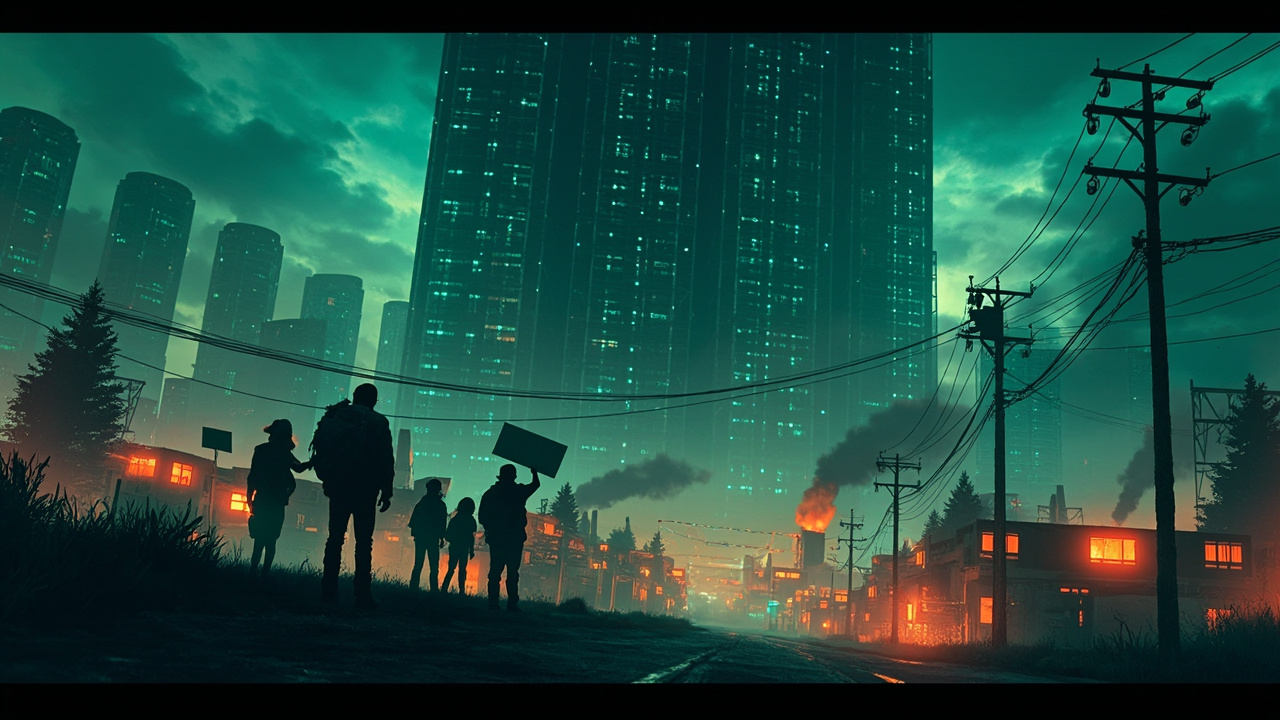
The artificial intelligence boom was supposed to be a story about software. Increasingly, it is a story about concrete, megawatts, and zoning hearings — and the people who live next to all three. A synthesis published by CNBC on August 29 pulls together the strands of what analysts are calling the most intense technology backlash in a generation: roughly $130 billion worth of data center projects were blocked or delayed in the first quarter of 2026 alone, majority public concern about AI has become the norm rather than the exception, and opposition to the physical buildout of AI has mutated into a genuinely bipartisan midterm election issue, with voting day just two months away.
The numbers behind the backlash
The most striking figure in the CNBC report comes from tracking of local opposition: during Q1 2026, around $130 billion in data center projects were blocked or delayed due to community opposition. That three-month figure nearly matched the approximately $156 billion in projects disrupted during all of 2025. In other words, the rate at which communities are stopping, stalling, or renegotiating data center construction has roughly quadrupled year over year.
The drivers are concrete and local rather than abstract. Emily Wurth, organizing director for Food and Water Watch, told CNBC that data center concerns cut across water use, higher utility bills, emissions increases, noise pollution, and the prospect of facilities “taking over agricultural land.” In parts of Arizona, Michigan, and Pennsylvania, she described “hundreds of people showing up to speak out and oppose these projects” — turnout levels more typically associated with school board fights than infrastructure permitting. Her assessment of the industry’s state of readiness: “I think it likely caught companies and legislators by surprise.”
Groups like the Stop Data Centers Coalition have moved from local organizing to national demands, pushing for a moratorium on new projects to give lawmakers and the public time to examine environmental, societal, and economic impacts. Even Microsoft engineers entered the fray, testifying at a Seattle City Council meeting in June in favor of greater government regulation of AI data centers.
Trust is the scarcest resource
Beneath the land-use disputes sits a deeper collapse in confidence. More than half of Americans now say they are more concerned than excited about the growing use of AI in daily life, according to Pew Research Center data cited by CNBC — up from 37% in 2021. A survey of 18- to 34-year-olds found that more than 75% do not trust Anthropic CEO Dario Amodei to act responsibly, while around 70% expressed similar views about OpenAI’s chief executive.
That trust deficit is becoming a financial liability. Anthropic and OpenAI, both valued at nearly $1 trillion, are preparing public offerings that could mint new billionaires and scores of millionaires — and AI backlash is expected to appear as a key risk factor in Anthropic’s IPO prospectus. Anthropic’s own CEO has acknowledged the problem in unusually blunt terms. “I think it is fundamentally a crisis of trust,” Dario Amodei wrote earlier this month. “I think that ordinary people don’t trust companies, governments, or the tech industry and always suspect that we are cooking up some new way to screw them over. The causes of this go back decades, and AI is just the latest iteration of it.”
Sarah Myers West, co-executive director of the AI Now Institute, argues the industry’s response so far has been inadequate. “If this technology takes off in the way that you see the CEOs of AI labs talking about, we’re facing a significant impact to our economy, to people’s jobs, to their sense of agency,” she told CNBC. “Treating it as a PR problem and a problem of public sentiment would be tremendously misguided.”
The politics: a rare bipartisan flashpoint
What makes the 2026 backlash politically distinctive is that it does not follow the usual partisan lines. The National Republican Senatorial Committee has reportedly warned that data centers have become a “sleeper issue” for the entire midterm cycle. Both Democratic and Republican hopefuls have spoken out against the facilities on the campaign trail, and swing-state candidates are scrambling to endorse stricter data center policies while accusing opponents of being too close to Big Tech.
Jim Steyer, CEO of Common Sense Media, described the phenomenon in categorical terms: “There is genuinely a techlash, and it’s not partisan at all. It doesn’t matter if you’re liberal or conservative, or you vote for Republicans or Democrats, or what part of the country you live in. It’s everywhere.” He called the current moment “qualitatively different” from any backlash in his two decades of advocacy work.
The backlash is also colliding with other tech controversies. Meta agreed to a landmark settlement of up to $17 billion with a bipartisan coalition of state attorneys general over teen harms — including a default two-hour daily time limit for teens on Facebook and Instagram and muted notifications during school hours. California AG Rob Bonta characterized the settlement terms as “a floor conceptually, not a ceiling.” Meanwhile, AI-powered license plate reader company Flock Safety has seen more than 90 cities deactivate, reject, or cancel contracts this year, even as the company maintains new partnerships outpace non-renewals by roughly ten to one. The ACLU’s Jay Stanley argues the surveillance fallout “folds neatly” into broader resentment toward AI, data centers, and tech billionaires.
The countercase
The picture is not uniformly bleak for the industry. Jennifer Huddleston, senior fellow in technology policy at the Cato Institute, noted that “many unions are coming out in favor of data centers, not only because of the initial construction boom, but also the electricians and HVAC” professionals in demand once facilities are built. Hyperscalers argue they are responding to genuine, insatiable demand — much of it enabling advances in medical research and precision farming. And utility-bill anxiety cuts both ways: as University of Minnesota law professor James Coleman observed, there is “not a lot of trust necessarily in the utilities and the regulators” to begin with, given years of rising electricity prices.
But the direction of travel is clear. The AI industry’s physical footprint has grown faster than its political capital, and with less than a quarter of the $7 trillion-plus in announced data center spending actually under construction, the gap between announcement and megawatt is where communities, courts, and now campaign strategists are focusing their attention. For an industry that measures progress in weeks, the discovery that zoning boards and midterm voters operate on their own clock may be the most consequential benchmark miss of the year.