Cerebras Bets €1.7 Billion on Finland: Inside the 165 MW Mikkeli AI Data Centre
Cerebras and Compute Nordic will build a 165 MW AI data centre in Mikkeli, Finland — a seven-year contracted, phased build-out backed by an estimated €1.0-1.7 billion in regional investment.
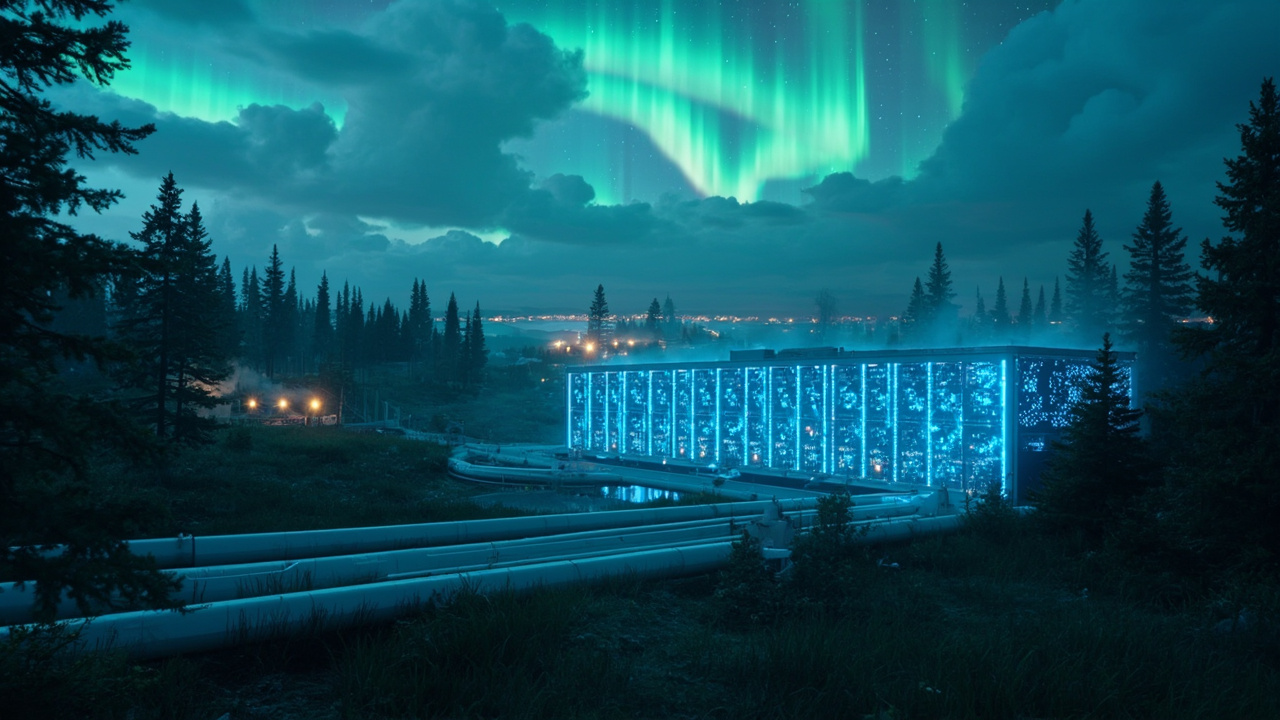
Cerebras Systems (NASDAQ: CBRS) has picked Mikkeli, a mid-sized lake city in southeast Finland, as the site of its newest AI data centre — and the deal structure says as much about where the inference market is heading as the megawatts do. Announced today, the facility will scale in phases to 165 MW of contracted IT capacity, with construction on the initial 50 MW phase already under way.
The partnership with Finnish developer Compute Nordic Finland is formalized through a series of service orders, each carrying seven-year contract terms. That is the detail worth pausing on: this is not a speculative land grab or a power-purchase option that may never be exercised. It is contractually committed, phased capacity — capacity someone has already agreed to pay for, for most of a decade.
More AI per megawatt
Cerebras built its name on wafer-scale silicon — chips dramatically larger than a GPU, trading for raw memory bandwidth and interconnect density what conventional accelerators chase through cluster scale-out. That architectural bet shapes the kind of data centre the company wants to operate: dense, efficiency-first, and engineered around getting tokens out the door rather than racks on a floor.
“Our architecture is built to get more useful AI output out of every megawatt we deploy,” said Andrew Feldman, Cerebras CEO and co-founder. “Mikkeli lets us pair that efficiency with a data centre designed for closed-loop cooling and heat reuse from the ground up.”
The engineering brief reflects Nordic pragmatism. The facility is designed around closed-loop cooling that recirculates water rather than drawing continuously on municipal supply — a direct answer to the water-usage backlash that has stalled data centre projects elsewhere. The campus is also designed to support waste-heat recovery, pushing thermal energy from AI compute back into the surrounding community as a resource rather than venting it. In Finnish district-heating country, that is not green garnish; it is a revenue and social-licence play.
The numbers behind the announcement
Independent analysis from Ramboll’s Finnish Data Center Market Study and Impact Assessment Report (dated 12 September 2025) sizes the project at full scale:
- €1.0–1.7 billion in indicative regional investment at the full 165 MW build-out
- 80–250 direct permanent jobs — operations, power and cooling engineering, networking, security, and facilities management
- €0.8–2.5 million per year in property tax revenue for the region
- Capacity staged as 50 MW → 80 MW → 165 MW as data centre halls are delivered
Compute Nordic Finland leads project development, operator responsibility, the customer interface, and overall programme governance, working with the City of Mikkeli and a partner network of Finnish construction, engineering, energy, recruitment, and professional-services firms across the South Savo region.
“This partnership with Cerebras is not a speculative bet on future demand — it’s a contractually committed, phased build-out that reflects exactly how much AI compute the market needs today and where that need is heading,” said Pyry Virrantaus, CEO of Compute Nordic Finland. “The clearest measure of a project like this isn’t the number of construction jobs it creates upfront; it’s what remains ten or twenty years later.”
A piece of a bigger European puzzle
Mikkeli does not stand alone. In July, Cerebras announced a broader European expansion targeting 200 MW of AI compute capacity by the end of 2027, with build-outs planned across France and the Nordics and first European capacity slated to come online by the end of 2026. The Mikkeli campus — permitted for up to 212 MW across two single-storey buildings and sixteen data halls, according to earlier Finnish reporting — is now the concrete anchor of that roadmap.
The strategic logic is straightforward. European enterprises and governments want AI compute inside European jurisdiction, under European data-residency and regulatory expectations, without competing for capacity in oversubscribed US markets. Finland in particular offers cool climate, stable and relatively cheap power, deep grid interconnection, and a planning environment that — techlash notwithstanding — still says yes more often than not.
For Cerebras, the timing matters. The company competes against inference platforms built by the largest cloud providers on GPU fleets at extraordinary scale. Its counter-argument has always been speed: wafer-scale systems that serve tokens at latencies conventional clusters struggle to match. But an inference business lives and dies on committed capacity — customers building real products need guaranteed throughput years out, not spot availability. Seven-year contracted capacity in a purpose-built facility is precisely the instrument that converts performance claims into enterprise-grade SLAs.
Why “contracted” is the operative word
The AI infrastructure boom has produced two species of announcement. The first is the memorandum: enormous numbers, vague timing, options on land and power that may or may not become reality. The second is the signed service order with a term sheet — money that flows whether or not the broader AI market has a bad quarter.
Cerebras and Compute Nordic have deliberately framed Mikkeli as the second kind, and the framing is itself competitive positioning. A phased 50 → 80 → 165 MW ramp tied to seven-year commitments tells customers and investors that capacity arrives in step with real demand, financed against contracted revenue rather than hope. In a market where the credibility question is no longer “can you build it?” but “will anyone pay for it in 2031?”, that distinction is the whole story.
The €1.0–1.7 billion investment estimate and the 80–250 permanent-job range carry wide bands precisely because the build-out is staged — the final figures depend on where in the ramp demand settles. But with the first 50 MW already in construction, the region’s bet has moved from planning to steel.
For South Savo, a region more often in the news for demographics than for gigawatt-scale investment, the project represents a rare industrial anchor: technical employment designed to persist for the facility’s lifetime, a local supply chain, and a waste-heat source that grows as the campus does.
For everyone else, Mikkeli is one more data point in the great re-sorting of AI compute — away from a single US-centric cloud oligopoly and toward a federated map of national and regional capacity, each site competing on power price, jurisdiction, cooling physics, and now, heat you can sell to your neighbours.
Sources
- [1] https://www.manilatimes.net/2026/09/01/tmt-newswire/globenewswire/cerebras-and-compute-nordic-finland-announce-new-165-mw-ai-data-centre-in-mikkeli-finland/2415603
- [2] https://investors.cerebras.ai/news-releases/news-release-details/cerebras-systems-accelerates-european-expansion-200mw-ai-compute/