OpenClaw 2.0 Ships With 933 Contributors and 16,000 Merged PRs — the Largest Crowd-Built AI Agent Release Ever
OpenClaw 2.0 (v2026.8.1) rebuilds installation, browser, memory, and security in one release — 933 contributors, 16,000+ merged PRs, and a multiplayer cloud-session model its own team used to ship it.
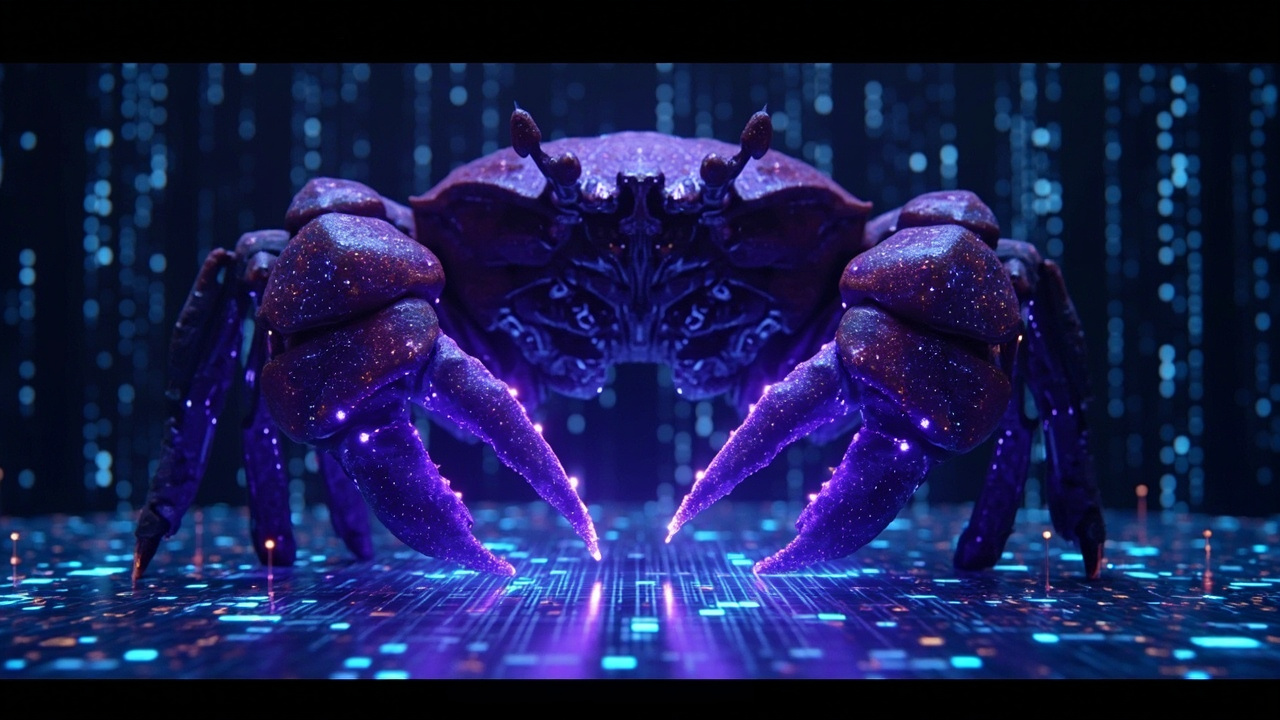
OpenClaw, the open-source personal AI agent that went viral late last year under its old Clawdbot (and briefly Moltbot) identity, shipped version 2.0 on August 31 — and by almost any measure it is the largest single crowd-built release the agentic AI world has seen. The release, tagged v2026.8.1 in the project’s changelog, folds in work from 933 contributors and merges more than 16,000 pull requests, which the team says accounts for roughly half of every PR ever merged into the codebase.
The official announcement post is tellingingly titled “OpenClaw 2.0, accidentally” — a push for simpler setup and a first-class browser experience that snowballed into a ground-up rework of nearly the entire platform. Installation, messaging, memory, skills, model handling, automations, the browser and native apps, plugins, and security: all nine areas were rebuilt or reworked in a single cycle. Most releases touch two or three.
The numbers behind the release
The contributor stats are the part outsiders keep coming back to. Of the 933 people who contributed code, documentation, or fixes, 569 were first-time contributors — a majority of the release’s workforce had never committed to OpenClaw before. For a mature open-source codebase, where returning maintainers usually dominate commit volume, that ratio is highly unusual, and it suggests the release cycle doubled as an onboarding wave for developers drawn in by the project’s viral growth.
The release also ended a nearly two-month stretch without a stable cut — long enough that community channels speculated development had quietly stalled. It hadn’t. The maintainers attribute the gap to scope: rewriting installation flows, migrating session storage to SQLite, and rebuilding the browser front end resist being split into weekly increments without breaking things for people running the agent in production. Bundling them meant one disruptive upgrade instead of several.
What actually changed
Installation was rebuilt around subscriptions instead of config files. OpenClaw now scans what a user already has — an active ChatGPT or Claude subscription, existing API keys, or locally hosted models — and configures itself around that, rather than demanding a settings file before the first prompt. The project’s provider-agnostic identity is the point here: OpenClaw isn’t a model, it’s an agent layer that sits on top of whichever backend you already pay for or self-host.
The browser is now the control center. Chat sits front and center, formatted like the interfaces people already expect from commercial chatbots, with a text box that opens straight into a conversation. Users can start sessions, rejoin in-progress work, or watch an agent execute a task live. Interactive widgets and dashboards can be pulled into chats, pinned to a home view, and wired to trigger actions off events.
Shared cloud sessions make it multiplayer. Previously OpenClaw sessions were single-player by design: one agent, one operator, one context thread. Version 2.0 lets a team join an ongoing conversation, pick up work where a colleague left it, and hand off tasks without losing surrounding context. The strongest endorsement is that the team used this mode to build OpenClaw 2.0 itself — founder Peter Steinberger described the process as “multiplayer coding + infinite compute,” and quipped that “local harnesses feel like relics of the past now.” Shipping a feature and then routing your own high-velocity development workflow through it is a better signal than any changelog entry.
Memory and skills got smarter. OpenClaw 2.0 introduces self-learning skills — the agent can pick up a new capability mid-session and reuse it later without a developer hand-coding it — alongside a rebuilt memory and session-continuity layer, full-text search across past conversations, and live session cards that show task progress in real time.
Security got a full overhaul. Early OpenClaw versions reportedly carried serious security flaws, and 2.0 is positioned as a direct answer: explicit trust boundaries, least-privilege controls, stronger prompt-injection defenses, and a gateway that centralizes permission checks with role-based access control, instead of leaving each skill or plugin to police itself. Every agent action is now governed by four questions: who can trigger it, what it can access, where the code executes, and where credentials are allowed to travel. A new private credential request feature lets users share secrets with an agent without exposing them in chat. The project is still blunt that responsibility doesn’t end at the update — users connecting personal accounts or granting cloud-execution tools are expected to harden their own installations.
The subplot: life after the founder
This is the first major OpenClaw release since OpenAI hired Peter Steinberger, the framework’s creator; the project is now stewarded by a nonprofit foundation. A founder’s exit to a giant commercial lab normally stalls an open-source project’s momentum. A release built by 933 people — most of them new — is the opposite profile of a codebase losing steam, and it’s a data point enterprises weighing open-source agent frameworks against vendor-controlled ones will not miss.
The competitive context is unforgiving: agentic AI is the center of every major vendor’s 2026 roadmap, and OpenClaw has struggled to hold its viral-era position as competitors rolled out more accessible agent features. What OpenClaw still offers that they don’t is ownership — open-source, self-hostable, provider-agnostic, with your agent’s memory and credentials not locked inside one vendor’s infrastructure. Version 2.0’s simplified install and rebuilt browser are aimed squarely at the onboarding gap that let bigger platforms pull ahead.
For a project that began as a hacker’s toy claw-bot and accidentally became the reference implementation for self-hosted personal agents, 2.0 is the release where the community proved it can outship its own founder’s departure. Whether the Mac Minis of the world keep crying out in unison — as one Mashable writer put it — depends less on features now, and more on whether 933 contributors become 2,000 by the next cut.
Sources
- OpenClaw blog: OpenClaw 2.0, accidentally
- OpenClaw docs: v2026.8.1 release notes
- The Verge: OpenClaw 2.0 launches as Peter Steinberger says, “Local harnesses feel like relics of the past now.”
- Mashable: OpenClaw 2.0 is here — a crowdsourced update to the AI agent is now live
- SiliconANGLE: OpenClaw just gave everyone version 2.0 and it comes with major updates
- The Decoder: OpenClaw 2.0 brings simplified setup, a rebuilt browser app, and multiplayer sessions
Sources
- [1] https://openclaw.ai/blog/openclaw-2-accidentally/
- [2] https://docs.openclaw.ai/releases/2026.8.1
- [3] https://www.theverge.com/ai-artificial-intelligence/986765/openclaw-2-0-launches-as-peter-steinberger-says-local-harnesses-feel-like-relics-of-the-past-now
- [4] https://mashable.com/tech/openclaw-2-0-released-agentic-ai
- [5] https://siliconangle.com/2026/08/31/openclaw-just-gave-everyone-version-2-0-and-it-comes-with-major-updates/
- [6] https://the-decoder.com/openclaw-2-0-brings-simplified-setup-a-rebuilt-browser-app-and-multiplayer-sessions/