NVIDIA PAIR Turns Your Idle Home PCs Into a Private AI Cluster: Inside the Personal AI Router
At IFA 2026 NVIDIA shipped PAIR, a free open-source router that distributes AI inference across every idle PC on your home network — from RTX 20-series GPUs to Apple M4 Macs — alongside 1.9x faster llama.cpp/vLLM optimizations and October's RTX Spark PCs.
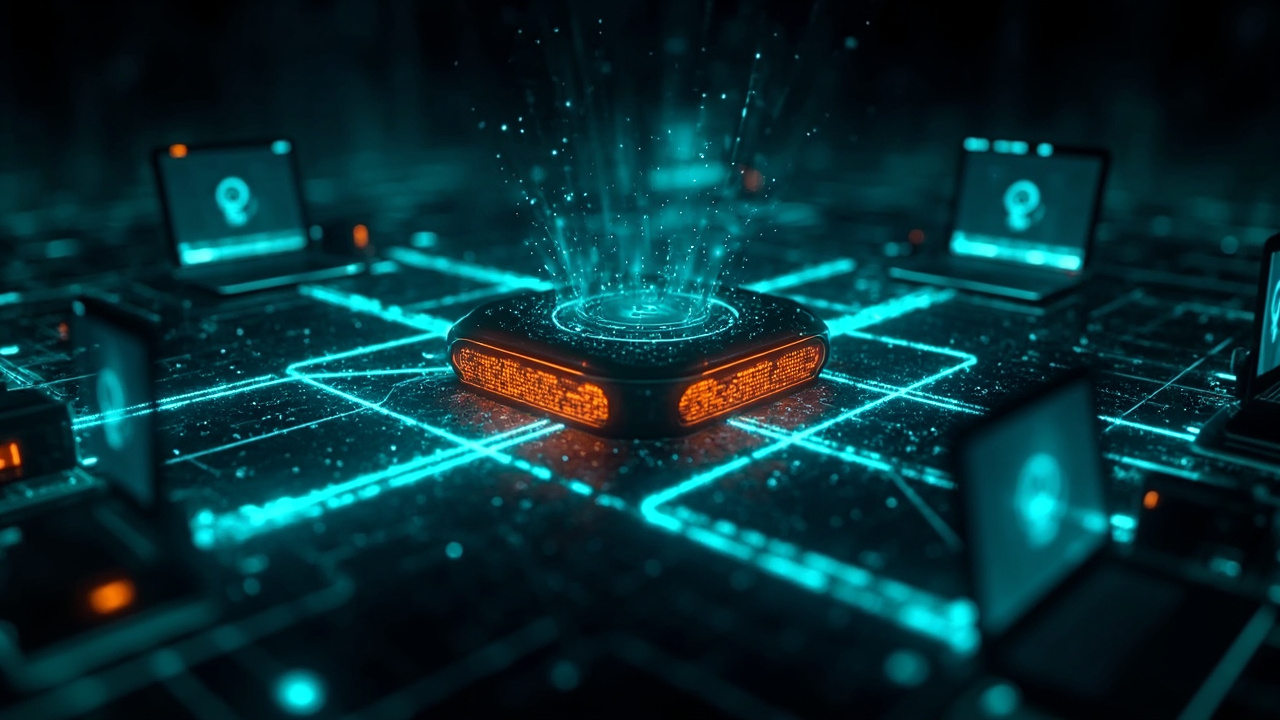
There is a small data center sitting idle in most homes, and NVIDIA wants to be the one to switch it on. At IFA 2026 in Berlin on September 3, the company announced PAIR — the Personal AI Router — a free, open-source tool in beta that discovers every capable PC on your local network and intelligently distributes AI inference workloads across them. The pitch is disarmingly simple: “More than half of US households have two or more PCs,” NVIDIA notes, and most of them sit idle throughout the day. PAIR turns that dormant silicon into a coordinated private AI cluster.
The announcement landed as part of a coordinated local-AI blitz at IFA that also included up to 1.9x faster local inference from new llama.cpp and vLLM optimizations (available now directly and through LM Studio and Ollama), simplified local-model setup inside popular agent apps, and the confirmation that the first NVIDIA RTX Spark Windows PCs from Lenovo and Acer arrive in October. But PAIR is the piece with the most conceptual weight — it is the first mainstream attempt to solve scheduling, not speed, as the core problem of household AI.
What PAIR actually does
Modern AI agents already parallelize: asked to triage a cluttered inbox and prioritize urgent messages, an agent typically splits the job across multiple subagents that run concurrently. The bottleneck is that all those subagents usually land on the same GPU, competing for the same VRAM and compute. Aggregate throughput collapses back to a single machine’s ceiling.
PAIR attacks exactly that point. The tool scans the local network for participating machines, tracks which are idle and which have spare capacity, and routes each task request to the node that can finish it fastest. The subagents stop fighting over one GPU; the work spreads across the household. Critically, the user on the main machine keeps gaming or working — the AI workload is routed away from the busy box, not stacked on top of it.
It ships in beta today for Windows, macOS, and Linux, through both graphical and terminal interfaces. The hardware compatibility list is broader than anything NVIDIA has published in years: GeForce RTX 20 Series and newer, RTX PRO workstation GPUs on Turing architecture and newer, DGX Spark desktop systems — and, notably, Apple M4 or newer Macs. NVIDIA building first-class scheduling software that embraces competitor silicon it hasn’t shipped a GPU for in a decade is the quiet headline here: the company is treating the home AI cluster as a network-effect land grab, not a peripheral-sales play.
The stack beneath it
PAIR does not arrive alone. The IFA announcements read as a full-court press to make local agents the default:
- Faster inference everywhere. New llama.cpp and vLLM optimizations deliver up to 1.9x speedups for local models, rolling out directly and through LM Studio and Ollama — the two most common on-ramps for local LLM users.
- Frictionless agent setup. Hermes Agent (from Nous Research), OpenClaw, and Perplexity’s Portable Computer are all adding simplified local-model configuration built on llama.cpp with NVIDIA’s optimizations baked in. Perplexity Portable Computer, which packages models, orchestration, and tools into a single local app, asks permission before escalating any part of a task to cloud models — a privacy pattern that pairs naturally with PAIR’s keep-it-on-the-LAN philosophy.
- New hardware in October. The RTX Spark Windows PCs — laptops as slim as 14mm with up to a 6,144-core Blackwell RTX GPU, a 20-core Grace Arm CPU, 128GB of unified memory, and roughly a petaflop of AI compute, reportedly near $2,000 — give the ecosystem a purpose-built anchor device capable of running models up to 120 billion parameters.
- A dense local-model catalog. NVIDIA’s roundup reads like a who’s-who of open weights: Nemotron 3.5 Lightning (30B), Qwen3.8-Flash-Next and Qwen3.8-27B, Meta’s Muse Glimmer (30B), DeepSeek v4 Flash (a 284B MoE that runs on a 2x DGX Spark cluster), LTX 2.5 for video, and MiniMax-H3 with the FastH3 distilled variant that runs 7x faster via FastVideo.
The strategic logic is coherent: every layer of the local stack — model supply, inference speed, agent UX, scheduling, and hardware — gets an NVIDIA-touched upgrade in the same week.
Why scheduling is the real unlock
Distributed computing in the home is an old idea — SETI@home and Folding@home proved decades ago that idle household machines aggregate into serious capability. But those projects chased throughput over the internet, batch by batch, latency be damned. PAIR inverts the model: it schedules interactive inference — sub-second, latency-sensitive agent work — across machines linked by gigabit LAN, where round-trips are measured in microseconds.
That difference matters because agent workloads are spiky and parallel. A single complex task might spawn five subagents for 30 seconds, then go quiet. Traditional setups waste that parallelism on one GPU; PAIR harvests it across the fleet. The Verge’s coverage highlights the practical payoff: MacBook-class machines and gaming desktops contribute to the same workload, with tasks routed to whichever box is idle right now.
There are honest limits. PAIR is a beta; each node still needs enough memory for the model or shard it runs; home networks vary wildly; and a two-PC household gains less than one with a desktop, a laptop, and a DGX Spark on the same switch. NVIDIA has not yet published deep technical documentation on how it handles model sharding versus whole-model placement per node — details the beta period will surface.
The bigger board
Seen from the industry level, PAIR is the consumer edge of a distribution war. One day earlier at Equinix’s Horizon event, NVIDIA helped launch the Inference Exchange to distribute enterprise inference across 280+ colocation data centers. Yesterday the enterprise edge; today the home edge. The same thesis — inference should run where capacity and data already sit — is being pushed down the stack from gigawatt data centers to the router in your hallway.
It is also a hedge. If frontier AI usage concentrates in a handful of clouds, NVIDIA’s consumer GPU business becomes decorational. If instead meaningful inference moves local — for privacy, cost, or latency — then every idle PC is a potential RTX upgrade, every Mac in the house is a node NVIDIA wants inside its scheduling fabric, and the RTX Spark in October becomes the family’s “AI base station.” PAIR, being free and open-source, is the loss leader that makes the whole household think of itself as one cluster — with NVIDIA holding the router.
For local-AI enthusiasts, the signal is unambiguous: the era of hand-configuring one lonely desktop is ending. The unit of local compute is becoming the household, and the software that coordinates it is now a first-class product category. The Personal AI Router is a beta tool with rough edges, but the direction it points — your home as a private AI cluster, orchestrated, open-source, and always-on — is likely to look obvious in retrospect.
The beta is available now for Windows, macOS, and Linux. If you have a gaming desktop and an M4 MacBook on the same network, you already own the test lab.
Sources
- [1] https://blogs.nvidia.com/blog/local-ai-ifa-next-gen-agents-nv-pair-rtx-spark/
- [2] https://www.engadget.com/2250189/nvidia-ifa-2026-pair-distributed-ai-computing-home-network/
- [3] https://www.theverge.com/ai-artificial-intelligence/989435/nvidia-pair-personal-ai-router-home-local-llm-compute-tool-rtx-macbook
- [4] https://www.forbes.com/sites/marcochiappetta/2026/09/03/distributed-personal-ai-is-the-future-and-nvidia-pair-proves-it/
- [5] https://startupfortune.com/nvidias-free-pair-tool-turns-your-idle-home-pcs-into-a-private-ai-cluster/
- [6] https://news.acer.com/acer-showcases-design-powered-by-nvidia-rtx-spark-at-ifa-2026
- [7] https://tech.yahoo.com/computing/articles/nvidia-confirms-october-2026-launch-160000371.html