A Storm of Cybercabs: Tesla's Driverless Two-Seater Hits Austin Streets on Launch Day
Tesla's purpose-built Cybercab went live in Austin on September 3 — no steering wheel, no pedals, a 13-and-over age gate, and Musk's 'A Storm of Cybercabs' teasing a national deployment wave as roughly 45 units join the Texas registry.
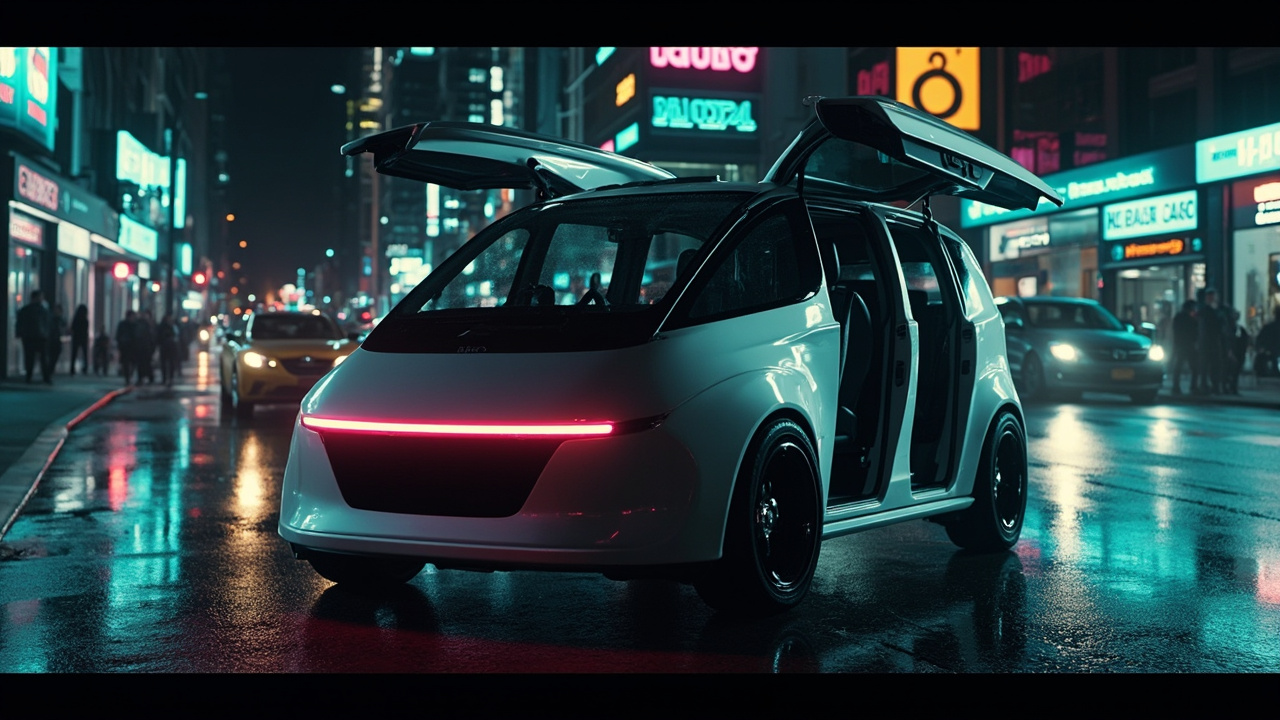
After two years of promises, the steering wheel-free future has a launch date that actually arrived. On the morning of September 3, 2026, Tesla’s purpose-built Cybercab rolled onto Austin streets as a commercial product — a compact two-seater with no steering wheel, no pedals, and no version of itself that works without self-driving software. By evening, the company’s “Exclusive Access” event at its downtown Austin campus would make the deployment official. The era of the mass-produced robotaxi is no longer a concept-car fantasy; it is a ride you can hail with an app.
Launch day, hour by hour
The day began before dawn. At 4:12 AM UTC, Elon Musk posted two words on X — “A Storm of Cybercabs” — a tease that racked up more than 1.2 million views within hours and signaled that Tesla intends to scale the vehicle at a pace well beyond a symbolic pilot. In a follow-up reply, Musk argued that public cost comparisons underestimate the vehicle, noting they don’t account for the “operational efficiency of Cybercab” — a hint that Tesla believes the driverless, purpose-built form factor gives it a structural cost advantage over conventional ride-hailing that analysts have not yet priced in.
Through the morning, Austin residents posted footage of Cybercabs moving through traffic: the RGB front light bar cycling purple, orange, turquoise, and green; the butterfly doors swinging upward at pickup; the in-ride user interface guiding passengers through a trip with no human aboard. Tesla had registered roughly 45 Cybercabs with the Texas DMV ahead of the event (per robotaxi trackers, with VINs climbing past the 2,400 mark), the first dedicated units to join some 270 Model Y robotaxis already on the state’s registry.
The infrastructure arrived in step. Early on launch day, Tesla pushed Robotaxi app version 26.8.0 to iOS, whose changelog explicitly notes support for Cybercab in Austin, Texas — confirming the software stack was ready for live operations hours before the 4:45 PM CT event kickoff. The update also added Cybercab-specific terms of service, including one stark difference from the Model Y robotaxi: riders must be at least 13 years old, versus age 8 for the Model Y variant. Children under 13 are not permitted in a Cybercab at all.
What actually launched
The Cybercab is not a Model Y with the wheel deleted. It is a ground-up autonomous vehicle, and the production specs — surfaced by Teslarati and Teslaoracle from regulatory filings — explain Tesla’s economics pitch:
- Motor: single AC 3-phase permanent magnet unit, 163 kW (219 hp), front-wheel drive — an unusual layout for Tesla
- Battery: 47.6 kWh lithium-ion pack, 326V nominal
- Range: 418 miles unadjusted, roughly 290–300 miles EPA-adjusted
- Curb weight: 3,113 lbs (1,412 kg) — lighter than any Model 3 or Y variant, which is how a small battery delivers that range
- Charging: inductive (wireless) charging support, a natural fit for a fleet that must redock without humans
- Autonomy: Hardware 4.0 sensor suite running FSD v14.3.3, targeting SAE Level 4 inside a geofenced service area
- Safety: front, knee, and side airbags — a full complement of passive restraints despite the absence of driver controls
- Price: $25,000 starting, unchanged from the 2024 concept reveal (Musk has said individual consumer sales will follow the fleet rollout)
The staging mirrors Tesla’s original Austin playbook from June 2025: employee and invited-guest rides first, public app access as confidence and data accumulate. Reuters notes that Tesla’s broader robotaxi operation — autonomous Model Ys, some still with human safety monitors aboard — continues in parallel, and that neither paid Cybercab passenger service nor unrestricted public access was confirmed going into the event. What is confirmed is the hardware: seven months of pilot production at Gigafactory Texas, February 2026 onward, has produced a real fleet.
The evidence Tesla is leaning on
Tesla’s core claim is that its camera-only, end-to-end approach can reach commercial autonomy at automotive scale. The supporting number the company cites: its robotaxi fleet has logged more than 380,000 unsupervised miles with no notable incidents, per disclosures cited across Electrek and other outlets. One robotaxi tracker cited by Quartz puts roughly 200 vehicles in Tesla’s U.S. fleet under an “unsupervised” designation — meaning they operate with no safety monitor aboard — including 28 Austin vehicles that ran unsupervised in the last 30 days.
That record is the argument for the Cybercab’s aggressive form factor. A vehicle with no wheel, no pedals, no mirrors, and no driver’s seat is cheaper to build and cheaper to run — but it only works if the software never needs a fallback. Musk has said the Cybercab needs its own training miles because it is a new vehicle with different weight, dynamics, and control feel; the launch-day fleet is, in part, a data-collection engine for exactly that.
The stakes are visible in the competitive landscape. Waymo has logged over 220 million rider-only miles and operates paid services across multiple metros. Amazon’s Zoox received a NHTSA commercial exemption for its own steering-wheel-free robotaxi last month. Uber and Wayve launched London’s first robotaxi service just hours earlier on September 3. Tesla’s differentiation is not being first — it is betting that mass manufacturing is the variable that decides who wins autonomous transport, not lidar density or geofence-by-geofence regulatory expansion.
The economics that made Musk post at 4 AM
Musk’s “operational efficiency” reply points at the robotaxi thesis in its purest form. Tesla’s stated goals, per earnings-call commentary cited by Seeking Alpha and Electrek: Cybercabs operating in ten cities by the end of 2026, and positive unit economics at scale by mid-2027. The Cybercab was designed backward from those numbers. At 3,113 lbs with a 47.6 kWh pack, it uses roughly half the battery material of a long-range Model Y. Wireless charging pads mean no human valet labor at docking. A two-seat cabin maximizes fleet utilization for the median urban ride: one or two passengers.
The full-capacity ambition is staggering. Tesla has previously described a production target of 2 million Cybercabs per year at full ramp — roughly 38,000 vehicles per week. Even a fraction of that would make Tesla the largest purpose-built autonomous vehicle manufacturer on Earth by an order of magnitude, and it is the reason a sub-$30,000, steering-wheel-free car is arguably the most industrially consequential AI product of the year: it is autonomy mass-produced on an automotive line rather than assembled in low volume.
There are also infrastructure signals beyond the car itself. Days before launch, a convoy of 17 Cybercabs was spotted testing in Bellevue, Washington — including at least one unit with an integrated Starlink antenna, suggesting always-on satellite connectivity as a core layer for fleet telemetry and remote monitoring where cellular coverage thins out. And aerial footage of the rapidly growing Optimus factory at Giga Texas, shared on launch morning, is a reminder that Tesla frames all of this as one “physical AI” program: the same autonomy stack, in different bodies.
What to watch next
The launch event answers the “does it exist” question; the next data points matter more:
- Fleet size at steady state — does “storm” mean dozens, hundreds, or thousands of Cybercabs in Austin by October? The gap between rhetoric and registry counts will define credibility.
- Public access timing — when Austin riders beyond invitees can hail a Cybercab in the Robotaxi app, and at what price per mile (Musk has previously floated a 40¢/mile target).
- The second city — Tesla holds robotaxi approvals in Nevada, Arizona, and parts of California; the Cybercab’s first expansion market will reveal how portable the platform is.
- FSD version cadence — the fleet runs FSD v14.3.3 today; investors expect news on the v15 branch and its improvement areas.
- Regulatory reception — Texas’s hands-off framework made this launch possible; NHTSA’s posture toward a no-controls vehicle sold beyond fleet operations remains the long pole.
September 3, 2026 is the day Tesla’s autonomy story stopped being entirely theoretical. A car with no way for a human to drive it is now carrying people in an American city, built on an assembly line, at a target price under $30,000. Whether it becomes a storm or a drizzle depends on execution no keynote can fix — but the hardware is on the street, the app is updated, and the registry is climbing.
Sources
- [1] https://www.basenor.com/blogs/news/tesla-cybercab-launches-september-3-in-austin-what-we-know
- [2] https://www.cnbc.com/2026/09/03/tesla-teases-no-steering-wheel-no-pedals-ahead-of-cybercab-update.html
- [3] https://www.reuters.com/business/autos-transportation/teslas-cybercab-event-set-thursday-with-few-details-2026-09-03/
- [4] https://qz.com/tesla-cybercab-driverless-robotaxi-austin-090326
- [5] https://www.investors.com/news/tesla-cybercab-elon-musk-robotaxi-waymo-uber-lyft/
- [6] https://finance.yahoo.com/markets/stocks/article/tesla-cybercab-to-launch-sept-3-as-robotaxi-bet-ramps-up-135557945.html